
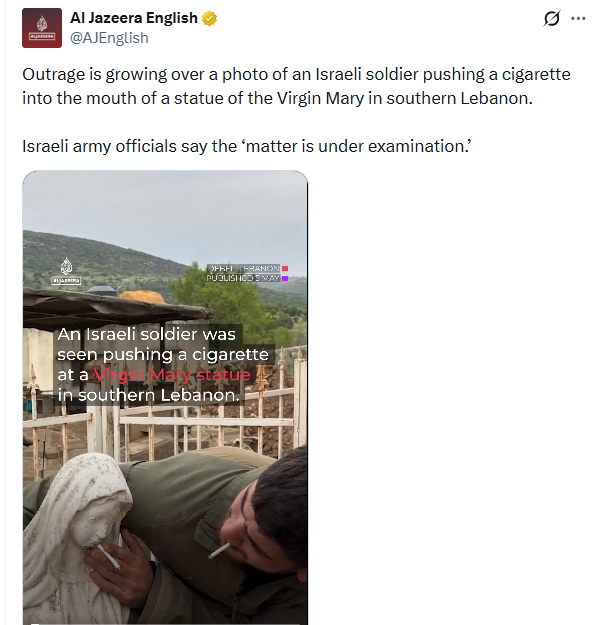

A controversial image showing an Israeli soldier placing a cigarette into the mouth of a statue of the Virgin Mary in southern Lebanon has triggered widespread anger across social media platforms and religious communities worldwide. The photo quickly went viral, prompting criticism from activists, religious leaders, and internet users who described the act as deeply disrespectful toward Christian religious symbols.
The incident reportedly occurred in southern Lebanon during ongoing regional tensions. Soon after the image surfaced online, users across multiple platforms condemned the soldier’s actions and demanded accountability from Israeli authorities. In response, Israeli army officials confirmed that they are reviewing the matter and stated that the incident remains “under examination.”
https://x.com/AJEnglish/status/2052231950224503093
🚨⚡️ "THE ULTIMATUM":
Russia Demands TOTAL EVACUATION of Kiev Before Victory Day — The "Red Line" Has Been Crossed! 🇷🇺🔥
The gloves are officially off! Moscow has issued a chilling, final warning to the West: GET OUT OF KIEV NOW. pic.twitter.com/zB20SyKfUh
— RussiaNews 🇷🇺 (@mog_russEN) May 6, 2026
Religious Communities Demand Accountability
Christian groups and human rights advocates strongly criticized the act, arguing that religious symbols must remain protected during conflicts. Furthermore, several online commentators warned that such incidents could intensify tensions in an already fragile region. The image generated thousands of reactions within hours, with many users calling for disciplinary action against those involved.
https://x.com/AJEnglish/status/2052231950224503093
The controversy also revived discussions surrounding previous incidents involving damage to religious sites and statues during military operations. Earlier reports about Israeli soldiers allegedly damaging a statue of Jesus Christ sparked international condemnation and renewed concerns regarding the treatment of religious landmarks in conflict zones.
Social Media Reaction Intensifies
Social media platforms witnessed a surge of criticism after the photograph spread globally. Moreover, many users shared messages urging respect for religious beliefs regardless of political or military disputes. Analysts noted that viral images from conflict areas increasingly shape international public opinion and diplomatic narratives.
Meanwhile, Lebanese residents and regional observers expressed concern that such incidents could further inflame public anger across the Middle East. Although Israeli officials have acknowledged the controversy, no official disciplinary measures have been announced so far as investigations continue.

