
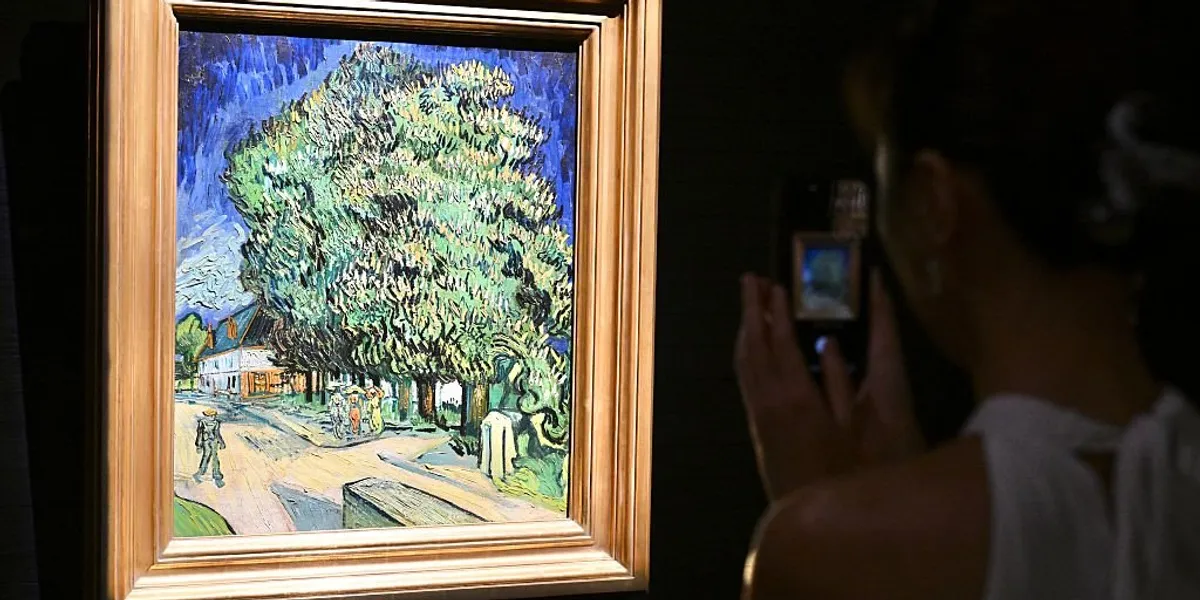

A masterpiece by legendary Dutch artist Vincent van Gogh has shattered auction records, selling for an astonishing $190.4 million after a long-running dispute over its ownership nearly disrupted the historic sale.
The painting, titled Chestnut Trees in Blossom, went under the hammer at Sotheby’s in New York on Wednesday, November 18, 2026. The sale established a new auction record for Van Gogh and made the artwork one of the most valuable paintings ever sold.
However, the extraordinary price was not the only reason the artwork attracted international attention. Its complicated history, involving a Jewish family during Nazi rule, brought renewed scrutiny just days before the auction.
Van Gogh created the painting in 1890 in Auvers-sur-Oise, France, during the final months of his life. The colourful landscape depicts flowering chestnut trees and reflects the artist’s distinctive painting style.
The artwork surpassed the previous Van Gogh auction record of $117.2 million. That record belonged to Orchard with Cypresses, an 1888 painting sold at Christie’s in November 2022.
The latest sale exceeded that record by more than $73 million, highlighting the extraordinary demand for rare works by the renowned artist.
The painting’s ownership history became a major issue before the auction.
German publisher Samuel Fischer purchased the artwork in Paris in 1909. His family later sold it in 1936, during a period when the Nazi government was persecuting Jewish citizens and businesses.
Fischer’s descendants argued that the family sold the painting because of severe financial losses caused by Nazi policies.
They questioned whether the transaction had taken place under fair market conditions.
The family’s lawyer, Gunnar Schnabel, called for evidence showing that the painting had been sold at its proper market value. He also sought clarification about whether the family would have agreed to the sale without the political and economic pressures of that period.
The dispute raised concerns about whether the artwork could legally and ethically proceed to auction.
The painting eventually came into the possession of the Blaquier-Arrieta family in 1975. The family retained ownership for more than five decades.
As the November auction approached, the descendants of the Fischer family challenged the circumstances surrounding the earlier sale.
However, an agreement between the two families cleared the way for the historic auction.
Sotheby’s announced the settlement on November 17, just one day before the painting was scheduled to go under the hammer.
The agreement involved the Blaquier-Arrieta family and the legal descendants of Samuel and Hedwig Fischer.
Although the financial terms were not disclosed, the settlement acknowledged the suffering experienced by the Fischer family during the Nazi era.
The descendants also welcomed the opportunity to recognize the efforts of Gisela Berman Fischer, who had sought justice for her family.
The sale has renewed discussions about artworks that changed ownership during World War II and the Nazi period.
Many Jewish families lost valuable possessions through confiscation, forced sales and financial pressure. Disputes surrounding these transactions continue to affect the international art market.
Auction houses and collectors increasingly face questions about the ownership history of valuable paintings, particularly works that passed through Europe during the 1930s and 1940s.
For Van Gogh’s masterpiece, the settlement allowed the auction to proceed while acknowledging its complicated past.
The extraordinary sale also demonstrated the continuing global fascination with the artist’s work more than a century after his death.
The record-breaking transaction leaves one remarkable contrast: a painting once sold during a family’s struggle under Nazi persecution has now become the most expensive Van Gogh artwork ever sold at auction.

