

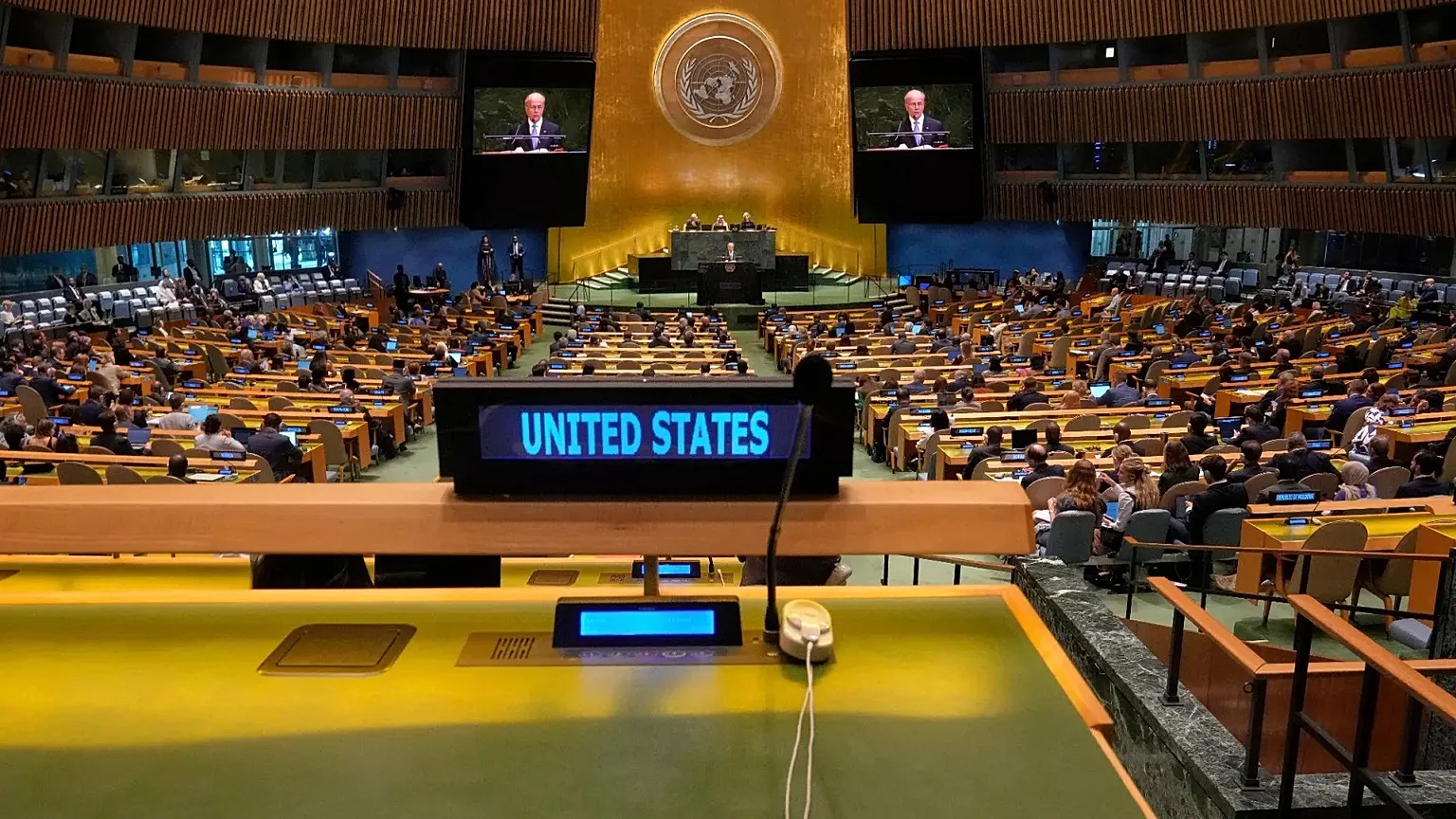

The United States has announced that it is denying and revoking visas for members of the Palestine Liberation Organisation (PLO) and the Palestinian Authority (PA) ahead of the United Nations General Assembly (UNGA) meeting scheduled for September, according to a statement released by the State Department on Friday.
The move targets Palestinian officials, although the department did not specify which individuals were affected by the visa restrictions. It remains unclear whether Palestinian Authority President Mahmoud Abbas, who is expected to travel to New York to deliver an address at the UN gathering later in the month, is included among those barred from entering the United States.
Riyad Mansour, the Palestinian ambassador to the UN, told reporters that the delegation is currently reviewing the implications of the U.S. decision. “We are checking exactly what the U.S. move means, and how it applies to any of our delegation, and we will respond accordingly,” Mansour said. Meanwhile, Abbas’ office did not immediately provide a comment regarding the visa restrictions.
This development follows a series of U.S. sanctions imposed on PA officials and members of the PLO in July, reflecting the Biden administration’s ongoing strategy to hold Palestinian leadership accountable.
The State Department justified the latest measures by stating that “it is in our national security interests to hold the PLO and PA accountable for not complying with their commitments, and for undermining the prospects for peace.” Officials emphasized that the actions are intended to address what they perceive as failures by the Palestinian leadership to fulfill obligations and to encourage compliance with agreements.
The U.S. restrictions come at a time when other Western powers are moving toward formal recognition of Palestinian statehood. Close U.S. allies, including Canada, Britain, Australia, and France, have in recent weeks either announced or signaled their intentions to recognize Palestine as a state during the UNGA meeting.
These moves have increased international pressure on Israel, particularly as the humanitarian situation in Gaza continues to deteriorate amid the ongoing military assault, which has led to widespread starvation and displacement.
The situation highlights the growing tensions between U.S. policy and the broader international community on the Palestinian question, with the Biden administration maintaining a hardline stance while other Western countries push forward with diplomatic recognition.
As the UN General Assembly approaches, the visa revocations are expected to complicate Palestinian participation in the international forum and may further strain diplomatic relations between Washington and the Palestinian leadership.
