

Muslims and Islam are increasingly becoming political issues in US election campaigns ahead of the November 3 midterm elections.
Republican candidates have intensified criticism of Muslim politicians and communities. They argue that their concerns involve national security, extremism and religion in public life.
Critics, however, say the rhetoric unfairly targets Muslim Americans and risks fueling Islamophobia.
Republicans Target Muslim Candidates and Issues
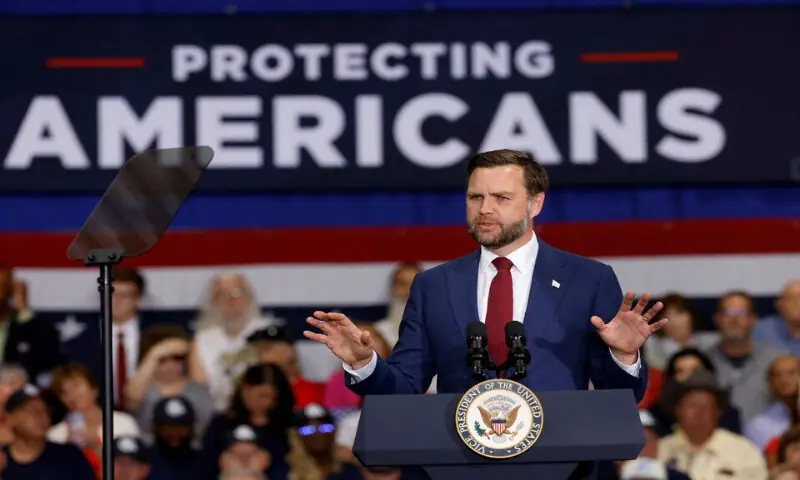
Republican Vice President JD Vance recently called Abdul El Sayed, a Muslim Democrat running for the US Senate in Michigan, “very, very evil.”
Vance accused El Sayed of defending terrorism over remarks he made following a March attack on a suburban Detroit synagogue.
In Texas, Republican Governor Greg Abbott has attacked a proposed Muslim-led development. He also called for an investigation into alleged efforts to establish “sharia courts.”
Developers and civil rights groups have disputed those claims. Abbott’s campaign said his actions focused on alleged illegal conduct rather than religious beliefs.
Meanwhile, Alabama Republican Senator Tommy Tuberville has warned that “the enemy is inside the gates.” He was referring to what he described as radical Islam.
Muslim Americans Gain Political Representation
The growing political focus comes as Muslim Americans achieve important milestones in US politics.
Around 5.5 million Muslims live in the United States, representing about 1.6 percent of the population.
New York City elected its first Muslim mayor, Zohran Mamdani, last year. Meanwhile, El Sayed could become the first Muslim elected to the US Senate.
In Virginia, Ghazala Hashmi became the first Muslim woman elected to statewide office after winning the lieutenant governor’s race.
Republican lawmakers have also expanded their focus on Islamic law. Representatives Keith Self and Chip Roy established a “Sharia Free America Caucus.”
Republican Representative Randy Fine of Florida has separately introduced legislation aimed at addressing what he calls the rise of sharia law.
El Sayed Becomes Central to Political Debate
El Sayed has faced increased Republican criticism following the Detroit synagogue attack.
He condemned the incident but said of the attacker, “hurt people hurt people.” He also noted that some of the man’s relatives in Lebanon had recently died in an Israeli airstrike.
El Sayed later apologized and said his comments may have been misunderstood.
He has also faced criticism for associating with Hasan Piker, a left-wing social media commentator.
The debate intensified after El Sayed discussed isolation among Americans and compared it with the stronger community connections experienced by relatives in Egypt.
Tuberville responded on social media by saying, “If you hate America so much, go live in Egypt.”
Islamophobia Debate Intensifies
The political rhetoric comes as President Donald Trump faces weak public approval ahead of the midterms.
Voters have identified the cost of living, the Iran war and tariffs among their major concerns. Meanwhile, public attitudes toward Israel have shifted, particularly among Democrats.
Aaron Hughes, a University of Rochester religious studies professor, said Republicans could be using criticism of Muslims to avoid difficult policy debates.
He described the rhetoric as “fear-mongering” and criticized what he called the conflation of Muslims with groups such as Hamas and Iran.
However, Democratic Socialists of America co-chair Ashik Siddique said Islamophobia cannot be attributed to only one political party.
The issue has also extended beyond campaigns. In August, Abbott sought a federal investigation into Islamic ritual washing facilities at two Texas airports.
Houston Mayor John Whitmire rejected concerns over preferential treatment, saying the facilities are open to travellers, employees and stakeholders regardless of faith.
As the midterms approach, the debate over Islam, security and Muslim political representation is likely to remain a contentious part of the US political landscape.

