
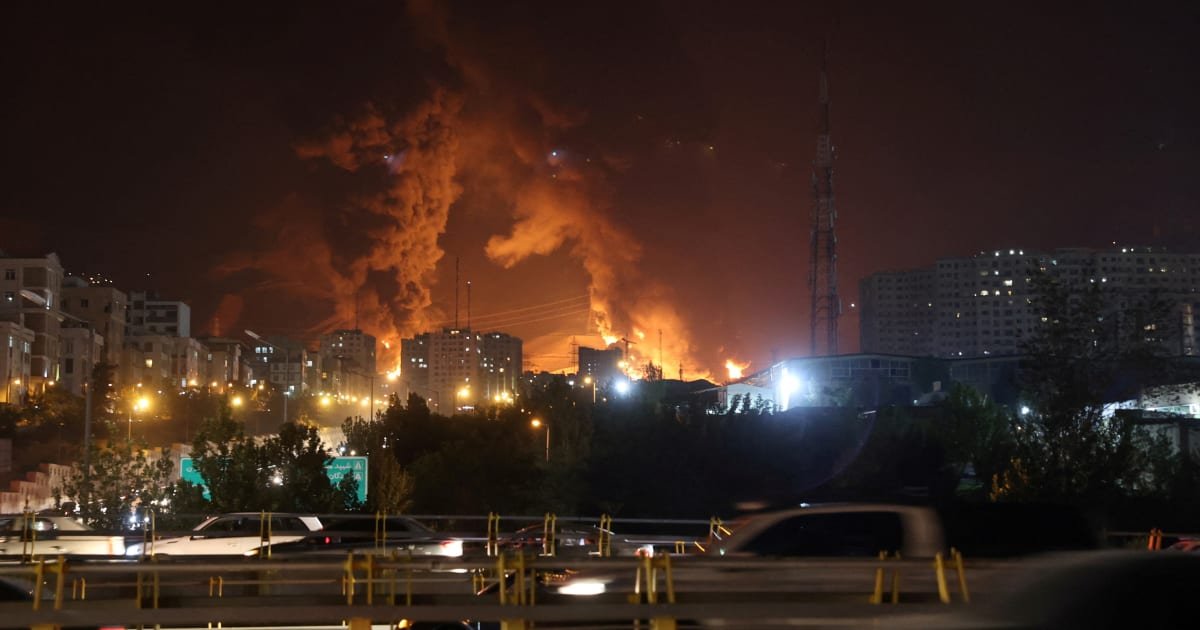

Bridge Destruction and Key Sites Targeted in Iran
Tensions in the Middle East have sharply increased after fresh attacks by the United States and Israel on Iran. The strikes targeted major infrastructure, including a key bridge and industrial facilities. Reports confirmed that a major bridge near Tehran was hit multiple times.
According to statements by Donald Trump, the tallest bridge in Iran was destroyed. He shared video footage showing smoke rising from the B1 bridge in Karaj. The structure was located about 35 kilometers from the capital. Moreover, it was considered one of the tallest bridges in the region.
Iranian state media reported that the bridge was struck twice. The first attack caused civilian casualties. Later, a second strike hit the same location while rescue teams were working. As a result, the damage increased and emergency efforts were disrupted.
In addition, a century-old research facility, the Pasteur Institute of Iran, was heavily damaged. This institute plays a key role in public health research. Therefore, its destruction has raised serious concerns.
At the same time, Iran’s two largest steel plants were forced to shut down. These facilities are vital for the country’s economy. Consequently, industrial production may face long-term setbacks.
Missile Strikes and Military Warnings Raise Alarm
In response, Iran launched missile attacks toward Tel Aviv. Air defense systems were activated immediately. Several explosions were heard across the city. Although injuries were limited, the attacks created panic among residents.
Meanwhile, loud blasts were also reported in Tehran. However, the exact targets were not confirmed. The situation remains tense, with both sides exchanging threats. Iran’s military leadership issued strong warnings. They stated that any ground invasion would be met with full force.
Iranian Army Chief Amir Hatami emphasized readiness for escalation. He said that forces must monitor enemy actions closely. Furthermore, he warned that no invading troops would survive. These statements highlight the growing risk of a wider war.
At the same time, a fire broke out near Mashhad airport. Reports said a projectile hit a fuel tank in the area. Fortunately, no casualties were reported. Emergency teams quickly responded to control the fire.
Despite the ongoing conflict, daily life continues in parts of Iran. Families gathered in parks to celebrate traditions after Nowruz. This shows a mix of resilience and uncertainty among citizens.
Global Reactions and Strait of Hormuz Crisis Deepen Concerns
The conflict has also triggered strong global reactions. International leaders are increasingly worried about the Strait of Hormuz crisis. This route is crucial for global oil supply. Any disruption can impact economies worldwide.
The United Kingdom led a meeting of around 40 nations. The group demanded the immediate reopening of the Strait. British Foreign Secretary Yvette Cooper said global trade must be protected.
Similarly, Emmanuel Macron warned that military solutions may not work. He said diplomatic efforts are necessary. Meanwhile, the Gulf Cooperation Council called for international action to secure shipping routes.
On the other hand, China blamed the United States and Israel for escalating the crisis. Chinese Foreign Minister Wang Yi said the attacks violate international law. This reflects growing divisions among global powers.
In addition, Russia urged diplomatic engagement. President Vladimir Putin called for peaceful solutions during talks with regional leaders. These efforts aim to prevent further escalation.
Overall, the situation remains highly unstable. Continued attacks could trigger a broader regional conflict. Therefore, global leaders are under pressure to act quickly and restore stability.

