
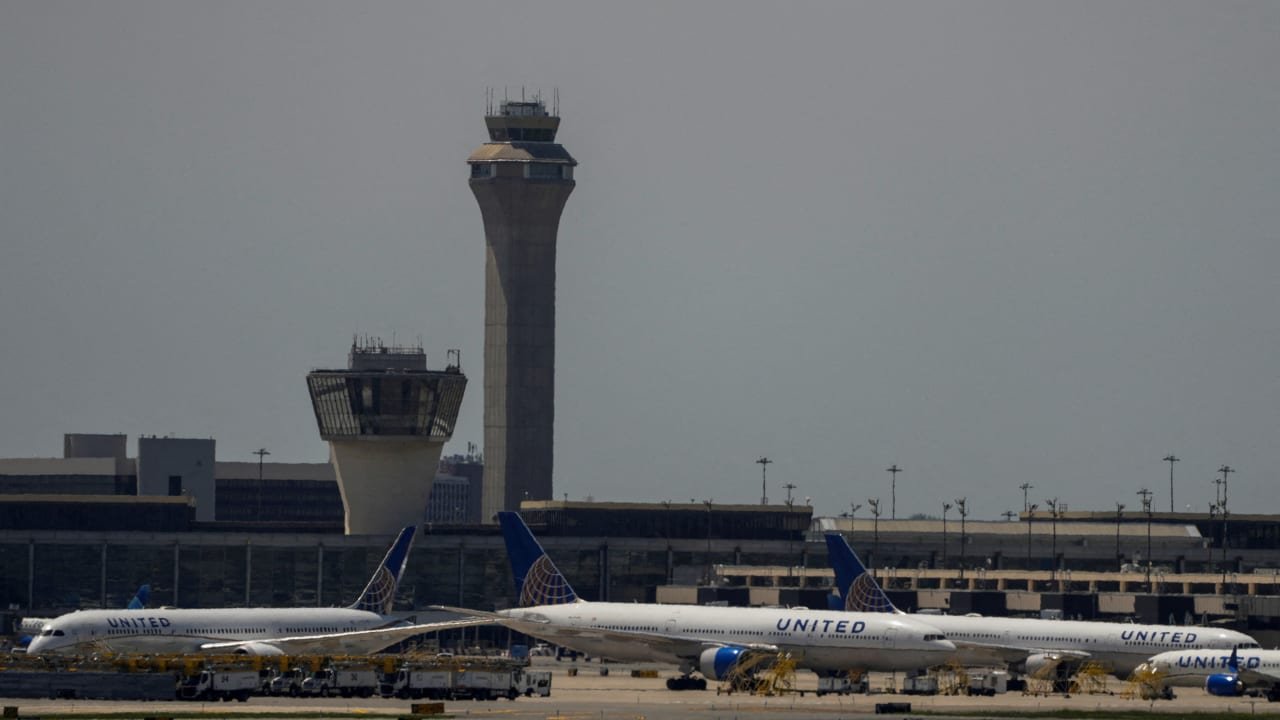

WASHINGTON: Fresh flight disruptions across the US Northeast have renewed concerns over America’s aging air traffic control infrastructure, which still relies on decades-old telecommunications equipment, analog systems and obsolete computers.
Thousands of flights faced delays or cancellations on Monday after a circuit failed at a Philadelphia air traffic facility while a construction crew accidentally cut a fibre-optic cable near New Brunswick, New Jersey.
US Transportation Secretary Sean Duffy said the country still operates with a 40-year-old telecommunications architecture, leaving major regions vulnerable when individual components fail.
FAA Still Relies on Obsolete Technology
The Federal Aviation Administration operates more than 300 air traffic facilities, many of which cannot communicate directly with each other through integrated systems.
FAA Administrator Bryan Bedford told Reuters that facilities effectively operate as separate “silos” and acknowledged the agency remained about 20 years behind technologically.
Furthermore, some towers still rely on old Compaq computers, while the FAA has resorted to 3D printing and online marketplaces such as eBay to obtain replacement components for obsolete equipment.
A 2024 Government Accountability Office report found that roughly one-third of air traffic control systems were unsustainable and required urgent action.
Washington Seeks Billions More for Modernisation
Congress approved $12.5 billion last year for air traffic control upgrades. However, Duffy said another $30 billion would be needed to complete improvements and modernise facilities.
The FAA expects to begin moving air traffic communications from analog to digital technology in late 2027 before eventually shifting facilities from individual computers to cloud-based systems.
Meanwhile, modernisation efforts have repeatedly suffered delays and cost overruns.
The FAA also continues replacing paper flight strips used by controllers. Although 18 major airports have eliminated them, the agency expects implementation across 49 major airports to continue until at least 2028.

