

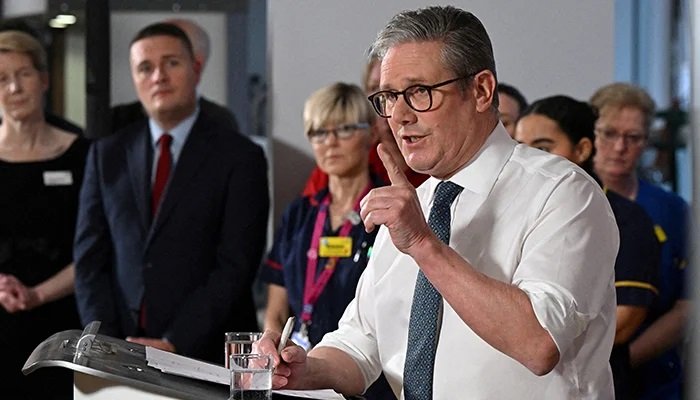

British Prime Minister Keir Starmer signaled on Monday that he would not step aside despite mounting pressure following the resignation of a second senior aide linked to the appointment of Peter Mandelson as ambassador to the United States. Addressing staff at Downing Street, Starmer urged unity and resilience as criticism over his judgment intensified.
Downing Street communications chief Tim Allan announced his resignation on Monday, saying he wanted to make room for a new team to support the prime minister. His departure followed Sunday’s resignation of Morgan McSweeney, Starmer’s closest aide, who stepped down amid controversy surrounding Mandelson’s past association with the late US sex offender Jeffrey Epstein.
As scrutiny grew, Starmer told staff he regretted the Mandelson appointment and stressed the importance of restoring public trust. He praised McSweeney as a key figure in transforming the Labour Party and securing its landslide victory in the 2024 general election. Emphasizing resolve, Starmer said the government would move forward with confidence and continue its agenda for change.
Later, Starmer’s spokesperson confirmed the prime minister had no intention of resigning and said Allan stepped down after the staff meeting. However, political pressure continued to build.
Political pressure mounts amid party divisions
The Times reported that Scottish Labour leader Anas Sarwar was expected to publicly call for Starmer’s resignation, reflecting broader unease within the party. Labour’s support in Scotland has weakened since the election, with recent polls placing it behind the Scottish National Party and Reform UK.
Meanwhile, government borrowing costs rose, signaling investor concern over potential leadership instability and a possible shift toward more left-wing economic policies. Opposition Conservative leader Kemi Badenoch accused Starmer of lacking control, calling for stronger leadership or fresh elections.
Starmer had hoped Allan’s appointment would improve government messaging, but criticism of Downing Street’s handling of the crisis persisted, complicating efforts to refocus on economic priorities.
