

Thousands of British and French troops have completed a major military exercise in Germany, testing how NATO allies could respond to a modern attack. The seven-week war game included one of Britain’s largest airborne operations in two decades, according to the UK government.
The exercise, named Rhino Titan, comes amid growing European concerns over Russian aggression following Moscow’s war against Ukraine. It focused on preparing troops to confront modern battlefield threats, including drones and electronic warfare.
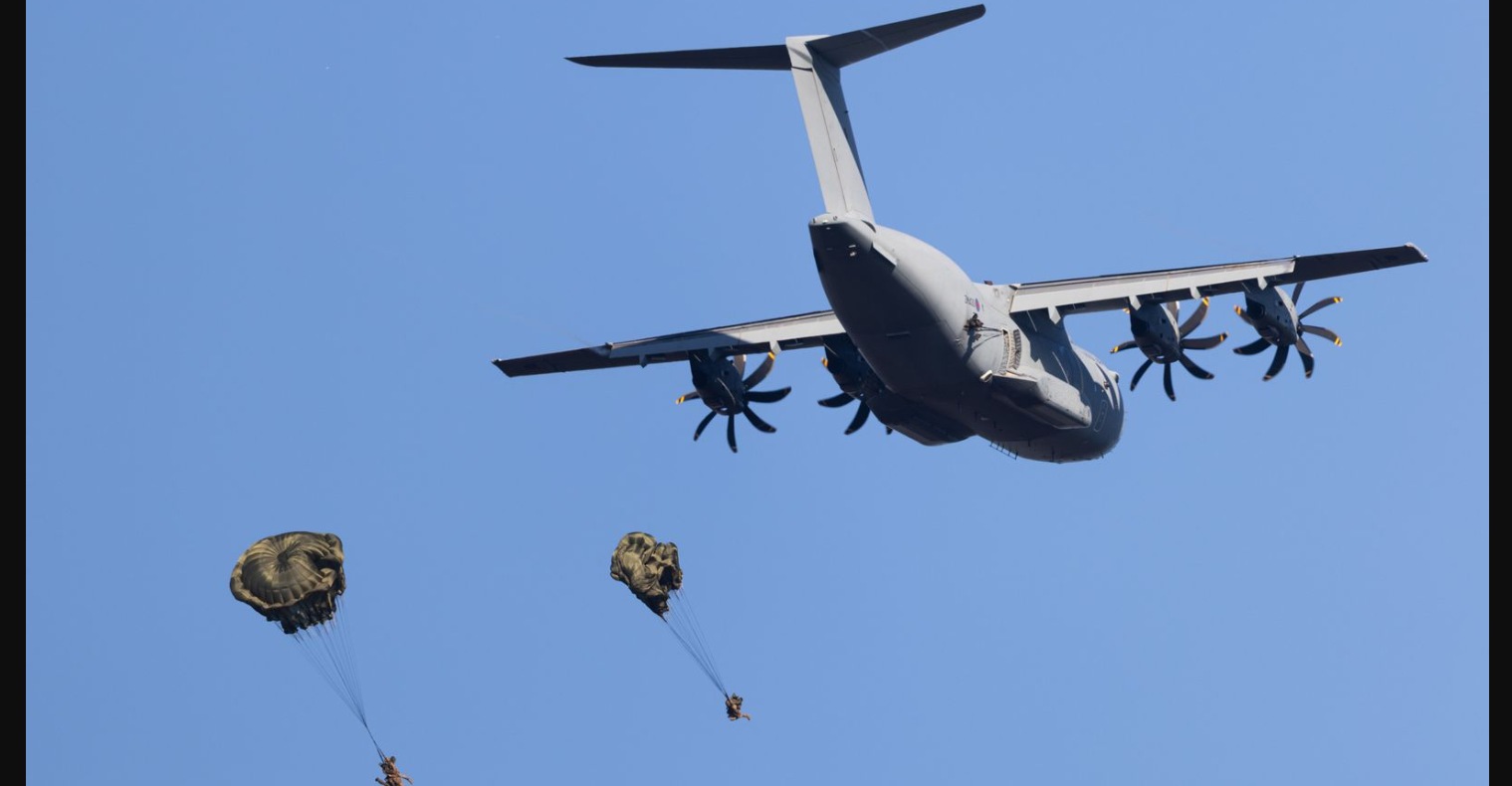
Around 2,500 troops participated in the training at the Sennelager military training centre in Germany. As part of the exercise, 600 British and French paratroopers jumped from four Royal Air Force A400M Atlas transport aircraft.
Rhino Titan Tests Modern Battlefield Readiness
The exercise assessed British forces’ ability to operate against an adversary equipped with advanced surveillance and electronic warfare capabilities. These technologies can complicate military operations and challenge traditional battlefield tactics.
Therefore, the training aimed to demonstrate how NATO members could strengthen their response to an attack on alliance territory. It also tested the ability to deploy airborne forces and specialised equipment quickly when required.
Defence Minister Wes Streeting said modern threats demand changes in military preparation and operational methods.
“The threats we face in the 21st century require an updated, modern approach to warfare –- and our adaptable armed forces are preparing accordingly,” defence minister Wes Streeting said in a statement.
He also highlighted cooperation between Britain, France and Germany during the large-scale exercise.
“Alongside our French and German allies, this large-scale training exercise shows we can deliver rapid, large-scale airborne power anywhere it’s needed to defend Nato territory.
“This combination of troops and specialised equipment is what is required to deter our adversaries and keep Britain and our allies safe,” he added.
European Security Concerns Shape Military Training
The exercise reflects wider security concerns across Europe as Russia’s war against Ukraine continues. NATO countries have increasingly focused on readiness, rapid deployment and cooperation among allied forces.
In addition, Western nations have accused Russia of conducting a broader campaign of so-called hybrid activities. These allegations include espionage, sabotage and disruptions affecting critical infrastructure.
Western governments have also pointed to damage involving undersea cables as part of their concerns about potential security threats. However, Moscow has strongly denied accusations that it is responsible for such activities.
Airborne Operations Remain Central to NATO Preparedness
The deployment of hundreds of paratroopers formed a major part of Rhino Titan. Airborne operations allow forces to reach locations rapidly, particularly when conventional routes face obstacles or delays.
By combining personnel, transport aircraft and specialised equipment, the exercise tested the allies’ ability to deliver military power where needed. Moreover, the participation of British, French and German forces highlighted the importance of joint training.
The exercise concluded after seven weeks of preparation and field activities. Its central objective was to test military readiness against modern threats and demonstrate how allied forces could help defend NATO territory.
For the latest updates, visit and follow The Truth International website (www.thetruthinternational.com) and subscribe to the YouTube Channel.

