

Pakistan has achieved a major milestone in international education as two schools from Lahore and Hyderabad earned global recognition at the World’s Best School Prizes 2026. Their achievements have highlighted innovative teaching methods, inclusive education and efforts to help disadvantaged children continue learning.
The prestigious awards, organized by international education organization T4 Education, recognize schools making exceptional contributions to students and their communities.
Thousands of public and private schools from around the world participated in the competition. An international panel evaluated their achievements before selecting the leading institutions in five categories.
TNS Beaconhouse in Lahore won the World’s Best School Prize for Supporting Healthy Lives, becoming the first Pakistani school to secure the prestigious award.
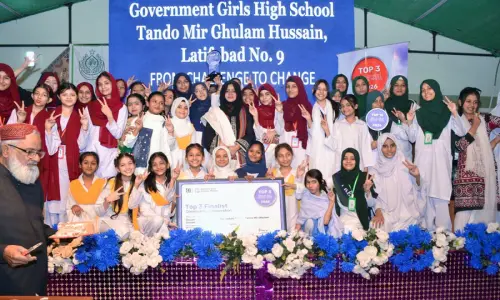
Meanwhile, Government Girls High School Tando Mir Ghulam Hussain in Hyderabad achieved international recognition by finishing among the world’s top three schools in the Community Collaboration category.
The Lahore-based TNS Beaconhouse received recognition for its inclusive approach to education, particularly its efforts to support neurodivergent students.
The institution serves more than 1,100 students across kindergarten, primary and secondary levels.
Its teaching approach focuses on building confidence, encouraging participation and creating a supportive learning environment for children with different educational needs.
The school has challenged traditional barriers by introducing practices that help students with different learning abilities participate more effectively in mainstream education.
The award highlights the growing importance of inclusive learning environments that recognize individual differences instead of expecting every student to follow the same educational approach.
However, the achievement of the government girls’ school in Hyderabad has attracted particular attention because of its efforts to overcome social and financial barriers to education.
Located in an underprivileged community, the school serves girls who often struggle to attend regular classes because of household responsibilities or the need to support their families financially.
Instead of forcing students to follow rigid schedules, the institution introduced a flexible education system designed around their circumstances.
The school operates a dual-shift learning model, allowing girls to attend classes in the morning or later in the day.
This arrangement helps students continue their education without completely abandoning their family responsibilities.
Teachers also visit students’ homes and engage directly with parents. These visits aim to explain the importance of girls’ education and encourage families to support their daughters’ academic development.
The initiative has challenged traditional attitudes that sometimes prioritize early marriage or household work over schooling.
The results have been remarkable.
According to figures highlighted by T4 Education, student enrollment increased by 90 percent within one year, while attendance improved by 80 percent.
The school also reported that 80 percent of participating parents now prioritize their daughters’ education over child labour.
These improvements demonstrate how flexible schedules and stronger community relationships can help address barriers to education.
The Hyderabad school competed in the Community Collaboration category, which recognizes educational institutions working closely with families and local communities.
The category’s top award went to the United Kingdom’s Swiss Cottage School, Development and Research Centre.
However, securing a place among the top three schools worldwide represents a significant achievement for the Sindh institution.
The World’s Best School Prizes recognize outstanding educational practices across five categories: Community Collaboration, Environmental Action, Innovation, Overcoming Adversity and Supporting Healthy Lives.
This year’s winners also included schools from the United Kingdom, Nigeria, Brazil and South Korea.
The winning institutions have been invited to the World Schools Summit in London in January 2027, where they will share their approaches with international education leaders and policymakers.
The recognition comes at an important time for Pakistan’s education sector, which continues to face challenges involving access, school attendance and learning opportunities for disadvantaged children.
Both institutions demonstrate different approaches to improving education.
TNS Beaconhouse has focused on supporting students with diverse learning needs, while the Hyderabad government school has developed a practical model for keeping vulnerable girls connected to education.
Their achievements suggest that meaningful educational improvements do not always require expensive infrastructure. Changes in teaching methods, school schedules and community involvement can also produce measurable results.

