

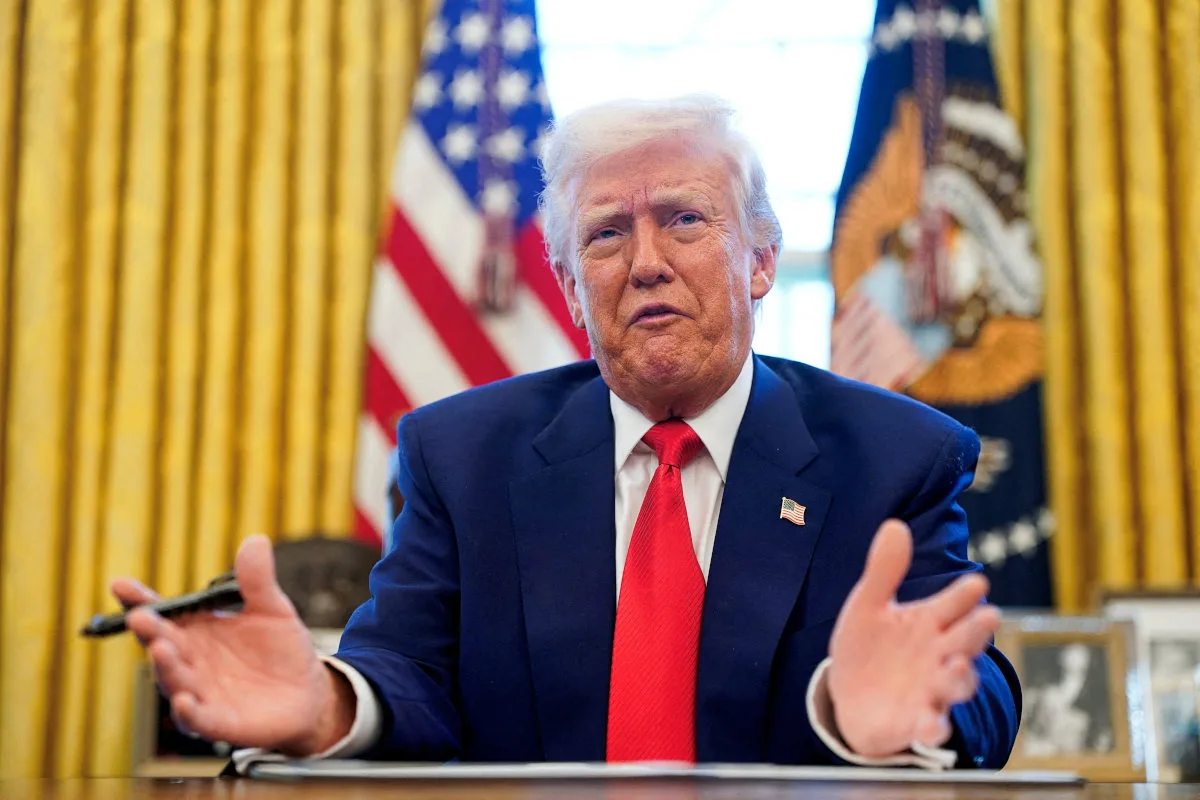

President Donald Trump is reshaping Washington in ways no other president has attempted, unveiling a combination of White House renovations and citywide projects that critics say blur the line between governance and personal branding.
Trump, a former real estate magnate, has infused the executive mansion with his trademark aesthetic. The Oval Office now gleams with gold trim, while the Rose Garden has been transformed into a patio lined with umbrellas and picnic tables — echoing the atmosphere of his Mar-a-Lago resort. Oversized mirrors, flags, and music systems have further fueled what commentators describe as “dictator chic.”
While Trump calls the changes part of his natural “talent for building things,” historians note that presidential renovations are nothing new. Franklin Roosevelt built the current Oval Office, Harry Truman launched a sweeping reconstruction after World War II, and John F. Kennedy modernized the Rose Garden. Yet, experts say Trump’s approach is the boldest and most theatrical since the Truman era, designed not only to modernize but also to showcase power.
His ambitions stretch beyond the White House gates. Plans include marble upgrades to the Kennedy Center, reinforced road barriers, graffiti removal, and infrastructure repairs across Washington. Perhaps the most extravagant proposal is a $200 million East Wing ballroom, to be funded partly by Trump and wealthy “patriot donors.” The broader $2 billion capital facelift is expected to require congressional support.
Supporters applaud Trump’s hands-on approach, praising him for beautifying the capital and boosting security. Detractors, however, warn that these moves dangerously intertwine personal legacy with public resources, reducing the nation’s capital to a political stage set.
Analysts suggest Trump’s citywide redesign combines architectural spectacle with military displays, underscoring his dual persona as builder and showman. The result is a Washington that reflects not only the presidency but also Trump’s unmistakable brand — raising enduring questions about legacy, democracy, and the identity of the capital itself.
