


“Unleash DOGE”
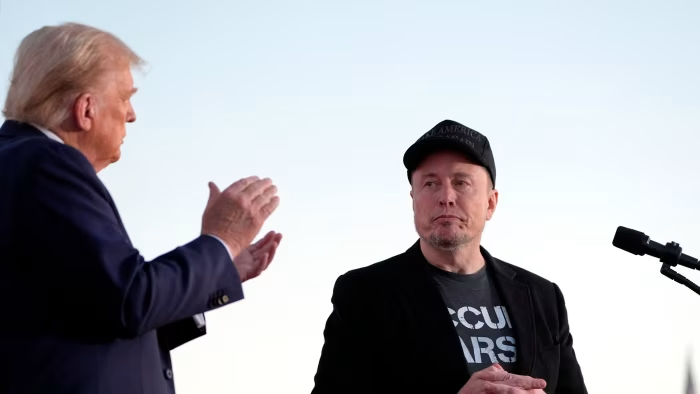
WASHINGTON: The increasingly volatile feud between U.S. President Donald Trump and billionaire tech mogul Elon Musk escalated dramatically on Tuesday after Trump called on a government watchdog to investigate the substantial subsidies received by Musk’s companies, including Tesla and SpaceX.
In a fiery post on his social media platform Truth Social, President Trump suggested that the Department of Government Efficiency (DOGE) should “take a good, hard look” at the billions in public funds awarded to Musk’s sprawling business empire. He claimed that Musk “may get more subsidy than any human being in history,” and accused him of relying on taxpayer support to keep his ventures afloat.
“Without subsidies, Elon would probably have to close up shop and head back home to South Africa,” Trump wrote. “No more rocket launches, satellites, or electric car production, and our country would save a fortune. Big money to be saved!!!”
Trump’s remarks come just a day after Musk reignited his public criticism of the administration’s massive tax-cut and spending bill. The controversial legislation — which has been labeled a budget-buster by independent analysts — is projected to add roughly $3 trillion to the national debt.
Musk, once a vocal supporter of Trump’s fiscal policy, now calls the bill “utterly insane and destructive,” and has promised political retribution against Republicans who voted in favor of it.
“They should hang their heads in shame,” Musk wrote on X (formerly Twitter). “And they will lose their primary next year if it is the last thing I do on this Earth.”
Musk also accused both parties of abandoning fiscal conservatism, calling for a new political movement to challenge what he described as the “porky pig party,” in reference to excessive government spending.
The clash marks a stark shift in the relationship between Trump and Musk. Just months ago, Musk contributed nearly $300 million to Trump’s re-election campaign and played a leading role in launching the administration’s DOGE cost-cutting initiative, aimed at rooting out wasteful government programs. Musk now claims that the bill effectively nullifies any savings achieved through those efforts.
Musk’s companies are deeply intertwined with federal spending. SpaceX, his rocket and satellite firm, holds approximately $22 billion in U.S. government contracts, many of which involve national security and broadband infrastructure through its satellite arm, Starlink. Tesla, while less directly dependent on federal funding today, has benefited in the past from a wide array of tax credits and government incentives for electric vehicles and clean energy initiatives.
The dispute is already rattling markets. On June 5, amid an earlier wave of public attacks from Trump, Tesla’s market value plummeted by nearly $150 billion — the steepest single-day decline in the company’s history. While the stock has partially recovered, Tuesday’s renewed tensions sent Tesla shares in Frankfurt tumbling by 5 percent.
The war of words is beginning to worry GOP strategists, who fear that the ongoing public brawl could damage Republican unity and cost them control of Congress in the 2026 midterm elections. Despite Musk’s influence, it remains uncertain how much political sway he can wield or whether his threats to unseat lawmakers will translate into tangible electoral consequences.
For now, the political drama continues to unfold, pitting the world’s richest man against the world’s most powerful office in a bitter battle over spending, subsidies, and the future of America’s fiscal policy.
