

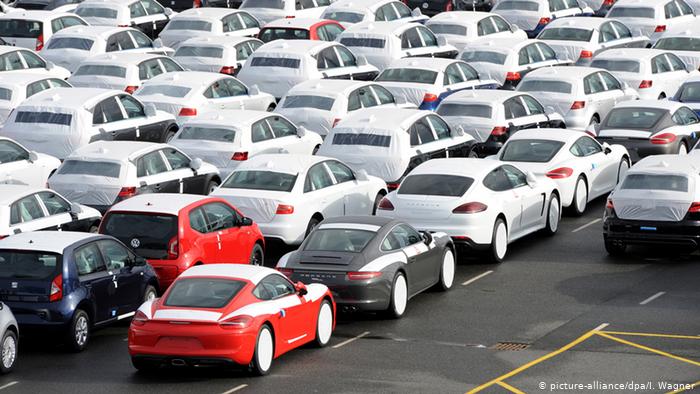

US President Donald Trump announced a 25% tariff on imported cars and light trucks Wednesday, set to take effect next week, marking a significant escalation in the global trade war he reignited upon returning to the White House. Auto industry experts warn the move will drive up prices and disrupt production.
“At the core of this decision is strengthening American manufacturing,” Trump said during an Oval Office event. “Any car not made in the United States will face a 25% tariff.”
Trump views tariffs as a means to generate revenue for his tax cuts and revitalize the declining US industrial sector. The tariff collections will begin on April 3, just a day after he plans to unveil reciprocal tariffs targeting nations responsible for the largest US trade deficits.
European Commission President Ursula von der Leyen called the move “bad for businesses, worse for consumers,” while Canadian Prime Minister Mark Carney condemned it as a “direct attack” on Canadian workers.
“We will defend our workers, our companies, and our country—together,” Carney declared in Ottawa.
The United Auto Workers (UAW), which has long opposed free trade agreements that it blames for American job losses, praised the decision.
“These tariffs are a major step forward for autoworkers and working-class communities,” UAW President Shawn Fain stated. “Now it’s on automakers—from the Big Three to Volkswagen—to bring back good union jobs to the US.”
Fain predicted that thousands of well-paying auto jobs could return within months through expanded shifts and reopened assembly lines.
The announcement rattled financial markets, causing automaker shares to drop in after-hours trading and US equity index futures to decline, signaling a weaker open for stocks on Thursday.
The legal basis for the tariffs stems from a 2019 national security investigation under Section 232 of the Trade Act of 1962, conducted during Trump’s first term. While the probe concluded that auto imports posed a national security threat, Trump initially refrained from imposing tariffs.
In a sign of the rapid rollout, Trump’s directive included temporary exemptions for auto parts as officials work through the logistics of enforcement.
For now, auto parts that comply with the US-Mexico-Canada Agreement (USMCA) will remain tariff-free, pending a Commerce Department and Customs and Border Protection (CBP) review. Other auto parts imports will be exempt until May 3.
Brad Setser, a former US Treasury official now with the Council on Foreign Relations, estimated that roughly 4 million vehicles from Canada and Mexico could face tariffs of 25% or more, likely driving up prices and slowing US car sales.
He also suggested the tariffs could violate USMCA and cast doubt on South Korea’s free trade agreement with the US.
