
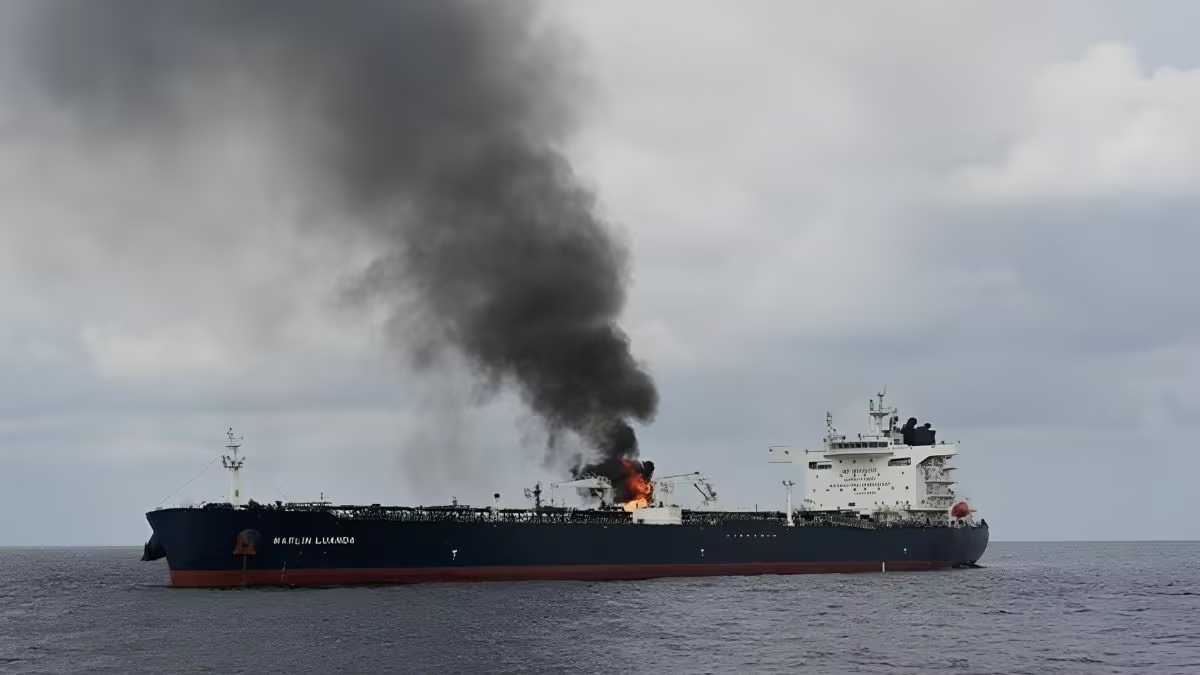

Three commercial vessels were struck by unknown projectiles while passing through the Strait of Hormuz, raising fresh concerns over maritime safety.
The United Kingdom Maritime Trade Operations Centre (UKMTO) reported the incidents after the vessels were hit on Tuesday. The agency said a crude oil tanker and two other ships were each struck by an unknown projectile.
The incidents come as the strategic waterway remains at the centre of the ongoing US-Iran conflict. Meanwhile, diplomatic efforts to revive a collapsed ceasefire are continuing.
Three Ships Hit in Strait of Hormuz
UKMTO initially described one of the vessels as an LNG tanker before later referring to it simply as a tanker. The agency did not identify the source of the projectiles or provide details about the extent of the damage.
However, the incidents add to concerns about commercial shipping in one of the world’s most important energy routes.
Around a fifth of global oil supplies traditionally pass through the Strait of Hormuz. The conflict has sharply disrupted normal maritime traffic through the waterway.
Shipping Risks Rise Amid Regional Conflict
The Strait of Hormuz has become increasingly difficult for commercial vessels to navigate since the war began.
Iran has restricted the movement of ships and has fired on vessels it says crossed through unauthorised routes. At the same time, the United States has imposed a counterblockade on Iranian ports.
As a result, shipping companies face greater security risks and uncertainty when operating through the region.
The latest attacks could further increase pressure on global energy markets if commercial traffic remains disrupted.
Iran Receives US Response to Latest Proposal
The maritime incidents occurred as Iran confirmed that it had received a US response to its latest proposal aimed at reviving a collapsed ceasefire.
Iranian Foreign Minister Abbas Araghchi conveyed the US response to the Iranian government after receiving it through Qatari mediators, according to Reuters.
The development came days after US President Donald Trump publicly rejected Iran’s proposal.
However, indirect diplomatic contacts have continued through mediators. Reports indicate that Washington and Tehran remain divided over how proposed steps should be sequenced.
Iran Offers Seven-Day Plan for Hormuz
Iran’s latest proposal included a plan to reopen the Strait of Hormuz within seven days if Washington met its conditions.
Tehran has called for the lifting of the US blockade on Iranian ports and changes to sanctions-related measures. In return, Iran would reopen the waterway and resume wider negotiations.
The proposal follows the collapse of an earlier agreement between the two sides.
Therefore, the latest US response could determine whether negotiations regain momentum or face another setback.
US Completes Withdrawal From Iraq
The diplomatic developments also coincided with the completion of the US military withdrawal from Iraq.
Washington officially completed the withdrawal of its remaining forces, ending a long military presence in the country. The move follows a 2024 agreement and shifts future US support toward training and intelligence cooperation.
Iran and allied groups have portrayed the withdrawal as a strategic development in their favour. However, concerns remain about Iraq’s ability to manage security threats following the departure of US forces.
Hormuz Remains Critical for Global Energy
The latest vessel strikes underline the wider economic importance of the Strait of Hormuz. Any prolonged disruption could affect shipping costs, energy supplies and international oil markets. Moreover, continued attacks could discourage commercial operators from using the waterway.
For now, the identities of those responsible for the latest projectile strikes remain unclear.
At the same time, diplomatic efforts are continuing as Iran reviews the US response to its proposal. The future of the Strait of Hormuz will remain closely linked to both maritime security and negotiations between Washington and Tehran.
For the latest updates, visit and follow The Truth International website (www.thetruthinternational.com) and subscribe to the YouTube Channel.

