

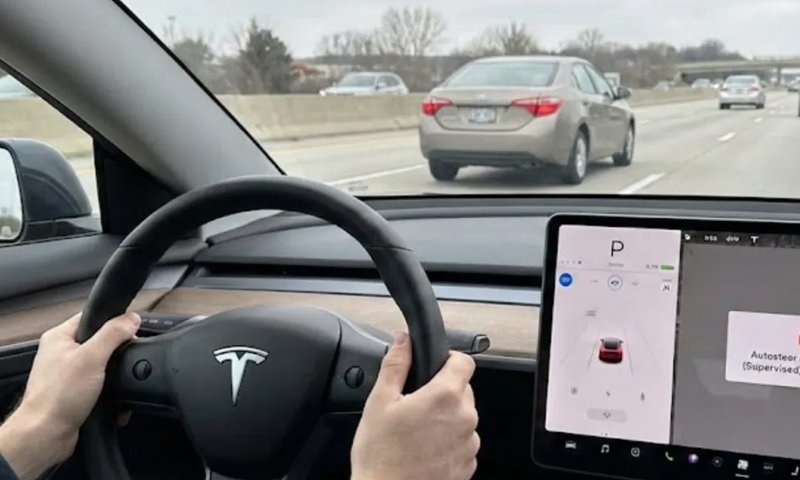

Tesla has officially removed Basic Autopilot as a standard feature on new Model 3 and Model Y vehicles in North America, effective immediately. The company now requires buyers to subscribe to the $99/month Full Self-Driving (Supervised) package to regain lane-keeping capabilities that were previously free.
For nearly seven years, Tesla included “Basic Autopilot” with every new vehicle. This entry-level suite of features included two key functions:
-
Traffic-Aware Cruise Control (TACC): Automatically adjusts the car’s speed to match traffic.
-
Autosteer: Keeps the vehicle centered within its lane.
Under Tesla’s new 2026 pricing structure, Autosteer has been removed. New vehicles will only ship with Traffic-Aware Cruise Control. Buyers wanting their cars to steer themselves on highways must now pay for the software that once came standard.
This change comes just weeks after Tesla announced it would stop selling Full Self-Driving (FSD) as a one-time purchase in February, pivoting fully to a subscription-only model. By eliminating the free tier of Autopilot, Tesla effectively creates a functionality gap, nudging customers toward the $99/month subscription. Elon Musk has hinted that FSD pricing could increase as the software improves, but the current strategy appears focused on increasing subscription take rates, which have reportedly been low.
Consumer Concerns and Safety Implications
Electrek calls the move “bad for consumers and confusing for the brand.” Autopilot’s lane-keeping, widely considered a safety feature rather than a luxury, reduces driver fatigue and prevents drift-related accidents. Making it paywalled has raised eyebrows because many economy cars now include equivalent features for free:
-
Toyota Corolla: Lane Tracing Assist included via Toyota Safety Sense
-
Honda Civic: Lane Keeping Assist System included via Honda Sensing
-
Tesla Model 3/Y: Lane-keeping requires a $1,200/year subscription
This pricing shift could hit Tesla’s core buyers hard. Model 3 and Model Y buyers are often aiming for monthly payments in the $500–$600 range, making the new $100/month subscription a significant extra cost for a feature standard on cars costing half as much.
Of course, the Full Self-Driving package offers more than just lane-keeping, including Navigate on Autopilot, automatic lane changes, and traffic light recognition. Still, it’s clear Tesla is removing standard functionality to push subscription adoption or encourage buyers to pre-purchase the $8,000 package before it becomes subscription-only.
Financial Context Behind the Move
Industry analysts suggest this may be a desperation move amid Tesla’s financial challenges in 2026. Tesla has seen declining sales over the past two years and recently lost access to significant U.S. subsidies that had bolstered profits. As competition heats up in the EV market and profit margins tighten, the company appears to be monetizing previously free software to offset revenue pressures.
The change also aligns with Tesla’s broader pivot toward recurring subscription revenue, a strategy that ensures more predictable income but risks alienating buyers who view lane-keeping as a basic safety necessity.
Electrek’s Take
Critics argue the move undermines Tesla’s safety messaging. Tesla has consistently claimed that Autopilot and FSD improve safety for drivers. Making lane-centering a subscription service appears contradictory to that stance. Consumers may now have to weigh safety against cost—a debate that doesn’t arise with competitors like Toyota or Honda.
The company’s new pricing structure also signals a shift in strategy, from hardware sales and one-time software purchases toward recurring software revenue. While this might boost Tesla’s bottom line, it raises questions about the accessibility and ethics of charging for features many regulators consider standard for driver safety.
Bottom Line
Tesla’s decision to remove free Autopilot on the Model 3 and Model Y marks a major shift in the EV market, turning a formerly standard safety feature into a subscription service. While the move may help Tesla financially, it has sparked criticism over safety, affordability, and brand consistency.
For prospective Tesla buyers, this change is more than just a pricing adjustment—it’s a wake-up call that features once standard are no longer guaranteed without extra cost.
