

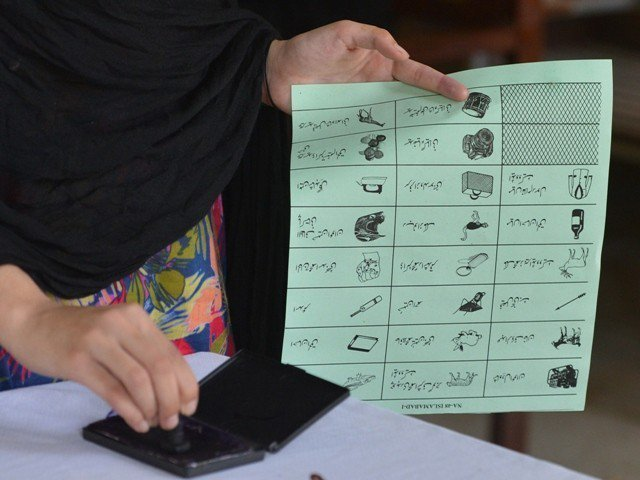

Violence erupted during the re-polling process at six polling stations in the NA-43 Tank-cum-Dera Ismail Khan constituency, casting a shadow over the electoral proceedings and raising concerns about the safety of voters and election staff.
Gunfire broke out outside the Kot Azam polling station, prompting a swift response from the authorities. Initial reports suggested that terrorists attacked both police personnel and civilians in an apparent attempt to disrupt the democratic process.
In the exchange of fire between terrorists and the police, one attacker was reportedly killed in retaliatory action. However, the situation remained tense, with firing continuing outside the polling station, heightening fears of further violence and instability.
Polling later resumed at the Kot Azam polling station after a brief interruption.
Earlier in the day, re-polling in six stations of Dera Ismail Khan’s NA-43 constituency began, but voters were unable to cast their votes in five out of the six polling stations where the exercise was ordered by the election commission.
Even after the scheduled 8 am start time passed, re-polling could not commence at Attal Sharif (female and male), Kot Azam, Rorri, and Looni (female and male) polling stations, as the police and election commission staff could not reach these destinations.
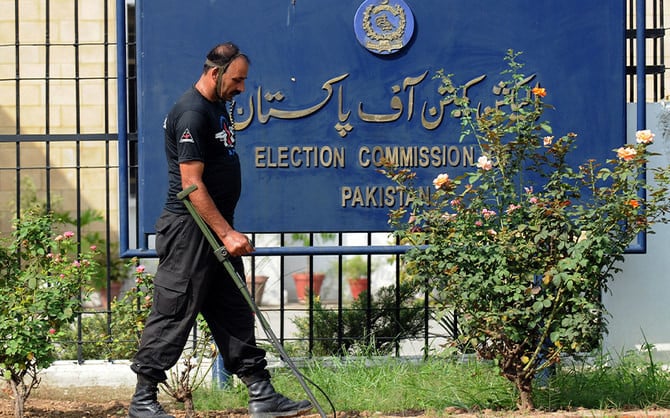
Maulana Fazlur Rahman’s son and former federal minister Maulana Asad Mahmood had filed an application with the Election Commission of Pakistan, stating that polling was not held in these constituencies. The ECP then ordered polling in these areas on February 19, originally scheduled for February 17.
In the initial February 8 elections, Engineer Dawar Khan Kundi, an independent candidate backed by the PTI, defeated Maulana Asad Mahmood in a tough competition, securing 63,556 votes. JUI-F’s Maulana Asad obtained 62,730 votes, with an overall voter turnout of 43.32%.
