

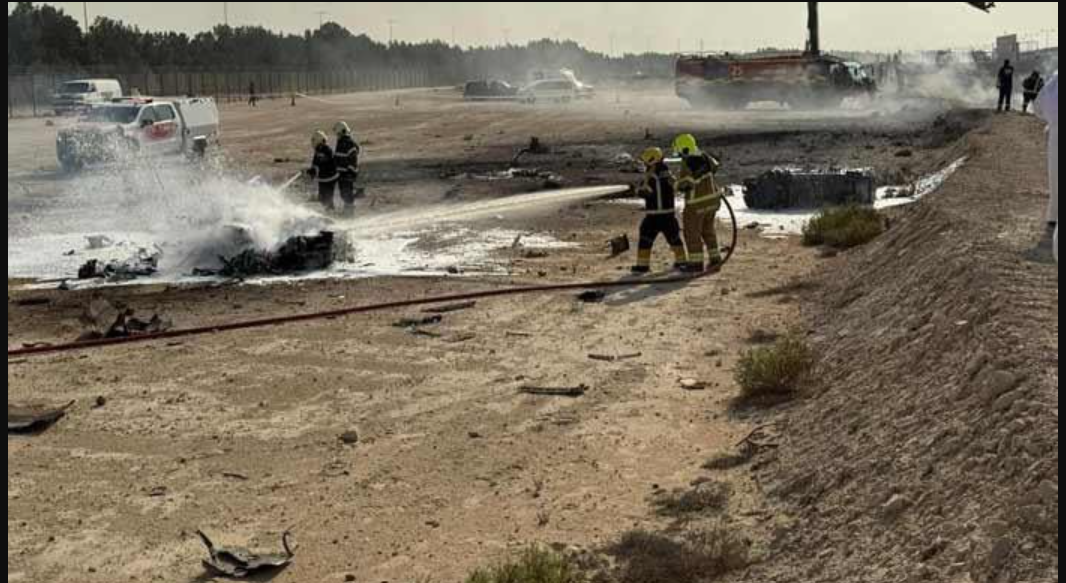

India’s push to promote the Tejas fighter jet on the global stage has suffered a major setback after a crash at the Dubai Airshow. The incident took place during one of the world’s most watched aviation events and cast a shadow over India’s long-awaited efforts to secure foreign buyers for its light combat aircraft.
Although the cause of the crash remains unclear, the timing proved damaging. The event drew global defence officials, military delegations and potential customers, and the failure unfolded before an international audience. The crash also came only months after India and Pakistan faced a tense aerial confrontation, adding further attention to the aircraft’s performance.
Impact on India’s Export Push
India has spent decades developing the Tejas programme. The jet was designed to replace ageing Soviet-era fighters and strengthen local defence manufacturing. Yet the crash has raised doubts among foreign buyers who had shown interest in the aircraft.
Experts say the visual impact of such an incident cannot be ignored. A crash at a major airshow tends to weaken confidence and slow export negotiations. However, analysts note that long-term defence sales often depend on broader political and strategic considerations, which may help India regain momentum over time.
A Programme Shaped by Delays and Challenges
The Tejas project began in the 1980s and has faced repeated delays due to shifting requirements, engine challenges and development bottlenecks. The latest Mk-1A variant has 180 units on order domestically, although deliveries have been affected by supply chain issues.
Despite the progress, India continues to operate a shrinking number of fighter squadrons. Many older jets are approaching retirement, and the Tejas was expected to replace them. Yet production concerns and slower-than-planned output have increased pressure on the military.
Consequently, India may consider additional off-the-shelf purchases to fill capability gaps. These could include more Rafale fighters as well as potential options from the United States and Russia. Even so, India still plans to increase the number of Tejas aircraft in active service.
Future Plans and Strategic Importance
India has long been one of the world’s biggest defence importers, but it aims to build a strong domestic aviation base. The Tejas programme plays a central role in that strategy. It has helped expand local engineering capacity and contributed to the development of future combat aircraft projects.
Although the Dubai crash will likely slow export discussions, the broader value of the programme lies in the technological foundation it provides. The aircraft is widely viewed as a stepping stone toward more advanced platforms that India hopes to design and produce in the coming years.
A Setback, Not the End
While the crash has dented export prospects, analysts expect India to continue refining and expanding the programme. The long-term success of the Tejas may depend less on foreign orders and more on how effectively it supports India’s goal of developing a modern defence industry.
Even with the setback, India is expected to keep promoting the aircraft while accelerating domestic production to stabilise its shrinking fleet. The coming years will reveal whether the programme can recover its international credibility and secure a lasting role in India’s aviation future.
