
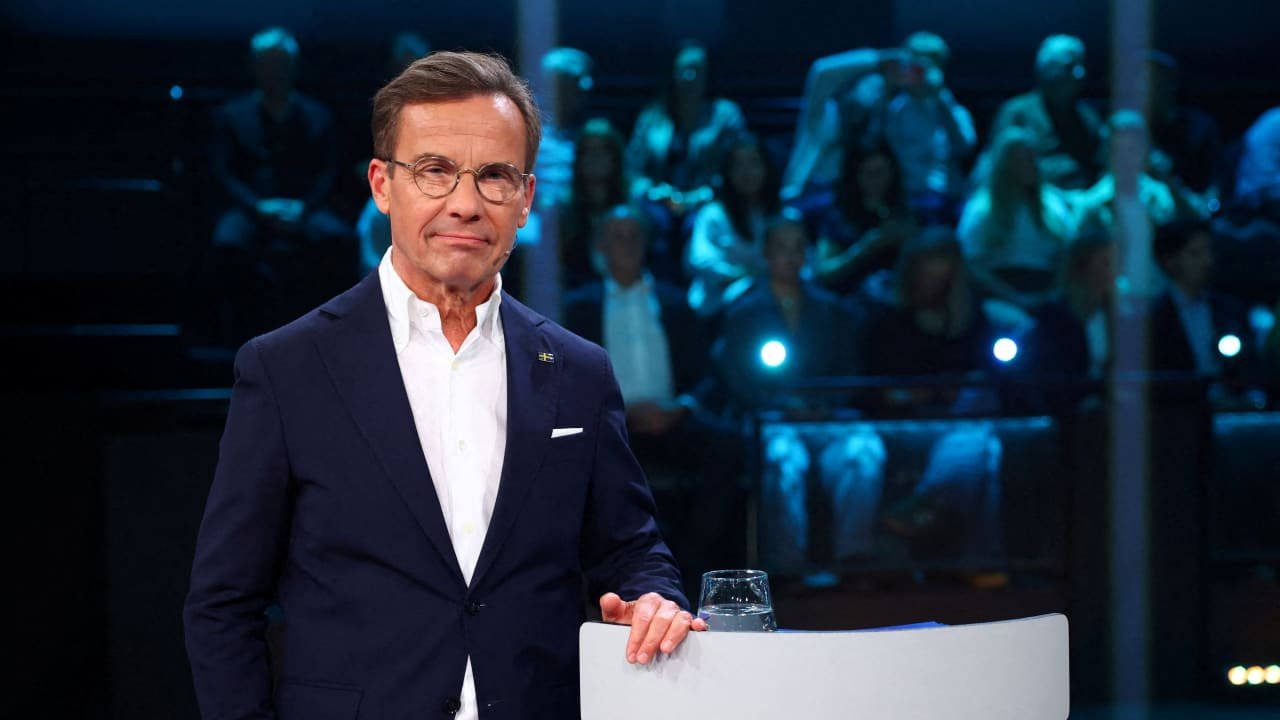

STOCKHOLM: Swedish Prime Minister Ulf Kristersson announced on Thursday that he would resign after the final vote count showed centre-left opposition parties securing a narrow parliamentary majority in Sunday’s election.
Sweden’s election authority said centre-left parties won 176 seats in the 349-member parliament, while Kristersson’s governing right-wing bloc secured 173.
Following completion of the count, Kristersson formally asked to be relieved of his duties as prime minister, clearing the way for parliamentary negotiations over Sweden’s next government.
“Now it is the speaker who will lead the next stage of the way to a new government,” Kristersson said in a letter posted on X, adding that he wanted the process to begin immediately.
Centre-Left Secures Narrow Parliamentary Majority
The three-seat margin gives the centre-left parties a parliamentary majority following four years of government under Kristersson.
However, the election result remains subject to formal certification in the coming days.
Under Sweden’s parliamentary system, the speaker will oversee consultations with political parties and guide the process of identifying a candidate capable of securing sufficient parliamentary support to form a government.
Consequently, the completion of vote counting marks the beginning of a potentially complex government-formation process rather than an immediate transfer of power.
Government Formation Talks Set to Begin
Social Democratic Party leader Magdalena Andersson is positioned to play a central role in the negotiations after her centre-left camp secured 176 seats.
Andersson previously served as Sweden’s prime minister before Kristersson took office following the 2022 election.
Nevertheless, the narrow parliamentary arithmetic means negotiations among centre-left parties will determine the shape and parliamentary support of any prospective government.
Kristersson’s resignation allows the speaker to formally begin that process as Sweden prepares for a change in political leadership following Sunday’s closely contested election.

