

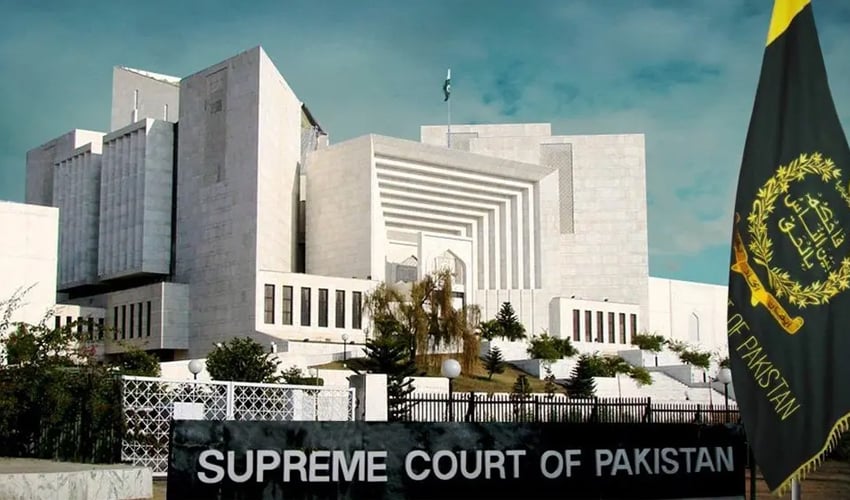

The Supreme Court of Pakistan has withdrawn the contempt notice issued against Additional Registrar (Judicial) Nazar Abbas and referred the matter to Chief Justice of Pakistan (CJP) Yahya Afridi, recommending the formation of a full court to address the authority of committees responsible for case allocation before benches.
In its decision, a two-member bench comprising Justice Mansoor Ali Shah and Justice Aqeel Ahmed Abbasi clarified that the Additional Registrar had not intentionally violated the court’s directive regarding case scheduling.
“We find that he [Additional Registrar (Judicial)] did not deliberately avoid the fixation of the cases before the bench as directed in the court order,” stated the bench in a 20-page judgment. The court, therefore, discharged the show-cause notice that had been issued for contempt proceedings against Abbas.
The judgment highlights the procedural challenges associated with determining the powers of committees that manage the scheduling of cases. The bench emphasized the need for clarity and uniformity in this matter, suggesting that a full court is best suited to address and resolve these complexities.
The referral of this case to the CJP underscores the importance of ensuring consistency in procedural practices across the judiciary. A full court would provide an opportunity to establish definitive guidelines on the jurisdiction and authority of such committees, which play a crucial role in managing judicial workloads.
By discharging the contempt notice and recommending further deliberation, the court aims to uphold procedural fairness while promoting institutional transparency and accountability. This decision sets the stage for broader discussions on the division of responsibilities within Pakistan’s judicial system.
