

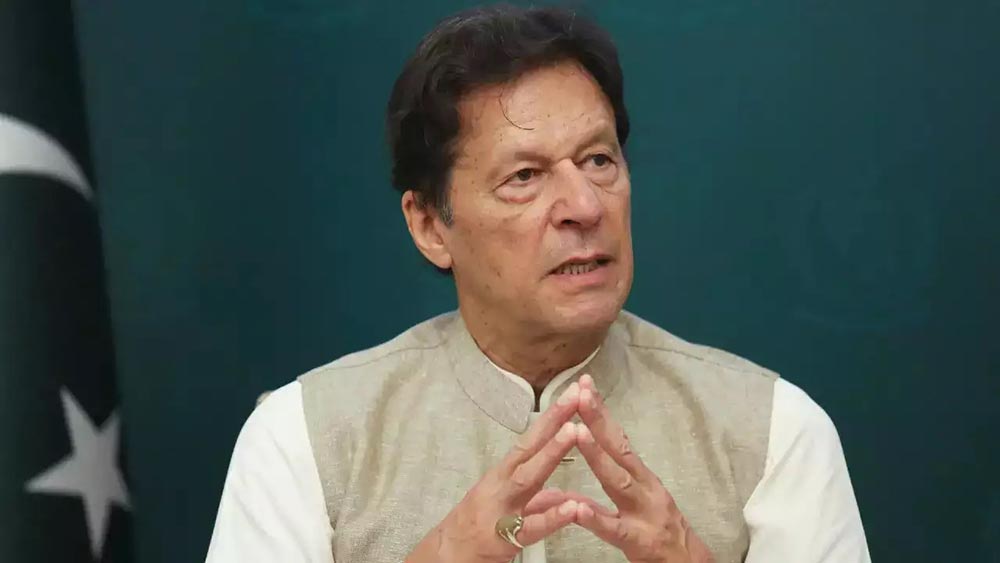

The Supreme Court is set to resume hearings on August 12 for a series of appeals filed by former prime minister and Pakistan Tehreek-e-Insaf (PTI) founder Imran Khan. These appeals challenge the Lahore High Court’s (LHC) decision to deny him post-arrest bail in several cases linked to the May 9, 2023, violence.
A three-member bench, headed by Chief Justice Yahya Afridi and including Justice Muhammad Shafi Siddiqui and Justice Miangul Hassan Aurangzeb, will take up the matter. The hearing was previously adjourned due to the unavailability of Mr Khan’s senior counsel, Salman Safdar.
Background of the Bail Denial
In his appeals, Imran Khan contests the LHC’s June 24 decision, which denied him bail in eight cases tied to the May 9 unrest. The allegations relate to incidents including attacks on Askari Tower at Liberty Chowk, Pakistan Muslim League-Nawaz offices in Model Town, Shadman police station, the burning of police vehicles near the Lahore corps commander’s residence, and violence at Sherpao Bridge.
Before approaching the LHC, Mr Khan had been refused bail by an anti-terrorism court on November 27, 2024. He argues that at the time of the alleged events, he was in the custody of the National Accountability Bureau (NAB), making his direct involvement “impossible.” His appeal highlights that the Supreme Court has previously recognized that an abettor not present at the crime scene is treated differently from a principal offender.
Claims of Political Victimisation
The appeals assert that Mr Khan has been the target of an “unprecedented campaign of political victimisation” since his removal from office in 2022. They describe the cases as politically motivated, based on vague and unsubstantiated allegations of abetment without convincing evidence linking him to the incidents.
It is further claimed that following his “unlawful” arrest from the Islamabad High Court premises on May 9, 2023, multiple FIRs were lodged in Lahore and Islamabad without specific details or allegations. The prosecution later added supplementary statements from police officials, which the defence alleges were aimed at falsely implicating him.
Questioning Prosecution Conduct
The appeals question why, if the authorities were aware of the alleged conspiracy by May 7, no preventive measures were taken to avoid the violence. This, they argue, undermines the prosecution’s claims and indicates a politically motivated agenda.
Furthermore, it is pointed out that despite bail being denied by the anti-terrorism court in November 2024, the police made no attempt to arrest Mr Khan for more than five months, even though his location at Adiala jail was well known. This delay, the defence contends, shows that the arrest was unnecessary for the merits of the case and was instead used as a means of pressure.
Allegations of Fabricated Evidence
The appeals state that the LHC’s decision relied on “engineered and fabricated evidence,” including delayed and questionable police statements. The defence notes that the prosecution’s narrative has shifted multiple times, with each new version introduced after earlier claims failed to hold up in court.
Such contradictions, they argue, create reasonable doubt and fall under the provisions of Section 497(2) of the Criminal Procedure Code, which supports the granting of bail in cases warranting further inquiry.
The Supreme Court is now being urged to grant post-arrest bail, with the defence maintaining that the cases against Mr Khan are part of a calculated effort to prolong his imprisonment, tarnish his reputation, and prevent his political participation.
