

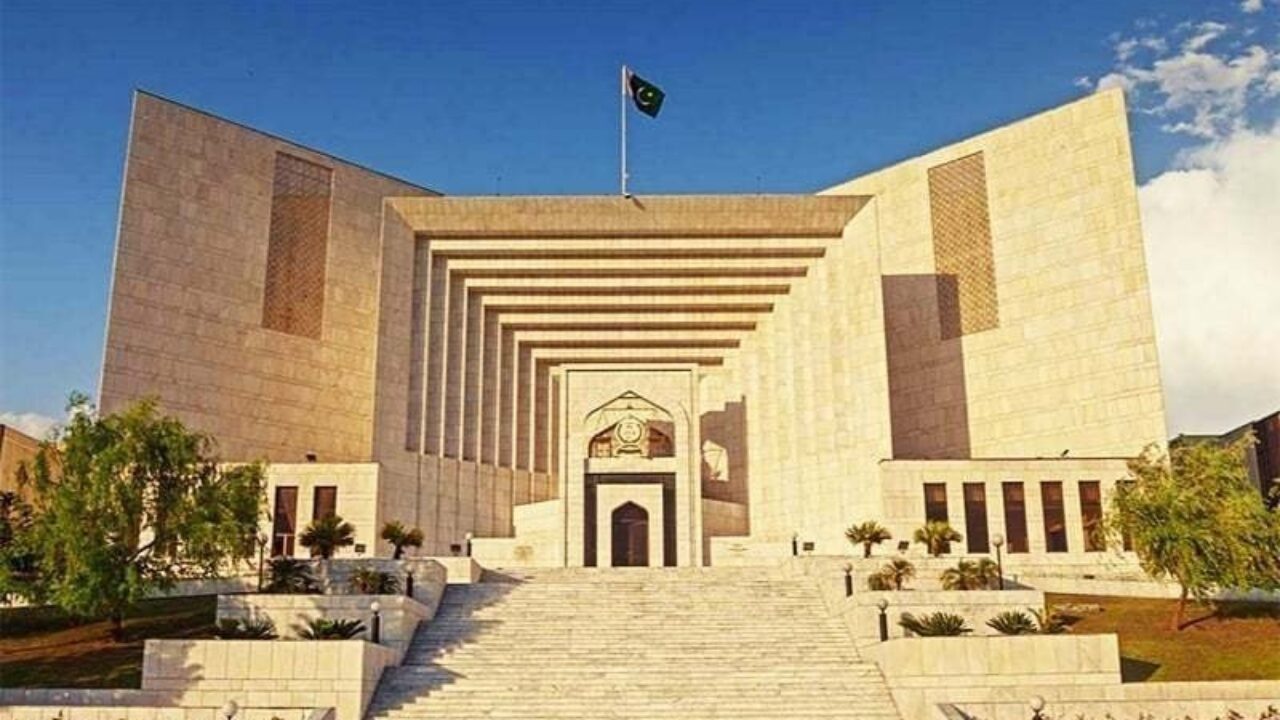

ISLAMABAD: A five-member bench of the Supreme Court has expressed a serious concern over the removal of names from the Exit Control List (ECL). The bench has raised questions about the procedure of removing names from the list.
The SC bench is headed by Chief Justice of Pakistan (CJP) Umar Ata Bandial, and it consisted of Justice Ijazul Ahsan, Justice Munib Akhtar, Justice Sayyed Mazahar Ali Akbar Naqvi and Justice Mohammad Ali Mazhar.
The CJP took suo moto notice on May 18 amidst allegations levelled by the PTI that soon after coming to power, the present coalition government started influencing different cases and transferring investigators or officers supervising cases, especially related to corruption allegations.
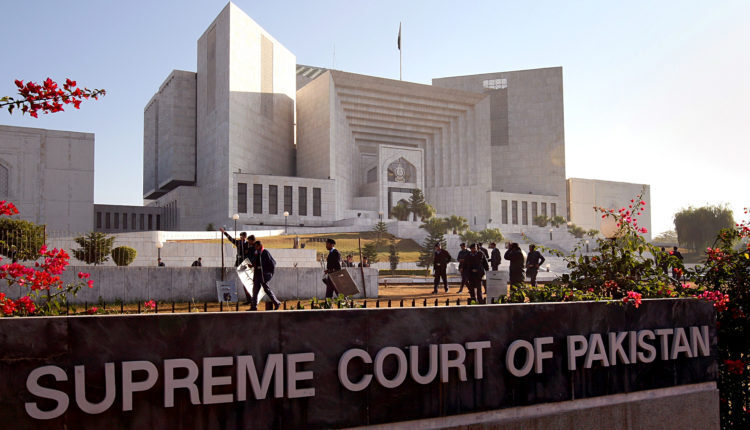
During the last hearing, the court had restrained the relevant authorities from transfers, postings or removals of those involved in the investigation or prosecution of high-profile cases against top government functionaries pending in the courts of special judge (central) and the accountability courts.
It also issued notices to the interior secretary, the Federal Investigation Agency (FIA) director general, the National Accountability Bureau (NAB) chairman/regional directors, prosecutors general and advocates general in the provinces and the Islamabad Capital Territory (ICT) and the head of prosecution branch in the FIA and NAB.
In today’s hearing, CJP Justice Bandial observed that changes had been made to the ECL Rules on April 22, 2022 and the names of those involved in corruption and tax theft of Rs10 million were removed from it.
Justice Ahsan questioned how the change could be applied retroactively, while Justice Akhtar asked whether the Cabinet Division notification about the change in rules mentioned that they could be applied to names added in the past.
“Who benefitted from the rules?” asked Justice Naqvi.
Justice Akhtar also observed that the approval of the change in rules by a cabinet member who was facing cases would be a conflict of interest. He asked for details of which cabinet members had benefitted to be submitted to the court.
He went on to observe that a member who was facing charges could have “disassociated” himself from the changes.
The CJP noted that the National Accountability Bureau (NAB) had said it was not consulted prior to the removal of 174 names from the ECL.
The chief justice asked Attorney General Ashtar Ausaf to read section 2 of the ECL Rules, 2010, which is related to grounds to prohibit persons from proceeding from Pakistan to a destination outside the country.
The attorney general said he would present the minutes of the cabinet meeting to approve the changes. Justice Ahsan asked whether names would automatically be removed from the ECL after 120 days, to which the attorney general replied in the affirmative.
