
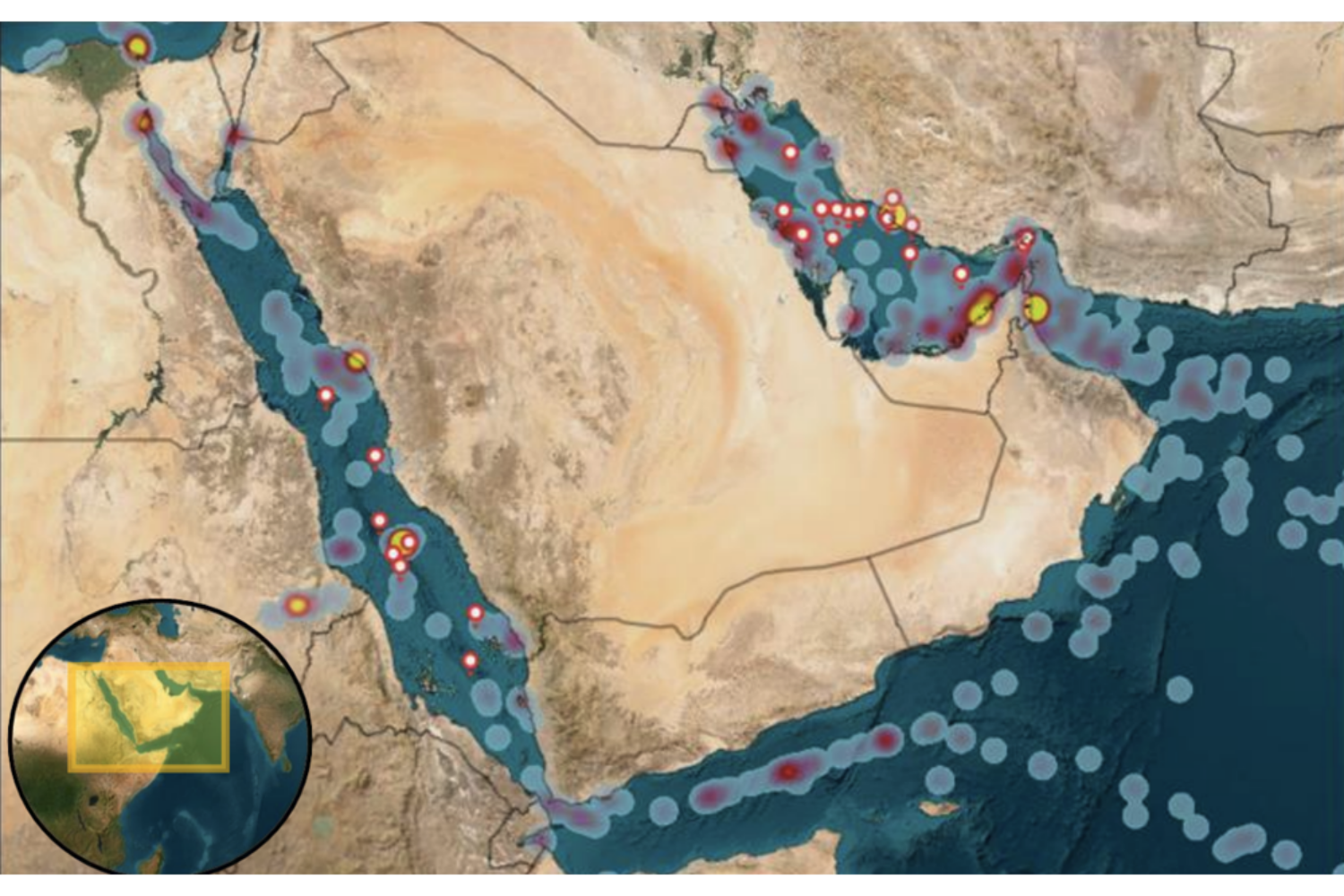

Powerful regional-level jamming has disrupted navigation systems in the Strait of Hormuz once again, with mariners reporting significant AIS spoofing and location anomalies over the past several hours. Additionally, vessel tracking platforms showed erratic movements as ships appeared to vanish and reappear on digital maps.
Furthermore, AIS data from MarineTraffic indicated that multiple vessels experienced sudden positional jumps, raising concerns among maritime analysts about possible electronic interference in the region. Moreover, several ship operators reported temporary loss of signal consistency, complicating real-time tracking and route monitoring for commercial traffic.
Meanwhile, the disruptions coincided with heightened regional tensions, prompting shipping firms to reassess navigation protocols and rely more heavily on manual verification systems. Consequently, authorities and industry stakeholders continue to monitor the Strait closely, as uncertainty around electronic navigation reliability persists.
In addition, experts suggest that repeated interference events could indicate sophisticated jamming capabilities targeting maritime communication systems. As a result, shipping companies may face increased operational risks, especially in congested transit routes like the Strait of Hormuz.
Consequently, maritime security observers emphasize the importance of redundancy in navigation systems and improved coordination among regional authorities. However, they also caution that attribution of electronic interference remains complex without confirmed technical evidence. Therefore, investigations are expected to continue as shipping lanes remain under close surveillance and global trade flows depend on stable passage through the region.
Overall, the latest disruption underscores growing concerns about electronic warfare risks in critical maritime chokepoints. Furthermore, stakeholders stress that maintaining secure navigation is essential for global energy stability. As developments unfold, shipping routes in the Strait of Hormuz remain highly sensitive to both geopolitical tensions and technological interference across international supply chains and energy markets worldwide continuously.
https://x.com/Osinttechnical/status/2051545569764733148?s=20

