


In 2024-25, Pakistan’s state-owned enterprises (SOEs) reported a drastic surge in financial losses, reaching Rs122.9 billion. This represents a 302 percent increase compared to the previous year. The Ministry of Finance (MoF) highlighted that these losses occurred despite government claims of economic stabilisation and ongoing SOE reforms.
Overall revenues of SOEs declined to approximately Rs12.4 trillion, mainly due to lower profitability in the oil sector. Profit-making SOEs also experienced a 13 percent drop in aggregate profits, falling to Rs709.9 billion from Rs820.7 billion in 2023-24. While some loss-making SOEs showed minor improvement, their net impact was overshadowed by significant overall deficits.
Power and Transport Sectors Remain Key Loss Contributors
The Ministry of Finance identified the power and transport sectors as the largest contributors to SOE losses. Power distribution companies and the National Highway Authority faced structural challenges, high depreciation, financing costs, and unprofitable public service obligations. These inefficiencies continue to strain the government’s fiscal resources.
To address performance disparities, SOEs were categorised into green, amber, and red groups based on financial sustainability. This classification aims to prioritise reforms and improve decision-making across chronically loss-making entities.
Government Support and Fiscal Flow Analysis
During 2024-25, total government support to SOEs rose to Rs2.078 trillion. This increase was largely due to equity injections for clearing circular debt, while subsidies saw a slight decline. Simultaneously, SOE contributions to government revenue increased to Rs2.119 trillion, driven by higher dividends, tax receipts, and interest income on government lending.
SOE debt also rose, reaching Rs9.57 trillion, comprising cash development loans, foreign re-lent loans, bank borrowings, and accrued interest. Unfunded pension liabilities, estimated at Rs2 trillion, remain a critical legacy risk. Additional off-balance-sheet contingencies and guarantees total Rs2.16 trillion.
Commitments to Transparency and IFRS-Based Reporting
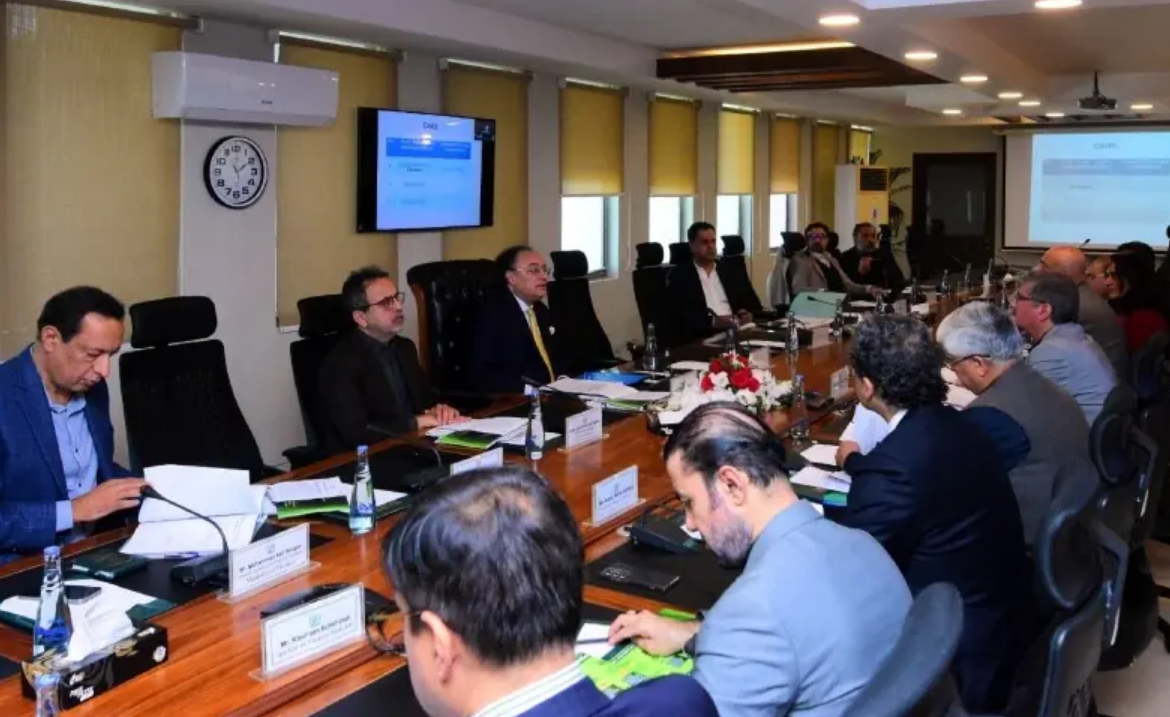
The Cabinet Committee on SOEs reaffirmed its commitment to improving transparency, operational efficiency, and financial sustainability. The committee emphasised the importance of enforcing audit completion, realistic business plans, sector-specific engagement, and strict budget constraints for underperforming entities.
The Ministry of Finance has initiated IFRS-aligned reporting and established a digital database to consolidate financial information. These reforms are intended to enable evidence-based decision-making and better governance across all state-owned enterprises.
Way Forward for SOE Reforms
Finance officials stressed that the consolidated report provides a credible foundation for sustained reforms. The report highlights progress in oversight, disclosure, risk identification, and fiscal flow management. Moving forward, the government plans to strengthen accountability and focus on operational and financial efficiency.
The meeting concluded that continued enforcement of the SOEs Act 2023, along with the timely transition to IFRS reporting by February 2026, is essential. Loss reduction strategies, realistic planning, and structural reforms remain critical for stabilising Pakistan’s SOE sector.
