
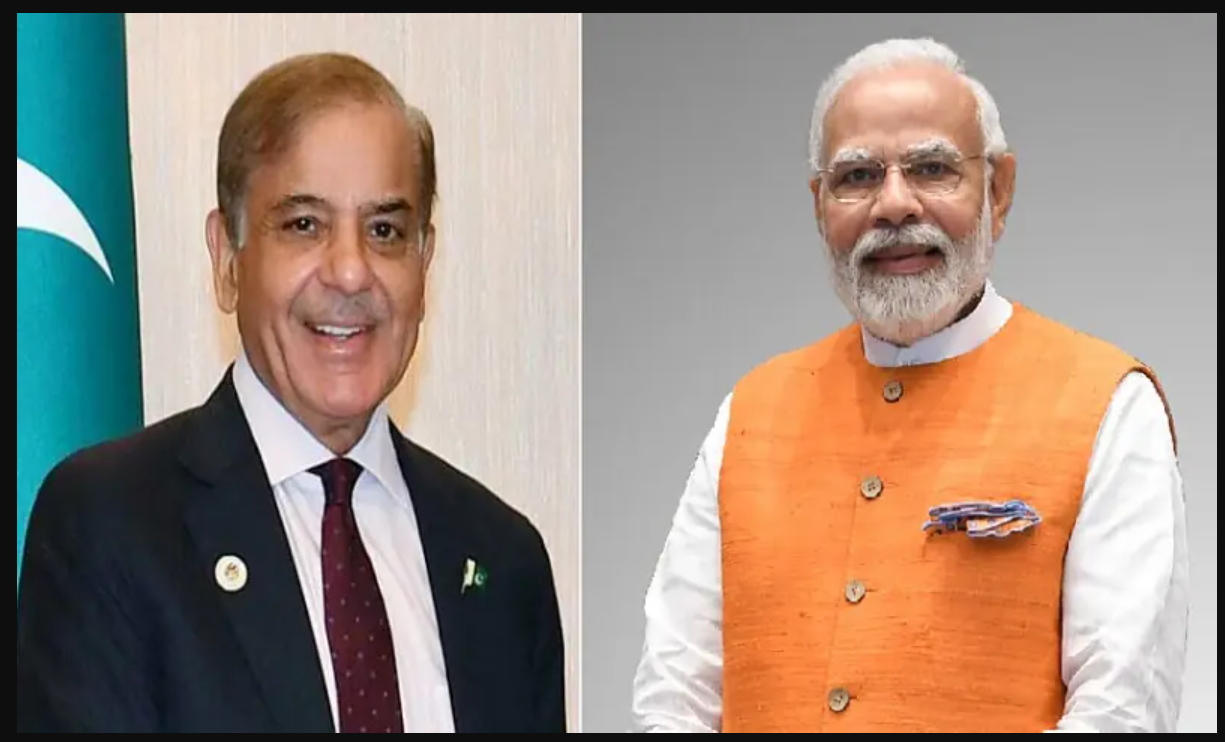

Prime Minister Shehbaz Sharif and Indian Prime Minister Narendra Modi are set to share the stage at the upcoming SCO Summit.
The two leaders will attend the two-day Shanghai Cooperation Organisation summit in Bishkek, Kyrgyzstan. The summit is scheduled to begin on August 31 and will bring together leaders from across the region.
Russian President Vladimir Putin and Chinese President Xi Jinping are also expected to attend the high-level gathering. Iranian President Masoud Pezeshkian will likewise participate in the summit.
The meeting comes as several members of the regional bloc face major geopolitical and economic challenges. Therefore, the gathering is expected to draw attention to the positions of major regional powers.
Shehbaz Sharif and Modi to Attend Plenary Session
Shehbaz Sharif and Narendra Modi are due to participate in a plenary session during the Bishkek summit.
The session will be chaired by Kyrgyz President Sadyr Japarov. Putin, Xi, Pezeshkian, Modi and Shehbaz will join other leaders at the session. Around a dozen heads of state are expected to travel to the Kyrgyz capital for the summit.
The gathering will also mark the 25th anniversary of the Shanghai Cooperation Organisation. The organisation brings together Russia, China, India, Pakistan, Iran and four Central Asian countries. Moscow-allied Belarus is also part of the group.
Meanwhile, the bloc has expanded its wider network through dialogue partners and observer countries. It now has 15 dialogue partners, including Türkiye, Saudi Arabia and Qatar.
Afghanistan and Mongolia hold observer status within the organisation.
SCO Summit Comes Amid Major Global Tensions
The Bishkek meeting will take place against a complicated international backdrop. Several SCO members are dealing with military conflicts, economic pressure or growing trade tensions.
The Ukraine war remains a major issue affecting Russia and its international relations. Meanwhile, tensions between Washington and Tehran have also created wider challenges for Iran.
The summit will also take place amid trade disputes involving the United States, China and India. Consequently, the gathering offers an important platform for countries facing different political and economic pressures.
Putin and Xi have previously used SCO summits to promote their vision of a multipolar international order. They have also used the gatherings to criticise what they describe as Western pressure.
However, the organisation maintains that it does not operate as an alliance against other states. The SCO’s founding declaration says the group is “not an alliance directed against other states”.
Despite that position, political differences involving Western countries have featured prominently in previous summit discussions.
Russia, China and Iran Relations in Focus
Putin is expected to hold separate bilateral meetings with several leaders during his visit.
Kremlin spokesman Yuri Ushakov said Putin was expected to meet Iranian President Pezeshkian and Chinese President Xi. Russia and Iran have significantly expanded their military and economic ties during the Ukraine war.
Both countries also remain among the world’s most heavily sanctioned states. The United States has warned Moscow and Beijing against providing military support to Iran.
Putin’s planned meeting with Pezeshkian comes amid continuing international attention on Iran’s economic and strategic position. The Russian president is also expected to discuss issues with other leaders attending the summit.
Iran Faces Growing Economic Pressure
Iran’s participation will carry particular significance because the country joined the SCO in 2023. Tehran has faced sanctions since the Islamic Revolution in 1979.
In recent years, Iran has sought stronger economic and political ties with countries outside the Western alliance system.
The country has also strengthened relations with Russia and China. This month, the United States imposed secondary sanctions targeting Iran’s trading partners.
The measures covered sectors including gold, technology, digital assets, aviation and maritime transport. Washington has also threatened sanctions against countries and entities supporting Iran.
China, which remains a major importer of Iranian oil, responded by saying it will “firmly defend” its interests. Iran has repeatedly said it will not surrender to economic pressure.
However, Iranian President Pezeshkian has acknowledged that the country faces “economic difficulties”. The SCO summit will therefore provide Tehran with an opportunity to engage with major regional partners.
Can the SCO Help Iran Overcome Sanctions?
Iranian officials have increasingly highlighted the value of regional alliances in dealing with Western sanctions.
International relations expert Mohammad Hassan Najmi said Tehran “believes its membership and active participation in these alliances can enable it to circumvent US and European sanctions”.
However, he also questioned how much practical assistance the organisation can provide during serious crises.
He said that “in times of crisis, these alliances have rarely allowed Iran to resolve its difficulties”. he contrasting views underline one of the SCO’s central challenges.
The organisation brings together countries with significant economic and political influence. Yet its members also have different interests and, at times, competing priorities.
SCO Members Face Trade and Strategic Disagreements
The Bishkek summit comes as several SCO members confront trade disputes with the United States. Washington has imposed tariffs on Chinese and Indian goods.
At the same time, conflicts in Ukraine and Iran have created further geopolitical divisions. These developments could make the summit particularly important for countries seeking stronger regional cooperation.
However, the diverse interests of SCO members can make common positions difficult to achieve. Russia and China, for example, compete for influence in Central Asia.
The region remains strategically important because of its resources and its position between Europe and Asia. Central Asia also plays a significant role in the movement of goods between the two regions.
Meanwhile, China’s relationship with India has faced periods of tension. These differences demonstrate the complex nature of the organisation.
A Diverse Regional Bloc
The SCO describes itself as a platform for cooperation rather than an alliance directed against other countries. Its members represent a substantial share of the global population and economy.
The bloc claims to represent around 40 percent of the world’s population and 25 percent of global GDP. However, its members have different political systems, economic interests and foreign policy priorities.
Therefore, maintaining unity can remain challenging despite the organisation’s growing membership. The presence of Russia, China, India, Pakistan and Iran gives the summit considerable geopolitical significance.
At the same time, disagreements among members can limit the extent of collective action.
What the Bishkek Summit Could Highlight
The upcoming SCO Summit will bring several major regional powers together at a time of heightened international uncertainty.
Shehbaz Sharif and Narendra Modi will participate alongside Putin, Xi and Pezeshkian.
Their presence will place the summit’s plenary session under particular attention. The gathering will also highlight the SCO’s expanding role in regional diplomacy.
Meanwhile, ongoing wars, sanctions and trade disputes will form the broader backdrop to discussions. For Pakistan, India’s participation alongside Shehbaz Sharif adds another important dimension to the gathering.
Both leaders are expected to share the stage during the two-day summit. However, the wider significance of the meeting will extend beyond their presence.
The summit will bring together countries seeking greater regional cooperation while navigating competing interests. As a result, the Bishkek gathering will offer a clear picture of the challenges facing the SCO.
It will also show how its members approach a period marked by conflict, sanctions, trade tensions and shifting global alliances.

