

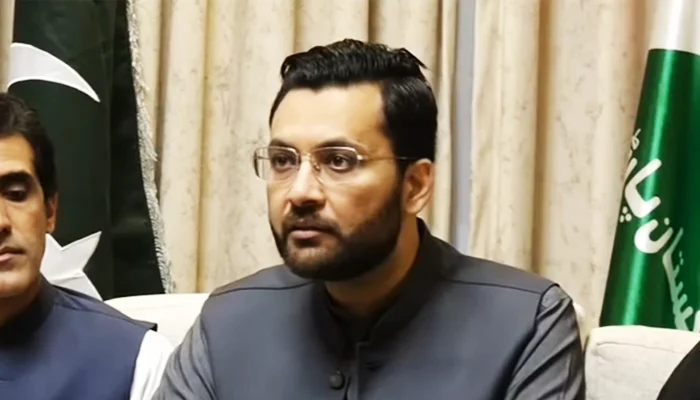

LAHORE: On Monday, Farrukh Habib, a senior leader of the Pakistan Tehreek-e-Insaf (PTI) made the decision to separate from Imran Khan and joined the Istehkam-e-Pakistan Party (IPP), expressing his discontent with the former prime minister’s “violent” policies.
Estranged PTI leaders Jahangir Tareen and Aleem Khan established the IPP on June 8 after leaving the ex-PM’s party due to significant disagreements. With time, several loyalists of Imran Khan have aligned with them.
During a press conference held at the IPP’s headquarters in Lahore, alongside the party’s top leadership, Habib announced this development. He condemned the events of May 9, considering them a dark day.
As one of the founding members of PTI’s student organization, Habib explained that he has not been at home for the past five months and also lost contact with his family in recent weeks. He questioned the purpose of his involvement in politics since May 9, as they lived away from homes and had not encountered the law for the past five months.
This setback for PTI occurred shortly after two prominent leaders, Sadaqat Ali Abbasi and Usman Dar, left the party in response to the May 9 events.
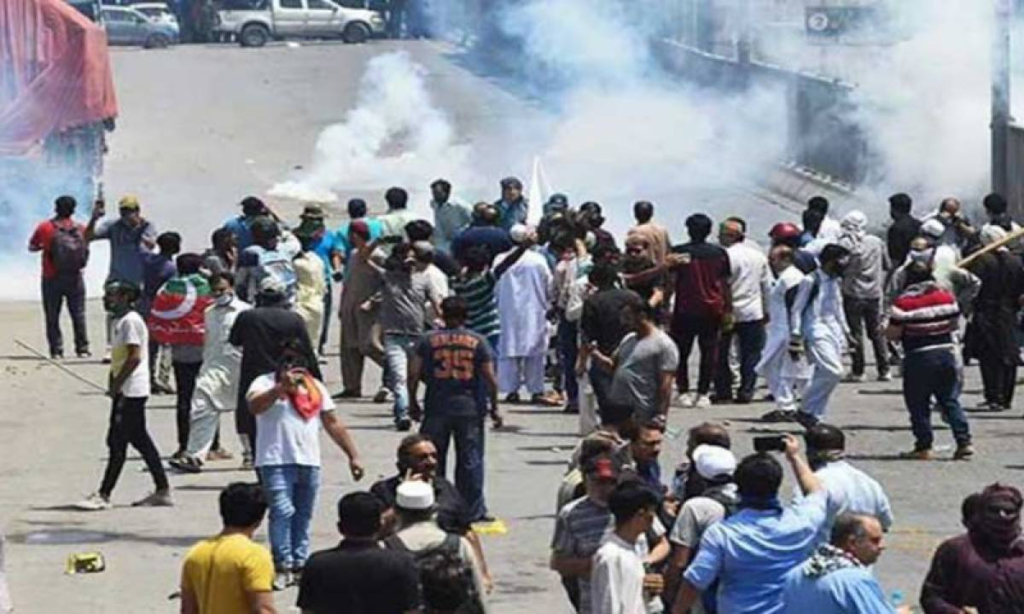
Police arrested Imran Khan, the PTI Chairman, on May 9 in a corruption case, which led the party to organize widespread protests across the nation, targeting state installations. Subsequently, the authorities launched a crackdown against those involved in the events, resulting in the arrest of numerous party members and leaders, including Vice Chairman Shah Mehmood Qureshi.
Pushing country towards violence
Habib criticized Imran’s narrative, stating that PTI’s “conflict” with state institutions was not a battle between believers and non-believers. He lamented that the former prime minister pushed the country to the brink of violence.
Regarding the no-confidence move, Habib mentioned that Imran’s government was constitutionally removed, but the former prime minister refused to accept this reality. Despite the no-confidence motion supported by the Pakistan Democratic Movement in April of the previous year, Imran continued to claim PDM removed him from office through a US-backed “conspiracy.”
Habib pointed out that after the no-confidence vote, Imran did not allow his party members to operate peacefully. He accused Imran of resorting to violence instead of adhering to the laws of the land.
Habib stressed that instead of advocating for a peaceful struggle through the ballot, Imran encouraged people to resort to violence. He noted that the ex-prime minister used individuals as human shields on multiple occasions to avoid arrest.
Cipher and Toshakhana
On the cipher issue, Habib stated that during Imran’s tenure, a joint statement was issued after a National Security Committee meeting. This statement indicated that there was no conspiracy but an intervention. Habib criticized Imran for using the cable for his political motives without considering national interests.
Imran, initially arrested in a corruption case in May, continues to be in custody in the cipher case, where he faces charges for disclosing details of a confidential document.
Habib disclosed that PTI forced its leaders to defend Imran in the Toshakhana case, in which the Election Commission of Pakistan disqualified him. He questioned Imran’s high moral ground, asking how he could accept watches from the Toshakhana without acknowledging it from the outset.
