

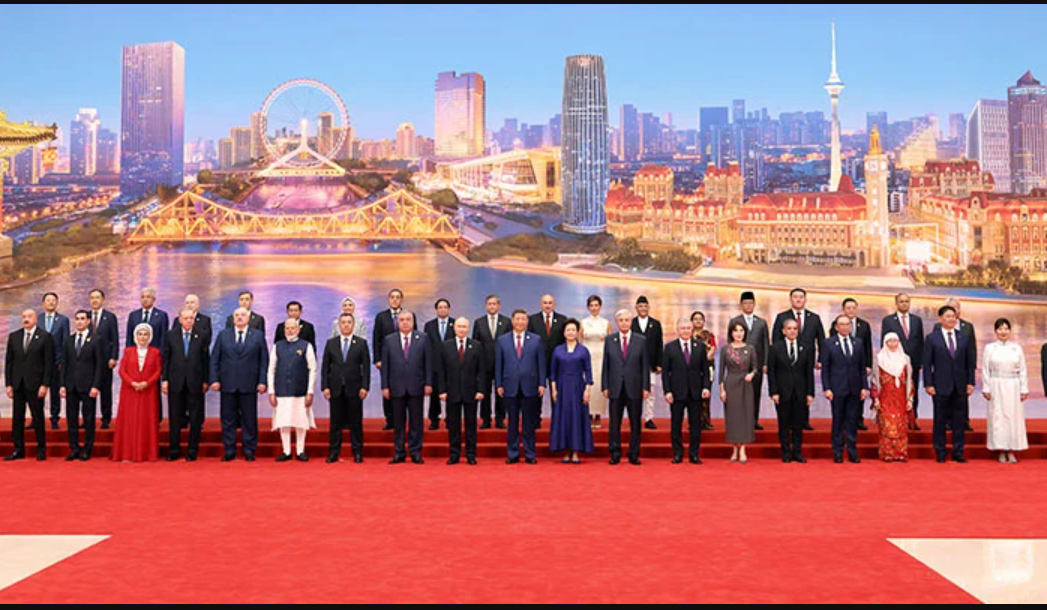

Leaders of the Shanghai Cooperation Organisation (SCO) have strongly condemned recent terrorist incidents in Indian Illegally Occupied Jammu and Kashmir’s Pahalgam region, the Jaffar Express, and Khuzdar. They pledged collective action against terrorism and vowed to hold perpetrators, organizers, and sponsors accountable.
SCO Strengthens Counterterrorism Stance
In a joint declaration, member states reaffirmed their commitment to combat terrorism, extremism, and separatism through coordinated multilateral efforts. Leaders emphasized that extremist groups must not be used for political purposes, stressing that sovereign states should lead counterterrorism strategies.
The declaration highlighted ongoing SCO initiatives, including the Regional Anti-Terrorist Structure (RATS), which facilitates intelligence-sharing and joint operations. Leaders praised last year’s counterterrorism drills in Xinjiang and confirmed plans for expanded exercises under the 2026–2030 Program of Cooperation on Countering Extremism. This program focuses on preventing radical ideologies, xenophobia, and intolerance.
Pakistan, India, and Regional Security
Tensions between Pakistan and India have recently escalated. Following the April 22 Pahalgam attack, India blamed Pakistan without evidence, while Islamabad denied involvement. The conflict triggered cross-border strikes, resulting in Pakistan launching Operation Bunyan-um-Marsoos and downing six Indian aircraft.
India later refused to endorse an SCO defense document in June, objecting to references about terrorism in Balochistan. However, Pakistan achieved a diplomatic breakthrough when the United States designated the Balochistan Liberation Army (BLA) and its Majeed Brigade faction as terrorist organizations. The BLA had previously claimed responsibility for the Jaffar Express hijacking, which left 31 dead and hundreds taken hostage.
Middle East Crisis Addressed
The SCO declaration also covered broader geopolitical concerns. Leaders condemned Israel and the United States for their June 2025 strikes against Iran, calling them violations of international law and the UN Charter. They warned such attacks endangered regional security and nuclear safety, stressing the importance of protecting civilian populations and energy infrastructure.
The organization urged a comprehensive and just solution to the Palestinian question as the only viable path to lasting peace in the Middle East.
Xi and Putin Criticize the West
Chinese President Xi Jinping and Russian President Vladimir Putin used the platform to challenge Western dominance. Xi criticized “bullying behavior” and power politics, urging member states to uphold multilateralism and sovereign equality. He unveiled his Global Governance Initiative (GGI), which prioritizes the Global South and proposes reforms in global security and economic systems.
Putin defended Russia’s stance on Ukraine, blaming the West for provoking the crisis and attempting to expand NATO’s reach. He argued that the SCO offers a genuine model of multilateralism, promoting a balanced security system in Eurasia that considers the interests of all nations.
New Economic and Technological Initiatives
Xi proposed the establishment of an SCO Development Bank to create an alternative to dollar-dominated payment systems. Beijing announced 2 billion yuan ($280 million) in aid for member states this year, alongside 10 billion yuan in loans for SCO’s banking consortium.
China also committed to building an Artificial Intelligence cooperation center for SCO countries and invited them to join its lunar research station project.
The summit’s final declaration underscored the SCO’s ambition to shape a new global order that challenges Western hegemony while prioritizing cooperation, security, and sustainable development. With counterterrorism, economic integration, and technology at its core, the SCO is positioning itself as a central force in Eurasian stability.
