

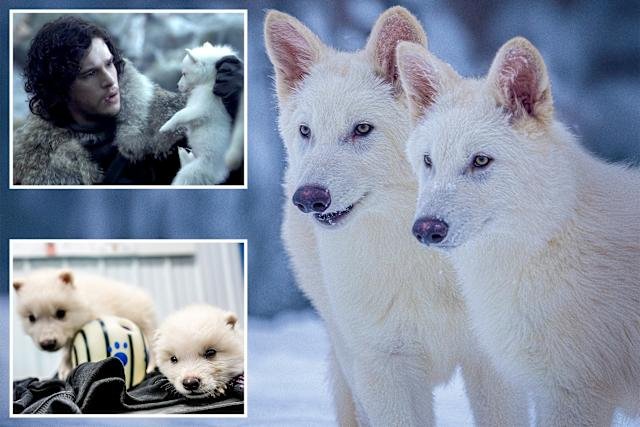

For the first time in over 13,000 years, the dire wolf, the legendary predator of the Ice Age, is back. In a remarkable scientific achievement, biotech company Colossal Biosciences has successfully revived this ancient species. Deep in a 2,000-acre wooded preserve in Texas, three young dire wolves—Romulus, Remus, and Khaleesi—are now prowling the underbrush, their thick coats glistening in the sunlight. These wolves, a powerful symbol of the past, have been brought back to life through groundbreaking advancements in genetic technology.
This historic de-extinction marks the first time that a species has been revived through the use of ancient DNA and modern genomic techniques. Colossal Biosciences, a Dallas-based startup, has achieved what once seemed impossible: the resurrection of an extinct predator. This project takes us beyond the realm of science fiction, into the domain of actual science, pushing the boundaries of what is possible in genetic engineering and conservation.
The Science Behind the Revival
The creation of these dire wolf pups began with DNA extracted from two ancient specimens: a 13,000-year-old tooth and a 72,000-year-old skull. Using this DNA, the Colossal team made 20 precise edits to 14 genes in gray wolves, the closest living relatives of the dire wolf. While the pups are not 100% genetically identical to their extinct ancestors, the result is strikingly close. These genetically altered gray wolves now share many traits with the dire wolves that once roamed the Earth from Venezuela to Canada during the Pleistocene epoch.
Ben Lamm, CEO and co-founder of Colossal, described the process as nothing short of magical: “We took DNA from a 13,000-year-old tooth and a 72,000-year-old skull and made healthy dire wolf puppies. It was once said, ‘any sufficiently advanced technology is indistinguishable from magic.’ Today, our team gets to unveil some of the magic they are working on and its broader impact on conservation.”
The revived wolves are already showing striking physical characteristics, including dense, thick coats designed for the harsh climates of the Ice Age. “Their coat is just absolutely amazing. It’s super thick. They are super friendly because we’ve raised them,” Lamm said. “But they’re starting to come into their own, where they’re acting more and more like wolves.”
These animals are living proof of the power of synthetic biology and the potential to reach into the distant past and bring back something long gone. Raised in a controlled environment with the care of human hands, these pups are already becoming part of the natural world once again.
The Ethical and Cultural Considerations
While the scientific achievement is awe-inspiring, it also raises important questions about the ethics and ecological impacts of de-extinction. The dire wolf’s return is not just a feat of genetics but also a significant moment in the broader conversation about conservation. The project has been shaped by a convergence of scientific ambition, cultural significance, and Indigenous wisdom.
Colossal Biosciences has collaborated with the Mandan, Hidatsa, and Arikara Nation (MHA Nation) of North Dakota, who have deep cultural ties to the dire wolf. The MHA Nation sees the dire wolf as a symbol of spiritual and ecological importance, representing the connection between the Earth and its stewards. Mark Fox, the Tribal Chairman of the MHA Nation, emphasized that the dire wolf is not just an animal, but a powerful reminder of humanity’s responsibility to protect life and maintain the delicate balance of the natural world.
“The dire wolf is a symbol that carries the echoes of our ancestors, their wisdom, and their connection to the wild,” Fox said. “Its presence would remind us of our responsibility as stewards of the Earth—to protect not just the wolf, but the delicate balance of life itself.”
The Impact on Conservation
Beyond the revival of the dire wolf, Colossal’s work could have far-reaching implications for conservation. In the process of creating the dire wolf, the company developed techniques that could help save other critically endangered species, such as the red wolf. By using blood samples instead of full tissue to create genetic clones, scientists may be able to preserve the genetic diversity of endangered species before they disappear entirely.
Elinor Karlsson, a geneticist with the Broad Institute of Harvard and MIT and an advisor to Colossal, explained the significance of the work: “Colossal produced healthy puppies with genetic variants that haven’t existed for over 10,000 years. Their work could help us preserve genetic diversity that is on the brink of disappearing from Earth today.”
The Future of De-Extinction and Ethical Dilemmas
The revival of the dire wolf inevitably leads to questions about the future of de-extinction. Should we bring back other extinct species? What are the ecological consequences of reintroducing long-gone creatures into modern ecosystems? These are some of the ethical dilemmas that the scientific community must consider as the field of genetic engineering continues to advance.
Beth Shapiro, a leading biologist and Colossal’s chief science officer, reflected on these concerns, stating, “We’ve spent a lot of time thinking about whether we should bring back a species. We weren’t just focused on whether we could. We’ve now proven we can.”
The de-extinction of the dire wolf is not just a scientific achievement but a cultural moment, as well. The dire wolf has captured the public imagination, thanks in part to its association with Game of Thrones, where it was famously featured as the symbol of the Stark family. The show’s creator, George R.R. Martin, has been both an investor and a creative advisor for the project. He sees the revival as a piece of “magic” brought to life: “I get the luxury to write about magic,” Martin said. “But Ben and Colossal have created magic by bringing these majestic beasts back to our world.”
A Step Into the Future
While the world that the dire wolf once ruled is no more—mammoths are extinct, forests have thinned, and climate change looms large—the revival of this magnificent creature represents a step into the future, a bridge between the past, present, and future of conservation. Romulus, Remus, and Khaleesi are not just symbols of ancient history but part of an ongoing effort to better understand our relationship with the natural world and the power of science to shape it.
The revival of the dire wolf is more than just a scientific curiosity—it’s a reminder of humanity’s potential to influence the course of nature, for better or worse. As these pups roam the Texas wilderness, the world watches, knowing that this moment represents just the beginning of a new era in the world of genetics and conservation.
The dire wolf is no longer just a myth or a memory—it’s alive, and with it, the possibilities for the future of species conservation have been rewritten.
