
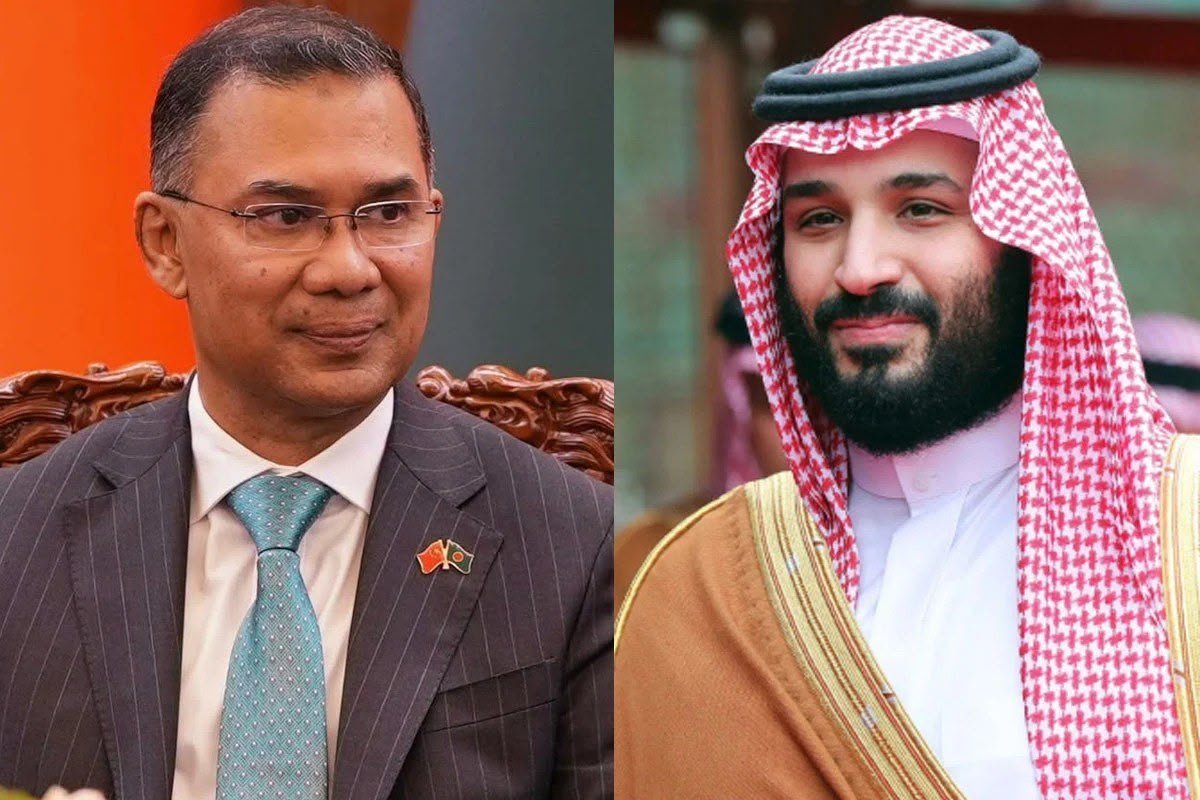

Tarique Rahman’s reported decision to decline Modi invitation adds another dimension to evolving South Asian and Middle Eastern alignments
DHAKA: Saudi Crown Prince Mohammed bin Salman has invited Bangladesh Prime Minister Tarique Rahman to Saudi Arabia, shortly after a Pakistan-Saudi Arabia-Türkiye agreement, adding momentum to a series of diplomatic developments across South Asia and the Middle East.
The invitation comes as Riyadh expands engagement with regional governments and explores deeper political, economic and strategic cooperation with important Asian partners.
Meanwhile, Rahman reportedly declined an invitation from Indian Prime Minister Narendra Modi only days earlier. The sequence has attracted attention because Bangladesh maintains important political and economic relationships with India while also strengthening engagement with Muslim-majority countries.
Riyadh Expands Diplomatic Outreach After Agreement
The Saudi invitation follows the recent Pakistan-Saudi Arabia-Türkiye agreement, which has highlighted growing coordination among Islamabad, Riyadh and Ankara.
Although the separate diplomatic moves do not necessarily indicate the emergence of a formal regional bloc, their timing has fuelled discussion about changing political relationships and strategic calculations.
Moreover, Saudi Arabia has increasingly sought broader partnerships across Asia as it expands its diplomatic and economic influence beyond traditional relationships.
Bangladesh, with its large population, expanding economy and strategic location near the Bay of Bengal, represents an important partner in that outreach.
Dhaka’s Foreign Policy Choices Draw Regional Attention
Rahman’s reported decision concerning Modi’s invitation has simultaneously placed renewed attention on relations between Dhaka and New Delhi.
India and Bangladesh share extensive economic, geographic and security interests. However, political changes in Bangladesh have created new questions about the future direction of bilateral relations.
Consequently, Dhaka’s engagement with Riyadh, Islamabad and Ankara will receive close regional scrutiny.
The latest developments suggest South Asian diplomacy is becoming increasingly fluid as governments diversify partnerships rather than depend exclusively on established relationships.
However, individual invitations and diplomatic meetings alone do not establish a strategic realignment.
Their significance will depend on subsequent agreements, official visits and whether expanding relationships translate into sustained economic, security or political cooperation.
🚨 Shortly after the Pakistan–Saudi Arabia–Türkiye agreement, Mohammed bin Salman has invited Bangaldesh PM to Saudi Arabia.
Notably, Tarique Rahman reportedly rejected an invitation from Indian PM Modi just days ago.
The regional diplomatic landscape is shifting. 🇵🇰🇸🇦🇹🇷🇧🇩 pic.twitter.com/sQ3ViDkKNE
— Truth Seeker (@Seeke09Truth) August 18, 2026

