
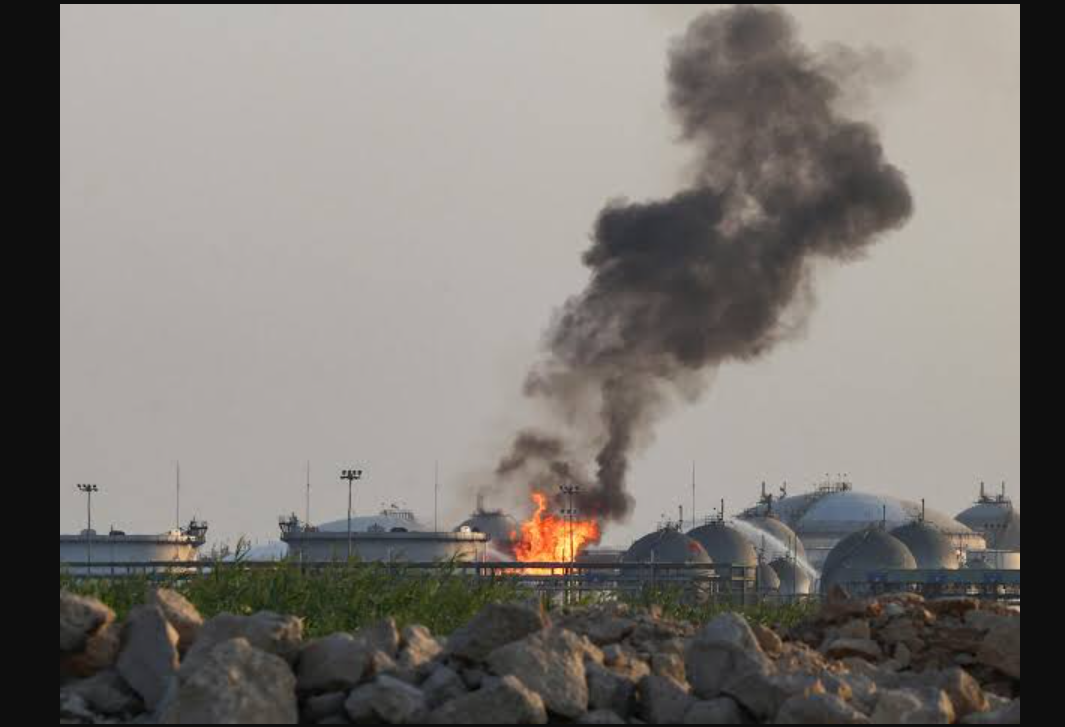

The Saudi-Houthi conflict has entered another dangerous phase, with strikes reported across Yemen and smoke rising near an Aramco facility in Riyadh. The latest escalation has brought the fighting closer to Saudi Arabia’s capital while intensifying pressure on Yemen’s already struggling population.
Houthi-affiliated media reported that Saudi aircraft carried out 26 strikes on Sanaa on Saturday. At the same time, flames and smoke were seen rising from a facility belonging to Saudi oil giant Aramco south of Riyadh.
The Houthis later claimed responsibility for an attack on the Aramco facility. They said ballistic missiles and drones were used in the operation. However, Saudi authorities and Aramco had not immediately confirmed that the facility was attacked.
The developments mark a sharp escalation in fighting that had remained relatively restrained for several years. They have further raised concerns about Saudi energy infrastructure and key Red Sea routes.
Sanaa Hit by Dozens of Reported Strikes
Houthi-affiliated Al-Masirah TV reported that Saudi aircraft struck Sanaa 26 times. The channel described the attacks as “Saudi aggression” but did not provide details about targets or casualties.
Two correspondents in Sanaa reported hearing loud explosions. They also saw warplanes firing missiles over the Yemeni capital.
The Houthis said Saudi Arabia had again targeted areas under their control after renewed fighting between the two sides. They had earlier reported that Sanaa came under attack on Thursday night.
The group further reported missile strikes against telecommunications infrastructure in Saada governorate. Saada remains one of the Houthis’ main strongholds in northwestern Yemen.
The latest exchange follows a major deterioration in relations after a fragile truce collapsed. The renewed fighting has since spread across several parts of Yemen.
Fire Reported Near Aramco Facility in Riyadh
While strikes were being reported in Sanaa, flames and smoke appeared near an Aramco facility south of Riyadh.
A witness observed firefighters attempting to control a blaze near the energy company’s facility. Ambulances and police vehicles were reportedly present in the area.
The Houthis later said they had targeted the facility using ballistic missiles and drones. They described the operation as retaliation for Saudi strikes on Yemen.
However, the circumstances surrounding the fire remained unclear at the time. Saudi authorities had not immediately confirmed that the facility had been attacked. Aramco had likewise not confirmed the cause of the fire.
The claim is significant because the Houthis have repeatedly threatened Saudi energy infrastructure. The group had previously claimed attacks against Aramco facilities in Yanbu.
Saudi Arabia had said it intercepted six ballistic missiles fired toward Taif and Yanbu during the earlier incident. It did not report damage to Aramco facilities.
Fighting Spreads Across Yemen
The latest confrontation comes after the Houthis made major territorial gains along Yemen’s Red Sea coast. The group has seized coastal areas around the strategically important Bab al-Mandab Strait.
The Houthis have also attacked Saudi targets, including energy infrastructure and areas around Riyadh. They have announced a naval blockade targeting Saudi shipping in the Red Sea.
Saudi Arabia, meanwhile, has continued supporting Yemen’s internationally recognised government. Government forces control much of southern and eastern Yemen, while the Houthis control most of the northwest, including Sanaa.
The fighting has also intensified around Taiz. Both sides reported significant casualties among their forces during clashes there.
The Houthis said 55 of their fighters were killed on Friday. Government sources reported that 26 troops had died.
The battle for Taiz is unfolding across several fronts. Fighting has included highland areas overlooking coastal territory recently seized by the Houthis.
Despite their territorial advances, the Houthis have not captured Taiz city. The city remains Yemen’s third-largest after Sanaa and Aden.
The Houthis also said Saudi Arabia carried out 94 strikes against areas under their control within 24 hours.
Saudi authorities separately reported that a Houthi projectile damaged a school in Najran. The Saudi city lies near the Yemeni border.
How the Latest Escalation Began
The renewed fighting followed several years of relative calm after a fragile truce.
The latest confrontation intensified after Iran sent a plane to Sanaa carrying a Houthi delegation. The flight did not seek Saudi authorisation, contrary to a practice that had existed for about a decade.
Riyadh responded by striking Sanaa airport. The Houthis then attacked Saudi territory for the first time since 2022.
The confrontation quickly expanded beyond individual exchanges of fire. The Houthis launched an offensive along Yemen’s Red Sea coast and captured strategically important areas.
The seizure of territory around the Bab al-Mandab Strait has added another dimension to the conflict. The waterway is an important passage for international shipping.
The Houthis have subsequently combined territorial advances with missile and drone attacks. Saudi Arabia has responded with airstrikes against Houthi-controlled areas.
The conflict has therefore moved beyond Yemen’s internal power struggle. It now carries wider regional and economic risks.
Hunger Crisis Deepens as War Returns
The renewed fighting has come at a particularly difficult time for Yemen’s population. Years of conflict have already left the country facing severe humanitarian challenges.
The latest escalation has further disrupted communities and food supplies. The World Food Programme warned that three-quarters of Yemen’s population could not meet basic food needs.
The warning highlights the human cost of the expanding military confrontation. Continued fighting could make access to food and other necessities even more difficult.
Yemen remains one of the world’s poorest countries. Years of conflict have weakened its economy and damaged essential infrastructure.
The latest battles could therefore deepen problems that existed long before the current escalation. For civilians, another prolonged conflict could mean greater displacement and worsening access to basic necessities.
US Watches Saudi-Houthi Conflict Amid Iran War
The Saudi-Houthi confrontation is also unfolding alongside the wider regional conflict involving Iran.
US media outlet Axios reported that President Donald Trump’s senior national security officials held a private meeting at Camp David. The meeting reportedly focused on the Saudi-Houthi conflict and the next steps in the Iran war.
Vice President Vance reportedly chaired the meeting. The discussions underline the wider regional implications of the fighting in Yemen.
Saudi Arabia’s conflict with the Houthis is increasingly connected to broader tensions involving Iran and regional security. Any further expansion could therefore affect developments beyond Yemen and Saudi Arabia.
For now, however, the immediate focus remains on the exchange of strikes and the worsening humanitarian situation.
The reported attacks on Sanaa and the claimed strike near Riyadh show how quickly the conflict is expanding. With fighting continuing across Yemen and pressure mounting on Saudi targets, the latest escalation has pushed the region into another uncertain phase.
For the latest updates, visit and follow The Truth International website (www.thetruthinternational.com) and subscribe to the YouTube Channel.

