

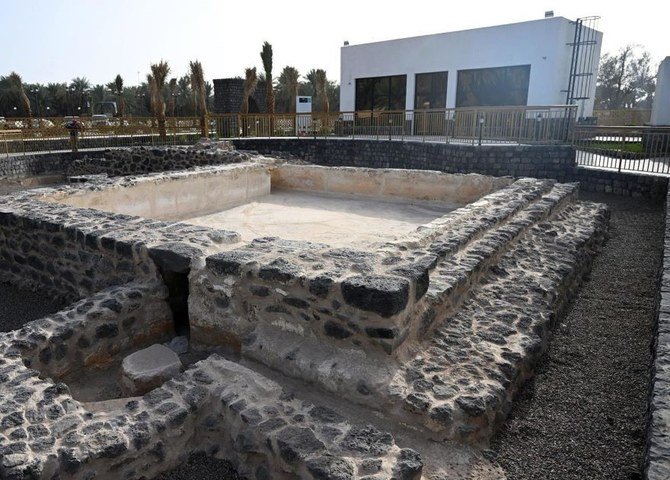

A historic well from the era of Prophet Muhammad (PBUH) in Madinah has recently reopened its doors to pilgrims and tourists. Formerly known as the Salman Al-Farsi well in the greater Muslim world, it is now referred to by many Saudis as Al-Faqir well.
According to reports from the state-run Saudi Press Agency, the well underwent development works before its reopening. Situated in the Aliyah District of Madinah amidst lush orchards, the renovation efforts included installing a one-meter-high iron fence for safety, planting palm trees, paving the inner courtyard, and strategically placing stone benches for visitor comfort.
Dating back to the 14th century, this well holds significance as a symbol of kindness and acts of charity by Prophet Muhammad (PBUH). Historian Fouad Al-Maghamisi notes its connection to the story of Salman Al-Farsi, who, as a slave working in the orchard, was set free by Prophet Muhammad (PBUH) through payment to his owner, hence the name Salman Al-Farsi well.
In 2022, the Saudi government embarked on a mission to renovate and preserve over a hundred historical sites dating back to the time of Prophet Muhammad (PBUH). The plan, slated for completion by 2025, includes the restoration of significant sites in Madinah such as the site of the Battle of the Trench, Al-Faqir well, and Al-Qiblatayn Mosque.
Additionally, deals have been struck for the restoration of other sites like the Uthman bin Affan well and Sayed Al-Shuhada Square. Recent announcements reveal that approximately eight historical sites have already undergone restoration.
Apart from Al-Faqir well, there are nine other wells in the region known for their historical importance, including Ethq well, Uthman bin Affan Well, Beer e Shifa well, Ghars well, Alyasira well, Arees well, and the Well of Abu Talha/Bir Haa.
