
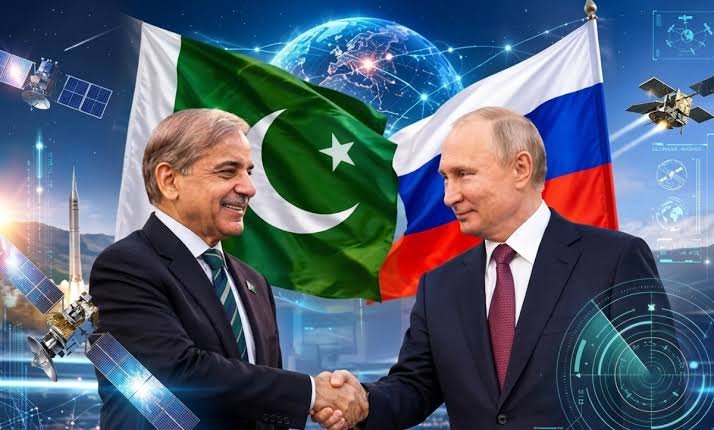

Russia has expressed its readiness to share advanced space technology with Pakistan, opening new opportunities for scientific research, satellite development and technological cooperation between the two countries.
Russian Energy Minister Sergei Tsivilev announced the development during a joint press conference in Moscow on November 25, 2026.
He revealed that a joint working group had prepared several agreements covering space technology cooperation. The documents could receive formal approval during a future meeting between the leaders of Pakistan and Russia.
Russia has offered to share its expertise in satellite navigation, communications, Earth observation, human spaceflight and other advanced space technologies.
The proposed cooperation could significantly strengthen Pakistan’s satellite capabilities. Advanced Earth observation technology could also support agricultural monitoring, disaster management, environmental research and urban planning.
The announcement followed the 11th session of the Pakistan-Russia Intergovernmental Commission on Trade, Economic, Scientific and Technical Cooperation in Moscow.
Pakistan’s Federal Minister for Power, Awais Ahmad Khan Leghari, also participated in the discussions.
Both countries agreed to strengthen cooperation across several sectors, including energy, industrial development, agriculture, education, science and technology.
Pakistan and Russia have also established a target of increasing bilateral trade to $5 billion by 2030.
Interestingly, the Russian offer comes shortly after Pakistan achieved a historic milestone in space exploration.
Pakistani astronaut Muhammad Zeeshan Ali became the first foreign astronaut to reach China’s Tiangong space station aboard the Shenzhou-24 spacecraft.
Potential cooperation with Russia could further expand Pakistan’s international space partnerships and create new opportunities for scientists, engineers and researchers.
Access to advanced satellite technologies could also strengthen Pakistan’s domestic space programme and reduce its dependence on foreign satellite services over time.
However, both countries have yet to formally sign the proposed space cooperation agreements. Further details regarding technology transfers, joint missions and implementation schedules remain unavailable.
The development could mark another important milestone in Pakistan’s ambitions to strengthen its presence in the global space industry.

