

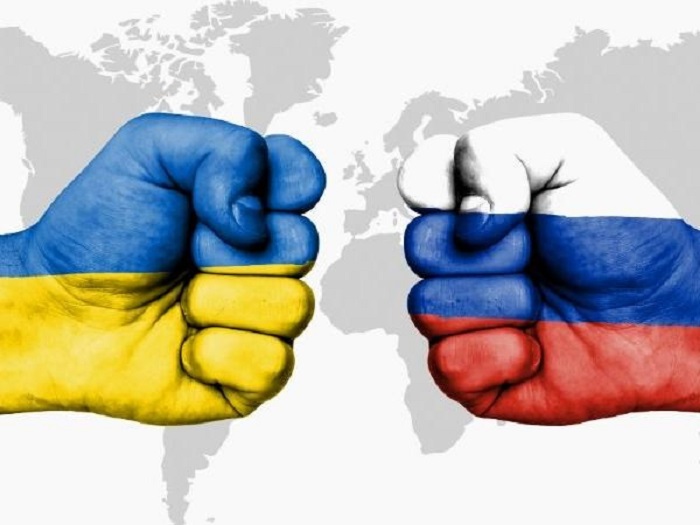

KYIV – Russia invaded Ukraine on 24th February, Thursday, launching airstrikes on cities and military bases, as well as sending troops and tanks from all directions. Civilians piled into trains and cars to flee as Ukraine’s government pleaded for help.
Since Russia invaded Ukraine early Thursday, around 100,000 people have fled their homes, according to the UN Refugee Agency.
Penetrating Russian forces pushed deeper into Ukraine, killing dozens and raising fears of a Moscow-Kyiv march. During a day of intense fighting, Russian missiles and shelling hit Ukrainian cities, forcing civilians to seek shelter in metros and also displacing many people.
According to AFP, at least 68 people were killed in Ukraine, including soldiers and civilians. Militants kill dozens of civilians as they flee in trains and cars.
Besides the Chernobyl nuclear disaster site, Moscow seized a key strategic air base near Kyiv.
According to a senior Western intelligence officer in Brussels, Russia has “eliminated” Ukraine’s air defences and is preparing to mass overwhelming forces around Kyiv.
It was reported that a Russian Antonov An-26 transport plane carrying military equipment crashed in southern Voronezh, near Ukraine, killing all crew members.
Russian paratroopers took control of the Gostomel airfield after helicopters and jets swooped in from Belarus, witnesses told AFP. The airfield could now be used as a strategic staging point for Russian troops to attack government buildings and the presidential palace in Kyiv.
According to Western intelligence, Russia is seeking to mass “overwhelming force” around Kyiv and has established “complete air superiority” over Ukraine.
Russian ground forces invaded Ukraine from the north, south, and east, forcing many Ukrainians to flee their homes. This comes after Moscow claimed to have destroyed over 70 Ukrainian military targets, including 11 airfields.
Chernobyl’s Fall
President Volodymyr Zelensky of Ukraine said there was a “new iron curtain” between Russia and the rest of the world.
President Joe Biden announced sanctions against Russian elites and banks, as well as export controls on over half of Russia’s high-tech imports.
Prior to this, he said the G7 group of wealthy nations had agreed to impose “devastating” sanctions. Biden also reiterated that US troops would not be sent to eastern Europe to fight in Ukraine but to defend NATO territory.
The West said Putin’s military buildup on Ukraine’s borders was Europe’s largest since WWII.
Early morning air raid sirens sounded over Kyiv after the city’s main airport was bombed for the first time since WWII.
The city imposed an overnight curfew, but said subway stations would remain open as bomb shelters.
In the deadliest single attack reported by Kyiv, 18 people were killed at a military base near the Black Sea port of Odessa, according to Zelensky.
A military plane carrying 14 people crashed south of Kiev, and a transport plane crashed in Russia, killing the crew.
Ukrainian forces said they had warded off an attack on a town by Moscow-backed rebels, which AFP could not confirm.
Official Vladimir Vesyelkin said missiles had been pelting the village of Starognativka, near the frontline, since morning, and power had been cut.
“They want to wipe out the village,” reported Ukrainian sources.
Ukraine said Russian tanks crossed the border in several northern and eastern regions, as well as from the annexed Crimean peninsula in the south.
Because of the fighting, stocks fell and oil prices soared past $100.
Putin justified the attack by citing the self-proclaimed Donetsk and Lugansk republics in eastern Ukraine.
However, NATO Chief Jens Stoltenberg said there were no plans to send NATO forces into Ukraine.
Russia has long demanded that Ukraine never join NATO and that US troops leave Eastern Europe.
In the Baltics, Lithuania declared a state of emergency, and Latvia banned three Russian TV channels for posing a “national security threat”.
Police quickly shut w small anti-war protest in Moscow down, and monitors said over 1,400 people were detained across the country.
First Ukrainian refugees arrive in Hungary and Romania
On the eve of the largest ground war in Europe in decades, President Vladimir Putin chillingly referred to his country’s nuclear arsenal. Any country interfering would face “unprecedented consequences”.
On multiple fronts, Ukrainian forces fought Russians, losing control of the decommissioned Chernobyl nuclear power plant, the location of the world’s worst nuclear disaster.
According to Ukrainian President Volodymyr Zelenskyy, Russia has chosen the path of evil.
President Joe Biden announced new sanctions against Russia, saying Putin chose this war and would pay the price.
“Sanctions will target Russian banks, oligarchs, state-controlled companies, and high-tech sectors,” he said. Russian oil and gas exports are crucial to Europe.
Zelenskyy urged the US and the West to expel Russia from the SWIFT system, a global financial network connecting thousands of banks. Concerned about the impact on the European and global economies, the White House has been slow to remove Russia from SWIFT.
Zelenskyy described a difficult situation developing in Kharkiv, Ukraine’s second-largest city, just over 20km away from the Russian border, and Russian troops slowly advancing from the north on the city of Chernihiv. He said a Russian airborne unit near Kyiv was being destroyed.
He warned world leaders that if they do not help now, “war will knock on your door tomorrow.” The war had already shaken global markets. Concerns about rising heating and food costs sent stocks plunging and oil prices soaring.
South Korea, Australia, and other countries joined the chorus of condemnation, and many governments prepared new sanctions. Even friends like Viktor Orban of Hungary tried to distance themselves from him.
