
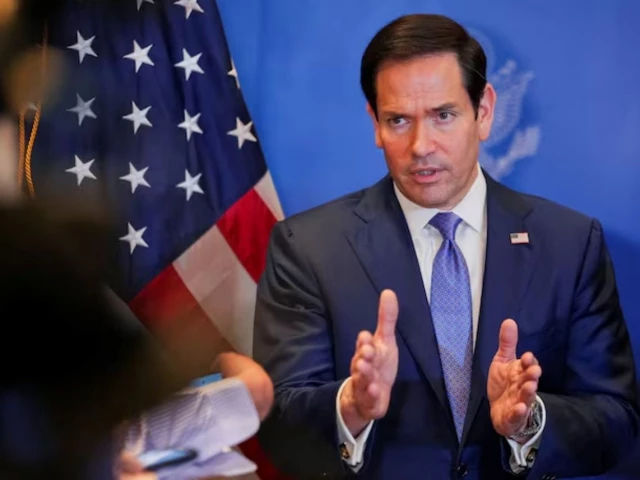

US Secretary of State Marco Rubio has said Washington remains willing to negotiate an end to the Iran crisis. However, he claimed Tehran is not showing seriousness toward diplomatic discussions.
Rubio made the remarks during a meeting with Southeast Asian foreign ministers on Wednesday. His statement came as the conflict continued affecting major global energy routes.
The situation has created concerns around two important shipping areas, the Strait of Hormuz and the Red Sea.
Energy Routes Face Growing Disruption
The latest tensions increased after three oil tankers carrying Saudi crude toward Asia changed their routes in the Red Sea.
Reports suggested the vessels turned back due to threats from Yemen’s Houthis.
The Houthis, who control parts of the Red Sea coastline, announced a naval blockade against Saudi Arabia on Monday. The move created concerns about another possible front in the wider conflict.
Meanwhile, Iran has also threatened shipping through the Strait of Hormuz. The waterway is a major route for global oil supplies.
Before the conflict, millions of barrels of Saudi oil passed through the region daily.
US Calls for Diplomatic Solution
Rubio said the United States supports diplomacy but questioned Iran’s willingness to negotiate.
He stated, “The problem we’re having right now is that they’re not serious about talks. If they’re serious, we’re serious. If they’re not, then we will do what’s necessary to protect our interests, and also the interests of our allies.”
Furthermore, Rubio warned against allowing any country to control an international waterway.
He said such actions could create a dangerous global example, especially for regions facing maritime disputes.
Military Strikes Continue Amid Tensions
Despite diplomatic efforts, military operations have continued.
The US military carried out strikes on Iranian targets for an 11th consecutive night. Iran also reported explosions in Tehran and other cities after activating air defenses.
Iranian officials said attacks also hit areas near Chabahar, Konarak, and Bushehr, where the country’s only nuclear power plant is located.
Moreover, Iran claimed it targeted US military facilities in Bahrain, Kuwait, and Jordan. Washington has not confirmed all of the claims.
US President Donald Trump said 18 American service members have died during the conflict so far.
Oil Prices Rise as Conflict Expands
Oil markets reacted to the growing uncertainty. Brent crude prices climbed above $91 per barrel after rising more than 2% earlier.
The possibility of disruptions in major shipping routes has increased concerns about future energy supplies.
Additionally, Iran’s military said it launched drone attacks against US facilities in Kuwait. Officials claimed the strikes targeted ammunition storage and logistical equipment.
However, the US Central Command said its latest strikes focused on Iranian military facilities, maritime capabilities, drone storage areas, and logistics infrastructure.
As the conflict continues, diplomatic efforts remain active. Yet, rising military actions and threats against energy routes have increased fears of a wider regional crisis.

