

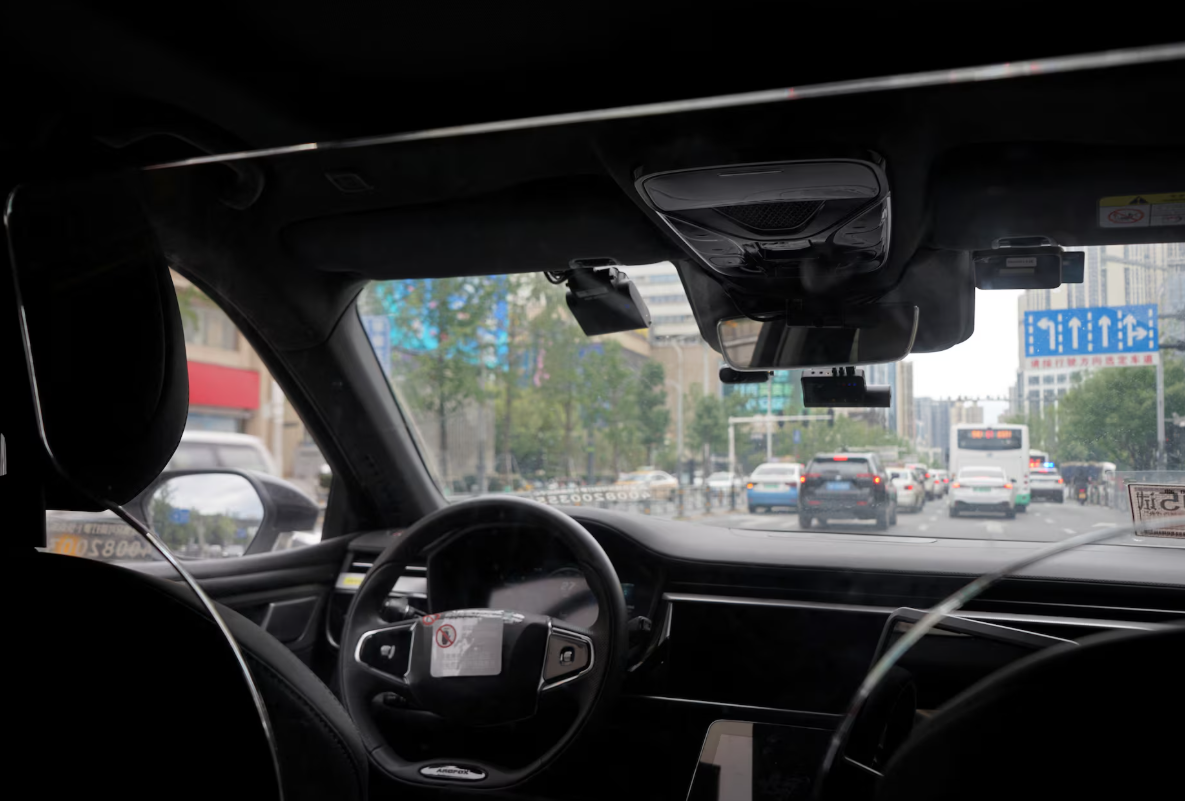

The global race to deploy robotaxis is accelerating as companies move from trials to limited commercial operations. Technology firms and ride-hailing platforms see driverless taxis as the next major shift in urban transport. As a result, cities worldwide are slowly opening regulatory doors. Companies believe automation will improve safety, lower costs, and enable round-the-clock transport services.
Across Asia, Europe, the Middle East, and North America, firms now focus on real-world deployments instead of experimental pilots. These efforts usually involve partnerships with city authorities and local fleet operators. Consequently, robotaxis are becoming part of official urban mobility planning rather than experimental technology.
China and Asia lead early commercial expansion
China remains at the forefront of commercial robotaxi operations. Baidu’s Apollo Go already operates fully driverless services in several major cities. Over time, the company expanded beyond Chongqing and Wuhan into Beijing and Shenzhen. In addition, Baidu secured approvals to test autonomous vehicles in Hong Kong.
Elsewhere in Asia, robotaxi testing continues to expand. In Singapore, autonomous ride services are in trial phases ahead of a planned public rollout. Meanwhile, companies are positioning Asia as a proving ground for scalable driverless mobility.
Middle East emerges as a fast-moving hub
The Middle East has become a major testing ground for advanced robotaxi services. Fully driverless Level 4 operations have already launched in Abu Dhabi. Passenger rides followed soon after on ride-hailing platforms in Dubai. A broader commercial rollout is expected next.
Saudi Arabia also joined the trend, allowing robotaxi services to operate on major platforms. These developments highlight strong government support for autonomous transport across the region.
Europe and the UK prepare for next-phase testing
Europe is gradually moving toward wider robotaxi adoption. In the United Kingdom, partnerships aim to begin advanced self-driving trials soon. Fully driverless testing is expected later in the decade. Switzerland has also approved limited robotaxi services, with full operations planned in the coming years.
Meanwhile, autonomous ride-hailing services are scheduled to launch in London by 2026. European regulators appear cautious but increasingly open to controlled deployment.
United States pushes commercial pilots forward
In the United States, robotaxi services already operate in select cities. Autonomous ride-hailing runs in Phoenix, San Francisco, and Los Angeles. In addition, free public rides are available in parts of Las Vegas as companies await fare approvals.
Tesla has also entered the robotaxi space with a limited paid rollout in Austin. The service currently operates under restrictions but continues testing without safety monitors.
Why robotaxis matter for urban futures
Companies argue that driverless taxis can reduce accidents caused by human error. They also promise lower labor costs and improved transport availability. Although challenges remain, momentum continues to build globally. The driverless future is no longer theoretical. It is actively unfolding on city streets worldwide.
