

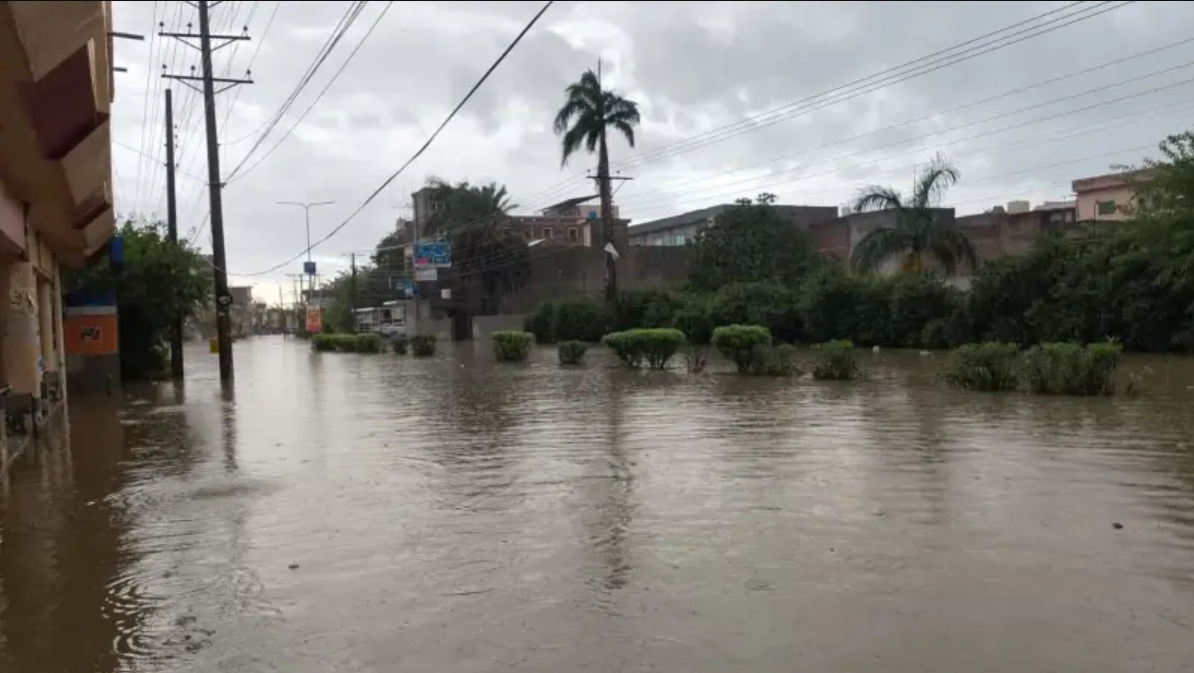

The city of Gujrat has been overwhelmed by record-breaking rainfall, with 573 millimetres of torrential downpour flooding homes, courts, markets, and even prisons. Streets remain submerged, buildings have collapsed, and thousands of residents are struggling as more heavy rains are forecast across Pakistan.
Gujrat Turns into a Flood Zone
Heavy rains transformed Gujrat into a waterlogged disaster zone, leaving several feet of water across residential and commercial areas. Business centres, the Deputy Commissioner Complex, and the District and Sessions Court were inundated under up to four feet of standing water.
The central jail was also severely affected, forcing authorities to relocate inmates to facilities in Lahore and Gujranwala. Earlier, more than 1,000 prisoners had already been transferred from Sialkot Jail after catastrophic flooding there on August 27.
Buildings Collapse and Farmlands Destroyed
The extreme rainfall also weakened structures, leading to the collapse of a vacant two-storey building in Jalalpur Jattan. In Baradari, Muslimabad, Mohallah Khawajgan, Hasan Chowk, and Rang Pura, floodwaters reached GT Road, further disrupting traffic and business activity.
Residents reported widespread destruction, with property worth millions damaged. Farmlands and surrounding villages were completely submerged, bringing daily life to a standstill.
Relief Efforts and Administrative Response
Panic spread as floodwaters entered homes and shops. Social organisations stepped in to provide assistance as residents criticised the absence of timely action by local authorities.
District officials have ordered schools to remain closed and deployed heavy machinery from neighbouring cities to speed up drainage operations. Traders in Nawab Chowk and Circular Road voiced frustration over stagnant water, which continues to hamper business activities.
Rising Frequency of Urban Flooding
The flooding in Gujrat comes just days after Sialkot faced devastation when 355 millimetres of rain left the city submerged under two to three feet of water. These repeated events highlight the increasing vulnerability of urban centres to extreme weather conditions.
More Heavy Rains Forecast Across Pakistan
The Pakistan Meteorological Department (PMD) has warned of further heavy rainfall from September 6–9 in multiple regions. Hyderabad, Sukkur, Larkana, and Tharparkar are expected to face severe downpours. Punjab districts, including Lahore, Narowal, Okara, Multan, and Dera Ghazi Khan, are also on high alert.
In northern Pakistan, Islamabad, Rawalpindi, Murree, and Potohar are forecast to receive thunderstorms. Eastern and southern Balochistan will face heavy rains between September 7–9, while upper Khyber Pakhtunkhwa and Kashmir may experience rain-triggered landslides in mountainous regions such as Swat, Dir, Bajaur, and Buner.
Climate Change Intensifying Disasters
Experts warn that climate change is amplifying the intensity and frequency of extreme weather events. Pakistan remains one of the most climate-vulnerable nations in the region, where infrastructure and urban planning are often unable to withstand such disasters.
The record-breaking floods in Gujrat underscore the urgent need for stronger disaster preparedness, resilient infrastructure, and climate adaptation strategies to protect vulnerable communities.
