

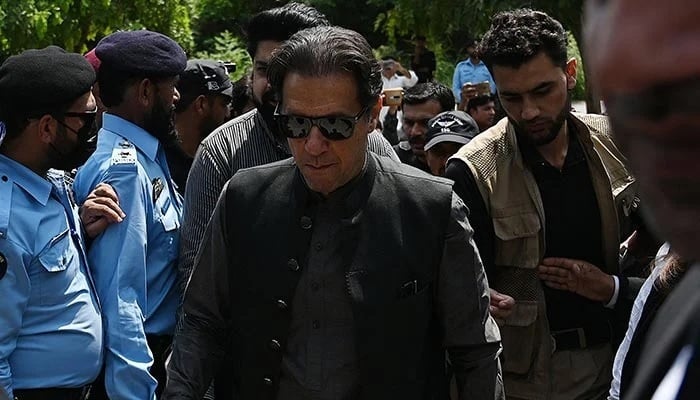

In a significant decision on February 7, 2026, a Rawalpindi Anti-Terrorism Court (ATC) denied Imran Khan’s request. The Pakistan Tehreek-e-Insaf (PTI) founder sought access to his personal physicians for a medical examination in prison. The hearing was conducted regarding the May 9 General Headquarters (GHQ) attack case.
ATC Judge Amjad Ali Shah oversaw the proceedings, with Imran Khan represented by his lawyer Faisal Malik.
Special Prosecutor Zaheer Shah opposed the petition, noting that Imran is an under-trial prisoner and not a convicted inmate.
Legal Grounds Cited by Prosecutor
Zaheer Shah told the court that under Pakistan Prison Rules, personal doctors are not appointed for prisoners. He emphasized that private medical care is unavailable under the current legal framework. Additionally, the prosecutor argued that the criminal court lacks authority to regulate the custody or medical access of a suspect on bail.
After reviewing arguments from both sides, the court dismissed the petition, leaving Imran Khan without access to his trusted doctors.
Health Concerns and Recent Procedures
Imran recently underwent an eye procedure at the Pakistan Institute of Medical Sciences (PIMS) in Islamabad. Doctors confirmed that pressure in blood vessels had affected his vision. The PTI alleged that authorities delayed sharing details about his condition for several days.
Bushra Bibi, the former first lady, reported that Imran’s health improved following the procedure. Medical experts had warned that failing to perform the procedure could risk permanent eyesight damage.
Political Reactions and Appeals
National Assembly Opposition Leader Mahmood Khan Achakzai urged Prime Minister Shehbaz Sharif to allow Imran’s personal doctors to examine him. In a formal letter, he stressed that medical evaluations were conducted without the presence of Imran’s trusted physicians.
Achakzai highlighted the critical need for doctors from Shaukat Khanum Hospital, Shifa Hospital, and other trusted facilities. He underlined that comprehensive medical care must comply with ethics, legal obligations, and fundamental human rights.
Imran’s family also requested access for his personal physician, who has not seen him in over a year.
Prison Conditions and Legal Context
The Adiala jail administration confirmed that Imran Khan receives facilities available to ‘B-Class’ prisoners.
These include tailored meals, healthcare services, reading materials, exercise, and daily walks.
The former prime minister, 72, has been in jail since August 2023. His imprisonment followed convictions in multiple cases that he claims are politically motivated.
His initial conviction related to allegations of unlawfully selling state gifts, commonly known as the Toshakhana case. Subsequent rulings added lengthy sentences, including ten years for leaking a diplomatic cable and fourteen years in the Al-Qadir Trust graft case. Prosecutors allege the trust engaged in illegal land transactions.
Ongoing Legal Battles
Imran Khan remains incarcerated while legal proceedings continue. The Toshakhana-2 case represents his latest conviction. He faces dozens of other cases filed since 2022, ranging from corruption to anti-terrorism and state secrets charges.
The PTI asserts that these prosecutions aim to exclude Imran from politics and future elections.
Imran continues to deny all allegations, calling the cases politically driven.
