

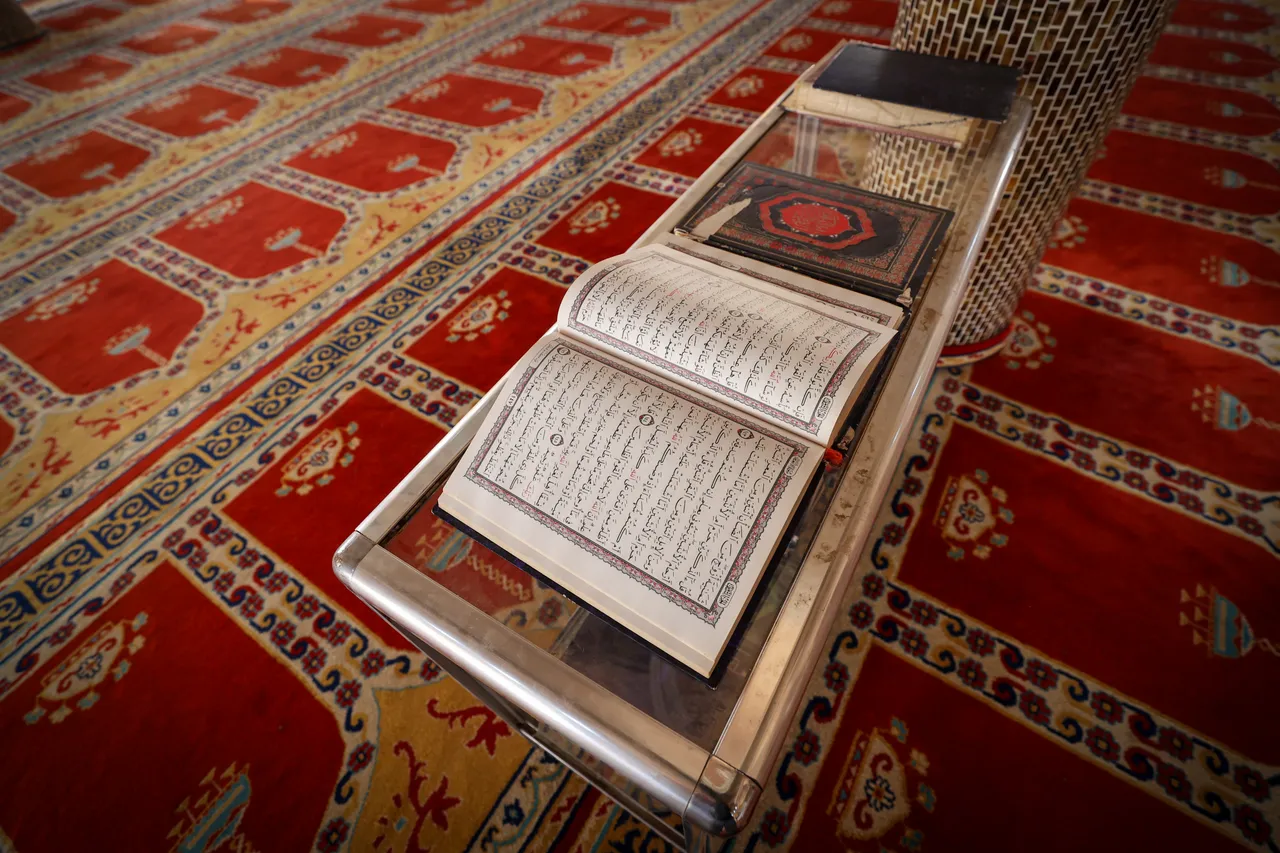

A racist attack has targeted the Stockholm Mosque in Sweden, alarming the Muslim community and drawing official condemnation. Mosque officials confirmed that attackers desecrated a copy of the Holy Quran and left it at the mosque entrance.
On Sunday, the mosque’s administration released a public statement. It said staff discovered the damaged Quran chained to the stair railings. The book contained six visible bullet holes, according to officials.
As a result, mosque leaders described the act as deliberate and deeply offensive. They also called it an explicit attack on Muslims living in Sweden.
Mosque Chairman Describes Incident
Mahmud al Halefi, chairman of the Stockholm Mosque, spoke to media after the discovery. He said Islamophobic and racist attacks have increased steadily across Sweden. Moreover, he warned that such incidents now occur with disturbing frequency.
Halefi confirmed that police have launched a formal investigation. He said the incident triggered strong emotional reactions within the Muslim community. Many worshippers expressed fear and anger, he added.
Condemning the act, Halefi provided further details. He said attackers chained the Quran next to the stairs leading to the mosque. He confirmed that the book had six bullet holes.
In addition, Halefi said the attackers wrote messages on the Quran. The writing appeared in both Arabic and Swedish. The message read, “Thanks for the visit, but it’s time to go home.”
According to Halefi, the message carried a clear racist meaning. He said mosque leaders viewed it as a direct threat against Muslims. Therefore, he described the act as intentional hate speech.
Calls for Action Against Hate Crimes
Halefi stressed that the attack formed part of a broader pattern. He said anti-Muslim hatred has spread across society in recent years. Consequently, he urged Swedish authorities to take firm action.
He called on officials to strengthen protections for religious communities. He also demanded stronger enforcement against hate crimes. According to him, tolerance requires active protection, not silence.
Meanwhile, community members gathered at the mosque after news spread. Many expressed solidarity and concern. Some called for peaceful responses and dialogue.
Authorities Increase Security Measures
Police have not released details about suspects. However, they confirmed an ongoing investigation. Officials said they are treating the case as a hate crime.
Meanwhile, security around religious sites has increased. Authorities aim to reassure worshippers and prevent further incidents. Nevertheless, community leaders say fear remains high.
Context of Rising Tensions in Sweden
The attack occurred amid heightened tensions in Sweden. In recent years, the country has faced repeated Quran desecrations. These acts have drawn international criticism and domestic debate.
Most notably, Salwan Momika carried out several public Quran burnings in 2023. He staged these acts in Stockholm under police protection. He burned copies outside parliament, the Stockholm Mosque, and the Iraqi embassy.
As a result, protests erupted across the Muslim world. Several countries witnessed unrest and diplomatic protests. Sweden faced strained relations with multiple nations.
Momika’s actions also prompted legal scrutiny. Swedish authorities investigated him for incitement against ethnic groups. However, the case remained unresolved.
In early 2024, Momika died in a shooting. Following his death, a Stockholm court postponed issuing a verdict. Nevertheless, the controversy did not fade.
International Condemnation Continues
Despite his death, rights groups report rising Islamophobic incidents. They warn that hate crimes persist across Sweden and Nordic countries. Muslim communities say fear and insecurity remain widespread.
International organisations have repeatedly condemned Quran desecrations. These include the Organisation of Islamic Cooperation, the European Union, and the United Nations. They have urged governments to adopt stronger legal protections.
Against this backdrop, the Stockholm Mosque attack has renewed concerns. Community leaders now seek decisive action. They say protecting religious freedom remains a shared responsibility.
