

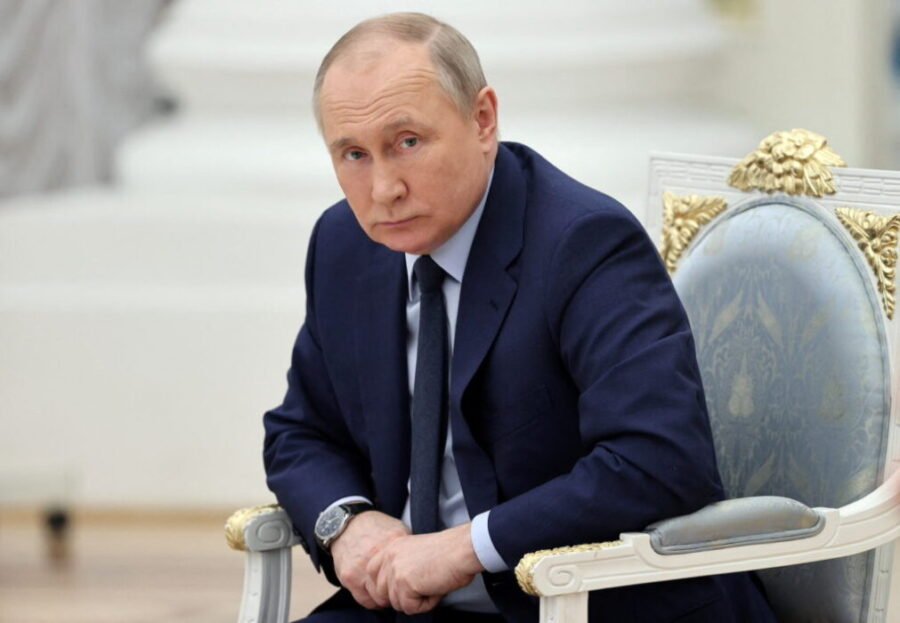

MOSCOW: Few question the expected outcome of Russia’s upcoming presidential election, wherein President Vladimir Putin is poised to secure another six-year term with a significant lead over his rivals.
Despite the tightly controlled electoral environment and heightened wartime restrictions, individuals critical of the government believe there are avenues to express discontent with the Kremlin during the March 15-17 voting period, as suggested by experts and opposition figures.
Spoiling the Ballot The contenders challenging Putin on the ballot include Vladislav Davankov of the New People party, Leonid Slutsky of the Liberal Democratic Party, and Nikolai Kharitonov of the Communist Party. Despite differing platforms, all are widely perceived as Kremlin-backed candidates.
With no viable alternative to Putin and no option for a “none of the above” choice on the ballots, some activists and politicians propose deliberately spoiling the ballot as a form of protest.
A resident of Moscow, speaking anonymously due to political sensitivities, stated her intention to spoil her ballot, expressing dissatisfaction with the available candidates. She lamented the absence of the “none of the above” option, which was present in previous elections.
The Put’ Domoi (Way Home) movement, comprised of relatives of mobilized Russian soldiers with nearly 70,000 Telegram subscribers, also endorsed spoiling ballots, labeling the tactic as “controversial” yet necessary to convey dissatisfaction with the current political system.
‘Alternative’ Candidate For anti-war Russians seeking to participate in the electoral process, some view Davankov of the “liberal” New People party as a potential alternative candidate, especially after the disqualification of anti-war contenders Boris Nadezdhin and Yekaterina Duntsova from the ballot.
While Davankov himself remains skeptical about his chances of winning, his candidacy has sparked considerable debate in recent days.
A former businessman and current State Duma deputy, Davankov advocates for “peace and negotiations” with Ukraine, an end to censorship, and the normalization of Russia’s relations with the West in his campaign agenda.
