

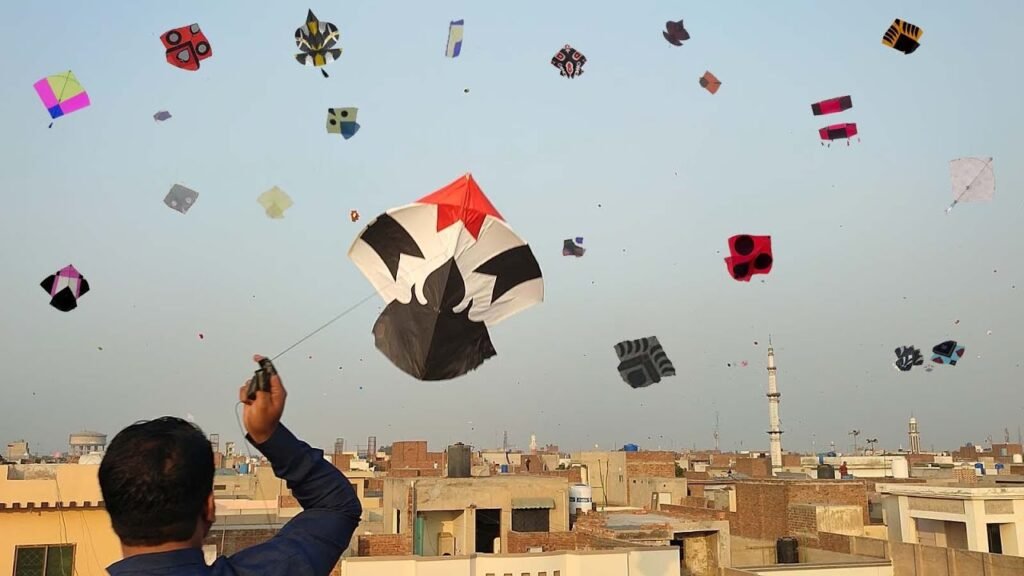

Punjab is moving towards legalising kite flying under a strict regulatory system. The Kite Flying Ordinance 2025 has entered the provincial legislative process. The governor approved the draft earlier, and it has now been presented in the Punjab Assembly. It has been referred to a committee for two months of detailed review before final approval.
The proposed framework aims to bring back the cultural tradition of kite flying while ensuring public safety. Therefore, regulation of the activity will be tighter than ever before.
District-Level Permission Required
Under the draft ordinance, kite flying will be allowed only in districts where deputy commissioners issue permits. The approval will require coordination with the provincial government. This condition ensures that each district assesses safety risks before granting permission.
Strict controls will apply to the manufacturing and sale of kites and string. These rules aim to prevent unsafe materials from entering the market.
Mandatory Registration for Makers and Sellers
The ordinance mandates registration of kite makers, sellers, and kite-flying organisations with the deputy commissioner’s office. No individual or group will be allowed to operate without completing this requirement.
Manufacturing or selling kites without registration may result in a jail term of up to five years. Additionally, violators may face fines reaching Rs500,000. The rule intends to regulate the commercial side of the activity and curb illegal production.
Complete Ban on Dangerous String Types
The draft imposes a strict ban on metal-coated, chemical, tundi, and sharp string. These materials have caused serious injuries in the past. Violations of this ban may lead to imprisonment of up to five years and fines of up to Rs2 million.
To enforce these rules, sub-inspector-rank police officers will have the authority to conduct warrantless searches and arrests. This power will be used when they receive information about the presence of banned string or related material.
Safety Measures for the Public
Once kite flying is permitted in a district, certain safety precautions will become mandatory. The use of motorcycles without protective gear will be restricted. This measure aims to prevent injuries caused by loose or stray kite string, which can be hazardous for riders.
The ordinance also marks a major change by abolishing the Kite Flying Ordinance 2001. The new framework provides a broader and more detailed regulatory structure.
Next Step: Assembly Approval
After the committee completes its review, the ordinance will return to the Punjab Assembly. Final approval is required before it becomes law. The government aims to balance cultural enthusiasm with public safety, creating a controlled environment for kite flying.
