

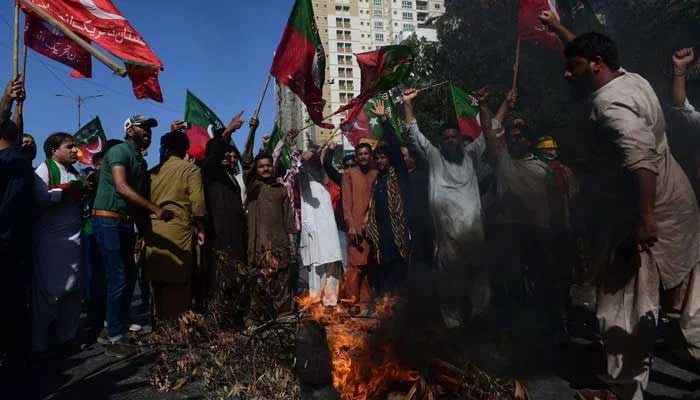

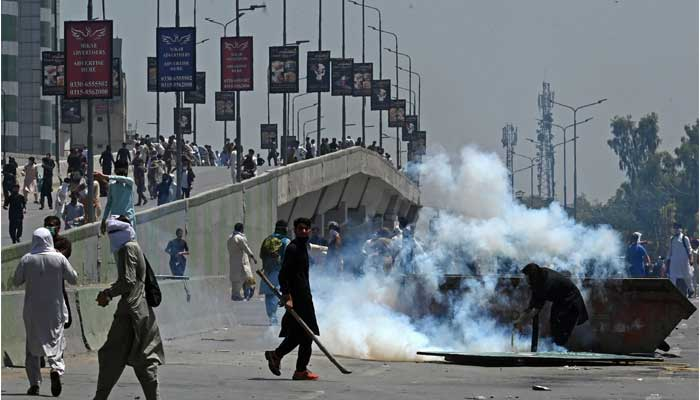
The caretaker government of Punjab has ordered that the trials of Pakistan Tehreek-i-Insaf (PTI) leaders and workers in jail for their alleged involvement in the May 9 riots that occurred in various cities across the province, including Lahore, Rawalpindi, Gujranwala, Mianwali, and Faisalabad.
Moreover, the home department issued separate notifications for jail trials in each of the 31 cases registered throughout the province. Furthermore, authorities made this decision to maintain law and order and streamline proceedings.
In addition, conducting trials within the jail premises is more convenient for judges, as it eliminates the need to transport numerous suspects to the courts on a daily basis. This approach ensures a more efficient and organized legal process.
However, some critics have expressed concerns about the transparency of court proceedings in the jail, as it restricts media access to these trials.
Joint investigation teams that were formed to investigate the May 9 cases have already filed charge sheets with the trial courts in 12 of the 14 cases in Lahore, including one related to the attack on the corps commander’s house. In these cases, the police have accused PTI Chairman Imran Khan and over 900 other party leaders and activists of various offenses. Moreover, the charges include attacks on military installations, police vehicles, and other public and private properties, such as Askari Tower and the Shadman police station.
Planned Conspiracy
According to the prosecution, the violent protests on May 9 were part of a planned conspiracy against the state, supported by over 400 pieces of video evidence, including speeches by the PTI chairman, which allegedly demonstrate premeditated attacks on military facilities in cantonment areas. These cases include charges of mutiny and waging war against the state, with reports from the Federal Investigation Agency (FIA) and intelligence agencies attached to the charge sheets.
The challan (charge sheet) in the corps commander house attack case alone comprises over 3,000 pages and lists 210 prosecution witnesses. Besides this, the authorities have compiled similar documentation and witness lists for other cases including the Askari Tower case and the Gulberg police station case.
