

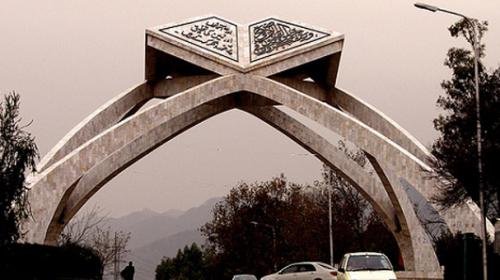

A protest and sit-in against the disappearance of a Baloch student entered its third consecutive day at Quaid-i-Azam University (QAU) on Wednesday, bringing academic activities across the campus to a complete standstill.
The demonstration, organised by the Baloch Students Council (BSC), was set up following the enforced disappearance of Saeedullah Baloch, a sixth-semester student of the Defence and Strategic Studies department.
The BSC had earlier urged students from various groups to join the protest camp, which prompted the university administration to suspend all academic operations amid concerns of a larger mobilisation.
Students participating in the sit-in declined to reveal their identities to media representatives, citing concerns for their safety. Speakers at the protest stressed that despite three days of pressure and uncertainty, the students remained resolute and unwilling to be silenced. They asserted that the unfolding events demonstrated that students would not succumb to intimidation when seeking justice.
Mohammad Azam, the brother of the missing student, described the camp as more than a protest site, calling it a symbol of shared strength. He said each passing hour amplified their message that enforced disappearances would not be accepted and that they would not retreat until they were heard.
The QAU administration has not issued an official statement regarding the ongoing protest or the suspension of classes. However, a senior official confirmed that the administration had contacted the BSC, offering assistance and discouraging the establishment of a protest camp.
The BSC declined, stating that the administration could not provide meaningful help and emphasising that their activity was not political but a demand for the recovery of a fellow student.
According to speakers at the camp, Saeedullah was abducted by unidentified men in civilian clothing on July 8, 2025, near the Islamabad toll plaza while travelling to Quetta. His friend, who was with him at the time, was allowed to continue the journey.
The issue forms part of a wider national concern, with the Commission of Inquiry on Enforced Disappearances reporting 125 new cases in the first half of 2025, underscoring the persistence of this longstanding problem.
