
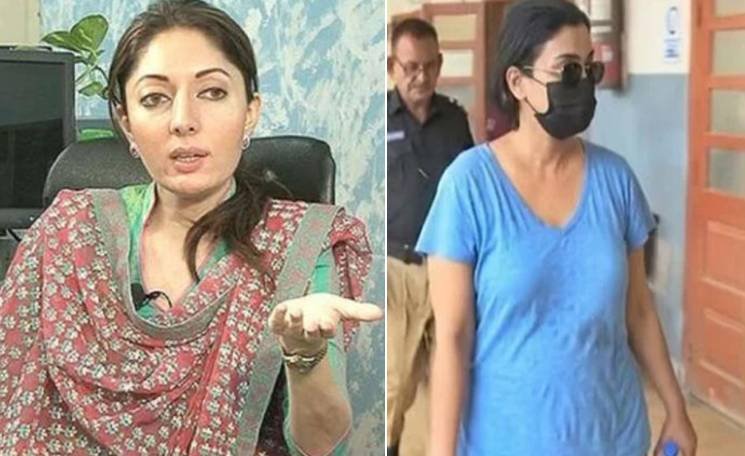

A major political controversy has erupted after alleged drug dealer Anmol, widely known as Pinky, appeared in court without handcuffs and reportedly received VIP-style treatment. The incident triggered strong reactions from politicians, lawmakers, and the public across Pakistan.
Pakistan Peoples Party lawmaker Sharmila Faruqui openly criticized the situation. She expressed anger over the treatment given to the accused during court proceedings. Videos and images circulating online intensified public debate and raised serious questions about law enforcement practices.
The controversy has now expanded beyond social media discussions. Members of parliament have demanded investigations, accountability, and stricter anti-drug enforcement measures.
Sharmila Faruqui Criticizes Police and Media Attention
PPP leader Sharmila Faruqui said it was deeply painful to watch an accused drug dealer move freely inside court premises without restraints. She stated that the incident reflected poorly on law enforcement authorities.
According to Faruqui, the accused received unnecessary protocol and public attention despite facing serious allegations linked to narcotics distribution. She also criticized sections of the media for portraying the suspect like a public celebrity instead of focusing on the gravity of the charges.
Faruqui warned that drug trafficking continues destroying the lives of young people across the country. Therefore, she stressed that society should reject individuals involved in supplying narcotics rather than glorifying them.
She further said the normalization of such behavior sends dangerous signals to the youth. Public confidence in institutions weakens when accused individuals appear to receive special treatment.
Her remarks quickly gained attention online. Many users echoed concerns regarding equal treatment under the law. Others questioned why security officials failed to follow standard procedures during the court appearance.
The incident has also sparked broader discussions about elite privilege, justice system transparency, and anti-drug operations in urban areas.
Lawmakers Demand Strict Action Against VIP Treatment
Member of Parliament Shaista Jadoon also condemned the handling of the accused during the court proceedings. Speaking outside Parliament House, she described the leaked audio clips linked to the case as deeply disturbing.
Jadoon stated that the accused should have appeared in court under strict security measures, including handcuffs. She urged the Sindh government to investigate officials responsible for granting what she called VIP treatment.
According to her, videos from the court showed the accused walking confidently without visible concern or fear. She argued that such scenes damage public trust in the justice process.
Jadoon further demanded accountability for every officer involved in the security arrangements. She emphasized that authorities must apply the law equally to every citizen regardless of social influence or media attention.
The growing criticism has placed additional pressure on provincial authorities and anti-narcotics agencies.
Meanwhile, several political figures continued discussing the matter on television and social media platforms. The issue rapidly transformed into a national debate about law enforcement standards and public accountability.
Senate Committee Summons ANF Chief as Pressure Mounts
The controversy reached parliament after the Senate Standing Committee on Interior officially summoned the Director General of the Anti-Narcotics Force. Committee Chairman Senator Faisal Saleem requested detailed records connected to the alleged drug network.
The committee specifically asked for information regarding individuals who may have purchased narcotics from the accused. Authorities were instructed to provide records involving students, politicians, judges, and people from other professional sectors if linked to investigations.
Senator Saleem also called for widespread drug testing measures. He publicly stated that he would personally volunteer for testing first. According to him, accountability should apply equally to everyone without exceptions.
His comments increased pressure on anti-narcotics authorities to show transparency and seriousness in handling the case.
The case has once again highlighted growing concerns about drug abuse among young people in Pakistan. Experts believe narcotics networks continue expanding through urban centers and social circles targeting students and vulnerable communities.
Political analysts say the controversy may push authorities toward stricter anti-drug policies and more visible enforcement operations in coming weeks.
For now, public attention remains fixed on how institutions respond to allegations of preferential treatment and whether meaningful action follows the growing outrage.

