

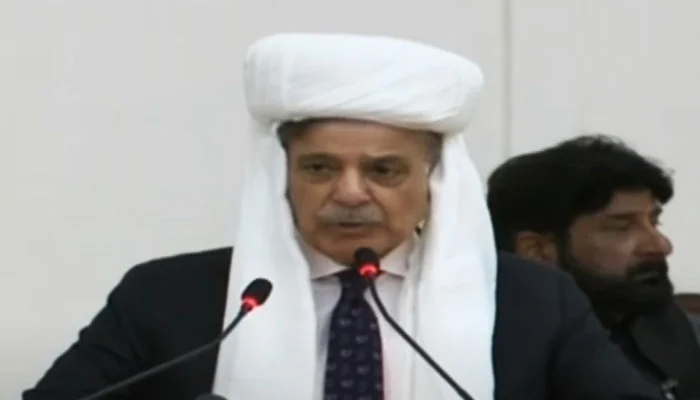

Prime Minister Shehbaz Sharif, during his one-day visit to Quetta on Saturday, emphasized the importance of unity and dialogue in addressing national challenges. Speaking at a grand jirga, the premier called for collective efforts to reintegrate those he described as “misguided individuals” back into the national fold.
He stressed that while all concerns should be acknowledged with respect, those resorting to terrorism only understand violence and cannot be tolerated. “Let us resolve our grievances as brothers, through dialogue and understanding,” he urged, adding that harmony within the nation was key to prosperity.
Highlighting Pakistan’s internal development, the prime minister announced that 25% of the next Public Sector Development Programme (PSDP) budget would be allocated to Balochistan. He also revealed that Punjab had transferred Rs11 billion from its National Finance Commission (NFC) share to support Balochistan.
Shehbaz Sharif mentioned Rs250 billion had been earmarked for the province out of the overall Rs1,000 billion development budget. He further noted that the federal government was assisting farmers in transitioning to solar power and pledged that laptops would be distributed among students in Balochistan. He also promised financial backing for the construction of the long-neglected and dangerous Karachi-Quetta highway.
Earlier in the day, while addressing military officers at the Command and Staff College in Quetta, the prime minister reiterated Pakistan’s firm stance against any unilateral move by India to suspend the Indus Waters Treaty. He cautioned that water must not be weaponized.
He praised Pakistan’s armed forces for their resilience, referencing the downing of Indian aircraft and targeting of enemy installations. He commended Air Chief Marshal Zaheer Ahmed Babar and Chief of Army Staff General Asim Munir for their leadership.
Welcoming foreign dignitaries at the college, PM Shehbaz noted their presence as a symbol of Pakistan’s enduring friendships and applauded the institution for shaping the country’s strategic command.
