
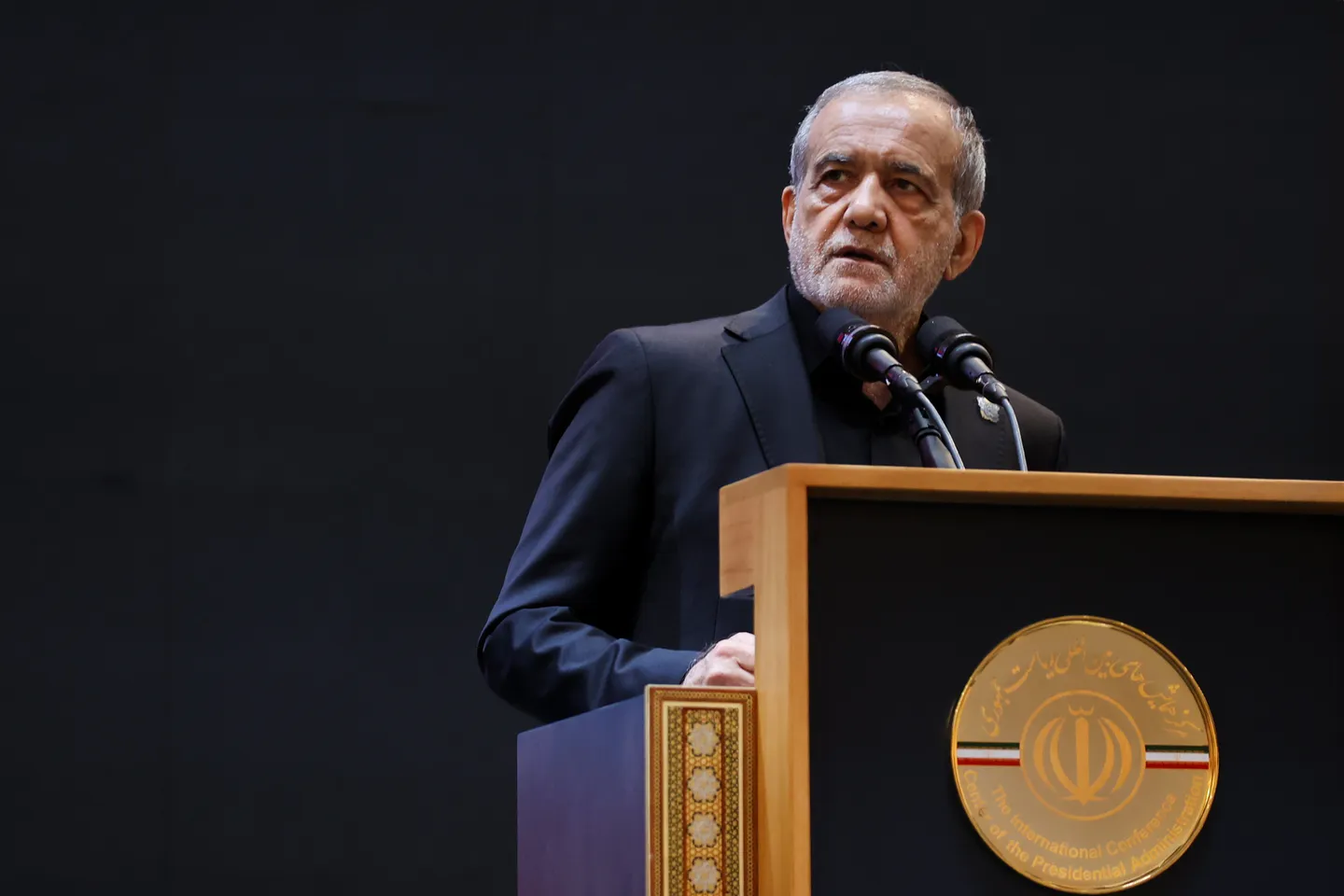

President calls for national unity while defending memorandum of understanding with Washington
TEHRAN: Iranian President Masoud Pezeshkian said on Monday that Iran is engaged in what he described as a “full-scale war” with the United States, urging unity and coordination across all state institutions as military tensions continue to escalate.
According to a statement issued by the Iranian presidency, Pezeshkian said the country must remain realistic about the challenges ahead and prepare for what he described as the natural consequences of continued resistance.
He stressed that national unity, collective decision-making and close coordination among government institutions are essential to managing the current situation. Speaking in remarks carried by the semi-official ISNA news agency, Pezeshkian added that his administration would continue pursuing reforms while maintaining public services despite the ongoing crisis.
Economy remains a key priority
The president described the economy and public livelihoods as Iran’s most important domestic battlefield, arguing that external pressure is intended to hinder the country’s development.
Pezeshkian also defended the Pakistan-mediated memorandum of understanding signed with the United States last month, saying Iran had not compromised its national interests, principles or rights in any of the agreement’s 14 points.
According to the president, the memorandum did not provide one-sided advantages to Washington and largely served Iran’s interests. US officials have not publicly responded to those remarks.
Military exchanges continue
Meanwhile, hostilities between Iran and the United States continued despite the memorandum aimed at reducing tensions and paving the way for a broader peace agreement.
Reports on Monday said explosions were heard in several Iranian provinces, including the northwestern city of Tabriz, following recent US military operations. Iran has also announced retaliatory strikes against facilities it says are used by US forces in several countries across the region.
The latest exchange of attacks has raised concerns about further regional instability, while diplomatic efforts to restore dialogue remain uncertain as both sides continue military operations alongside competing political narratives.

