
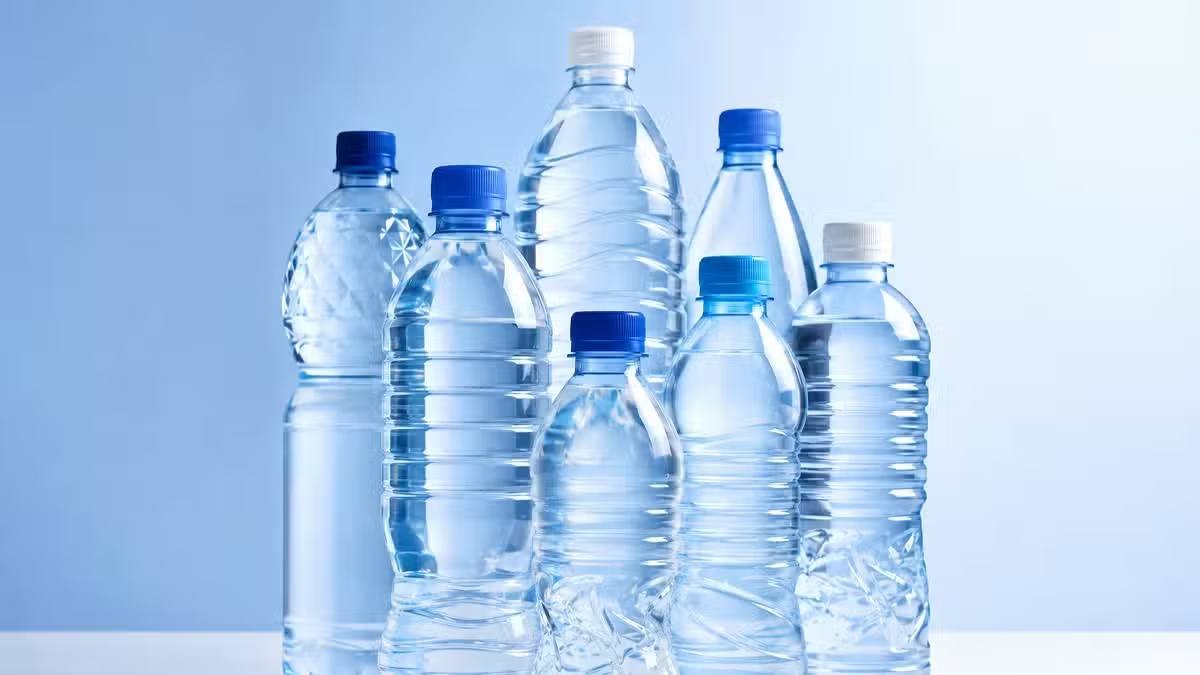

Council tests 230 brands across 20 Pakistani cities, finding 29 unsafe while most samples meet chemical and microbiological standards
ISLAMABAD: The Pakistan Council of Research in Water Resources (PCRWR) has classified 201 bottled and mineral water brand entries as overall safe for consumption in its latest quarterly quality assessment.
The assessment covered April to June 2026 and examined 230 bottled water brands collected from markets across 20 cities. According to PCRWR, 201 samples passed both chemical and microbiological safety requirements, while 29 were classified as unsafe.
Furthermore, laboratory testing found 220 brands chemically safe and 208 microbiologically safe.
Major Bottled Water Brands Pass Testing
The safe entries included several widely available brands such as Nestle Pure Life, Dasani, Gourmet Bottled Drinking Water, Culligan Water, Aqua Fina, Springley and numerous regional suppliers.
PCRWR also listed brands including Himalayan, Pak Aqua, Aqua Dor, Aqua Gold, Skardu Spring, Murree Sparkletts, Hunza Sparkletts and Deosai Bottled Drinking Water among samples meeting its overall safety criteria.
However, some brand names appear more than once in the published list, reflecting samples or entries assessed in the council’s detailed testing data.
The results indicate that most bottled water samples examined during the quarter complied with required quality parameters.
Samples Collected From 20 Cities
PCRWR collected samples from Islamabad, Rawalpindi, Karachi, Lahore, Peshawar, Multan, Faisalabad, Gujranwala, Sialkot, Sukkur, Gilgit and several other cities.
Additionally, the survey covered Dera Ghazi Khan, Sargodha, Sahiwal, Tando Jam, Badin, Dera Ismail Khan, Bahawalpur, Mianwali and Muzaffarabad.
For its assessment, PCRWR collected four bottles of every brand and used separate samples for microbiological and physicochemical examinations.
The quarterly monitoring programme aims to identify contaminated bottled water and provide consumers with updated information about drinking-water quality.
The latest findings show that approximately 87 per cent of the tested brands met both chemical and microbiological safety standards, while authorities classified roughly 13 per cent as unsafe.

