

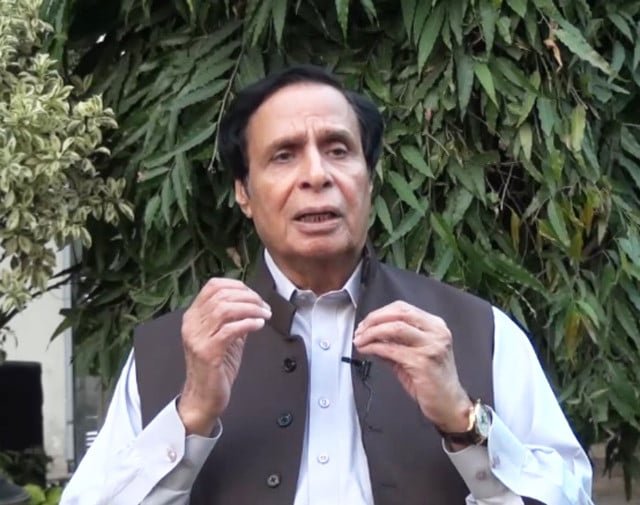

ISLAMABAD: The wife of Pakistan Tehreek-e-Insaf (PTI) President Parvez Elahi filed a petition with the Supreme Court (SC) challenging the Lahore High Court’s (LHC) ruling to dismiss a plea for her husband’s release after his rearrest.
The LHC disposed of a plea, terming it infructuous, which sought its order for the production and release of the PTI president.

In her fresh petition filed in the apex court, Parvez Elahi’s wife appealed to the top court to release her husband. She claimed that the LHC had not examined the facts regarding his arrest.
The plea also requests the Supreme Court to issue restraining orders against any potential arrest in undisclosed cases registered against him.
She urged the top court to order the production of Elahi before the court. Despite the LHC’s restraining order against his potential arrest, the Islamabad Capital Territory (ICT) police rearrested the PTI president under 3-MPO. This occurred shortly after he the National Accountability Bureau (NAB) had released him.
As a result, the seasoned politician was placed under house arrest in Adiala jail for the next 15 days, as conveyed by Elahi’s wife to the top court.
Islamabad IG gets show-cause notice for parvez Elahi’s detention
On September 5, the LHC issued a show-cause notice for contempt of court to Islamabad Inspector General (IG) Dr. Akbar Nasir Khan for the PTI president’s detention under 3-MPO (Maintenance of Public Order).
The LHC required the Islamabad police chief to personally appear before the court on September 8.
Following that, the former Punjab chief minister filed a petition with the LHC, requesting contempt proceedings against the Islamabad IG.
In response, the Lahore High Court summoned the Islamabad IG to appear before the court for the contempt case on September 8.
NAB files plea in LHC
The anti-graft watchdog appealed in the LHC against the restraining order on Elahi’s potential arrest. NAB argued his detention was lawful and requested the LHC to invalidate the single bench’s release order. They also asked for the suspension of the single bench’s order pending the appeal decision.
