

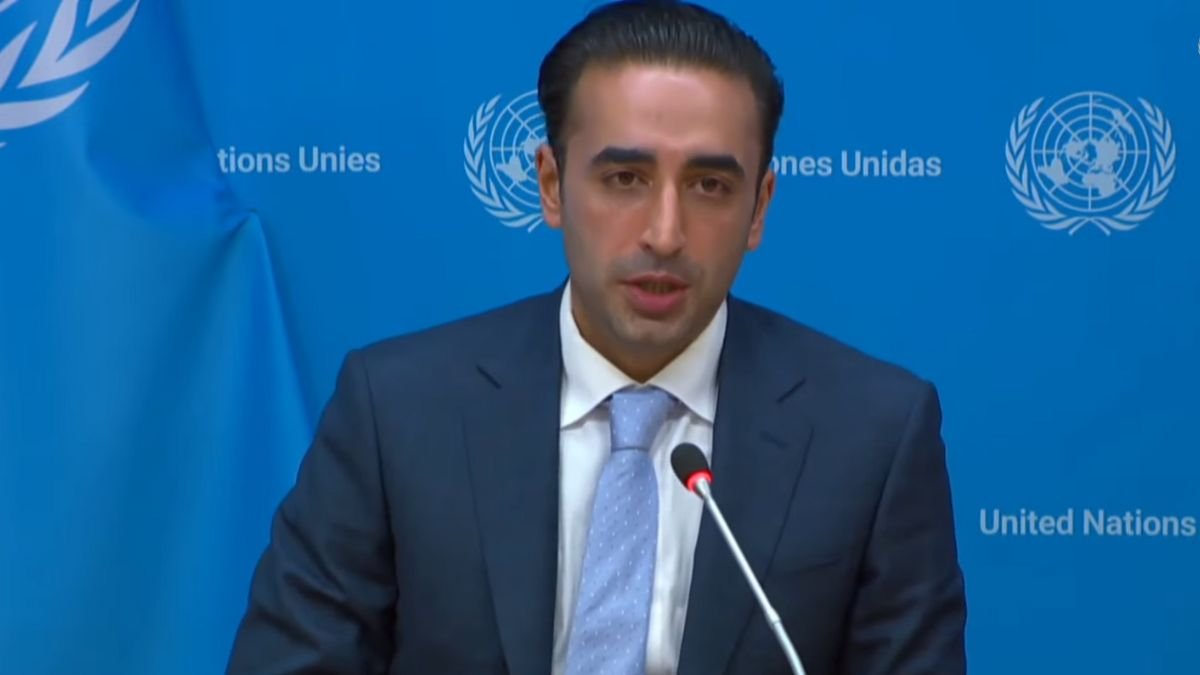

Pakistan’s Parliamentary Delegation
A high-level parliamentary delegation from Pakistan, led by Pakistan Peoples’ Party Chairman and former Foreign Minister Bilawal Bhutto Zardari, has concluded a significant two-day diplomatic mission at the United Nations Headquarters in New York. The visit was aimed at communicating Pakistan’s firm commitment to regional peace, the country’s stance on recent escalations with India, and its concerns over critical issues like Kashmir and water disputes.
The delegation conveyed a unified message: while Pakistan seeks peaceful and cooperative relations with all its neighbours, it will not accept aggression, impunity, or violations of international law.
During the visit, the delegation held comprehensive meetings with key UN officials, including the UN Secretary-General, the President of the General Assembly, and the President of the UN Security Council.
In addition, they engaged with representatives of both Permanent and Non-Permanent Members of the Security Council, ambassadors from the Organisation of Islamic Cooperation (OIC) group, international media, civil society organisations, think tanks, and members of the Pakistani diaspora in the United States.
This outreach effort was launched in response to India’s recent unilateral actions and hostile rhetoric. The Pakistani delegation voiced strong concerns over India’s decision to suspend the Indus Waters Treaty—a vital accord ensuring water rights for over 240 million Pakistanis. Islamabad warned that any effort to weaponize water and disrupt a longstanding international treaty would have serious implications for regional stability and violate international legal obligations.
In discussions with global stakeholders, the Pakistani lawmakers also condemned India’s unprovoked military aggression, including the targeting of civilian areas that resulted in the death of innocent civilians, women, and children. They dismissed Indian accusations linking Pakistan to the April 22 terrorist attack in Indian Illegally Occupied Jammu and Kashmir, labelling them baseless and unsupported by evidence.
The delegation highlighted Pakistan’s longstanding contributions to the global fight against terrorism, stressing the country’s sacrifices and frontline role. At the same time, they drew attention to India’s involvement in sponsoring terrorism within Pakistan and its use of transnational assassination tactics, calling on the international community to reject politicisation in counterterrorism efforts and instead embrace cooperative frameworks.
Reiterating Pakistan’s commitment to peace, the delegation underlined that any future hostilities could escalate dangerously due to the nuclear dimension of South Asia. They emphasized that Pakistan’s military responses to Indian provocations have remained lawful, measured, and necessary for defending national sovereignty.
A central point in all discussions was the unresolved Jammu and Kashmir conflict. The delegation urged the UN and global powers to support a just and peaceful resolution in accordance with UN Security Council resolutions and the aspirations of the Kashmiri people. They stressed that durable peace in South Asia is unattainable without addressing the core Kashmir dispute.
Finally, the delegation appealed to the international community to uphold treaty obligations, reinstate the full functioning of the Indus Waters Treaty, and encourage comprehensive bilateral dialogue between India and Pakistan. Such a process, they argued, is essential for resolving all outstanding issues and preventing future conflict in the region.
Members of the delegation included prominent political and diplomatic figures such as Minister for Climate Change Dr. Musadik Masood Malik, Senator Sherry Rehman, former Foreign Minister Hina Rabbani Khar, Engineer Khurram Dastgir Khan, Senator Syed Faisal Ali Subzwari, Senator Bushra Anjum Butt, and former foreign secretaries Ambassador (R) Jalil Abbas Jilani and Ambassador (R) Tehmina Janjua.
