
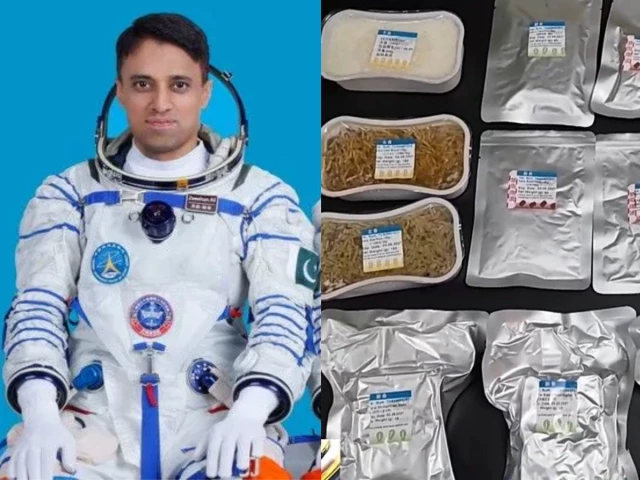

Pakistan’s first astronaut, Muhammad Zeeshan Ali, is enjoying a specially prepared food menu aboard China’s Tiangong space station. Chinese authorities have arranged more than 100 food varieties to accommodate his dietary requirements and culinary preferences.
The special menu includes traditional beef stew, lamb curry, butter chicken and curried chickpeas. The meals allow the Pakistani astronaut to enjoy familiar flavours while carrying out his historic space mission.
The China Astronaut Research and Training Centre developed seven Pakistani-style space food options. Researchers carefully selected ingredients to maintain familiar flavours while meeting astronauts’ nutritional requirements.
The food preparation process also followed Islamic dietary standards. Researchers conducted several rounds of testing to ensure the meals were suitable for consumption in space.
Interestingly, Zeeshan Ali developed a preference for Chinese black tea and rice during his training in China. He reportedly requested their inclusion in his space menu.
Chinese authorities also arranged a special dinner for six astronauts aboard the space station. The gathering brought together Pakistani and Chinese culinary traditions.
Zeeshan Ali made history on November 25, 2026, by becoming the first foreign astronaut to enter China’s Tiangong space station.
He travelled aboard the Shenzhou-24 spacecraft alongside Chinese mission commander Tang Hongbo and flight engineer Wu Yi.
During his introduction to fellow astronauts, Ali recited a verse by renowned Pakistani poet Allama Muhammad Iqbal. He also translated the poetry for his Chinese colleagues.
The Pakistani astronaut expressed excitement about his historic achievement, describing it as the fulfilment of a childhood dream.
Meanwhile, Chinese Foreign Ministry spokesperson Guo Jiakun described the joint mission as a significant milestone in international space cooperation. He reaffirmed China’s commitment to peaceful space exploration and scientific collaboration.
The mission marks a historic achievement for Pakistan and opens new opportunities for scientific research, technological advancement and international space partnerships.

