

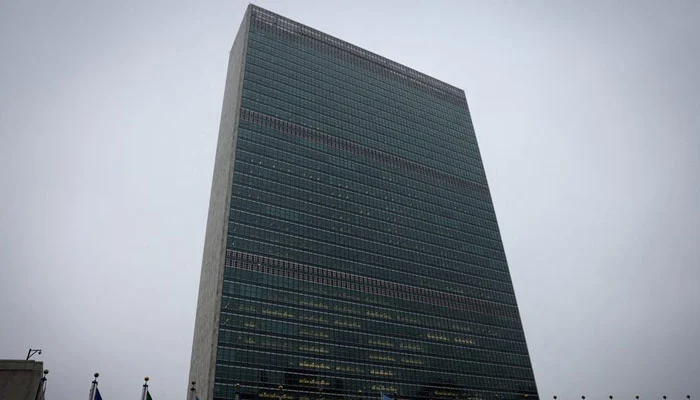

Pakistan has achieved a significant diplomatic success as the United Nations Security Council (UNSC) statement regarding the recent Pahalgam attack avoided strong language previously used in incidents such as the 2019 Pulwama attack.
Following the attack on tourists in Indian Illegally Occupied Jammu and Kashmir (IIOJK), which resulted in 26 casualties, the UNSC’s communication referenced the actions of “all relevant authorities” without directly mentioning India. Unlike past instances, the tone remained measured, delivering a setback to India’s diplomatic efforts.
The United States initially proposed a statement at the Security Council; however, it failed to secure approval in its intended form. Notably, Pakistan successfully prevented the insertion of certain controversial terms and ensured that the wording included “Jammu and Kashmir” rather than solely “Pahalgam,” countering India’s narrative that the region is an undisputed part of its territory.
Tensions between the two nuclear-armed neighbours have risen sharply since the April 22 attack. India suspended the Indus Waters Treaty in response, prompting Pakistan to retaliate by closing its airspace to Indian flights.
Prime Minister Shehbaz Sharif condemned the attack and expressed Pakistan’s willingness to participate in any neutral, transparent, and credible investigation. Meanwhile, Defence Minister Khawaja Asif warned that the situation could escalate into a full-scale conflict if not handled carefully.
In an effort to defuse tensions, Iran has offered to mediate between the two countries.
Adding to India’s diplomatic challenges, the UN statement avoided immediate condemnation and simply stated that the situation was being monitored with “utmost concern.” A UN official also called upon both Pakistan and India to show maximum restraint to prevent the situation from deteriorating further.
The developments mark a diplomatic setback for India and a significant achievement for Pakistan on the international stage.
