

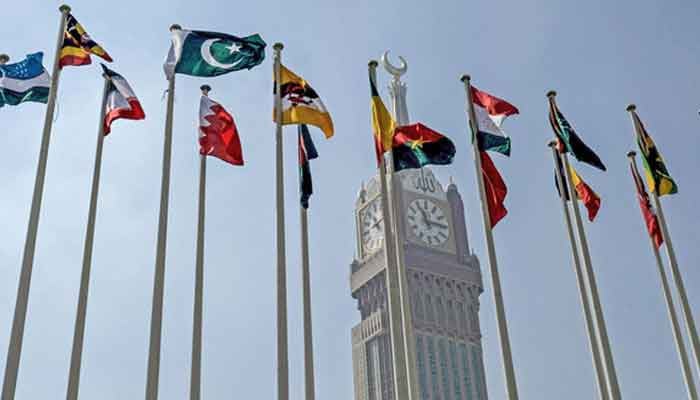

Deputy Prime Minister and Foreign Minister, Senator Mohammad Ishaq Dar, will undertake an official visit to Saudi Arabia from 25–26 August 2025 to attend the Extraordinary Session of the OIC Council of Foreign Ministers (CFM) in Jeddah.
He will travel directly from Dhaka, following his two-day visit to Bangladesh, to participate in the high-level meeting.
According to the Foreign Office spokesperson, the OIC session will bring together foreign ministers and senior officials from member states to discuss joint responses to the escalating crisis in Palestine amid Israeli military aggression, its plans for full control over Gaza, and ongoing violations of Palestinian rights.
Pakistan has consistently advocated the Palestinian cause at international platforms. In Jeddah, Senator Dar will reaffirm Pakistan’s principled stance, calling for Israel’s complete withdrawal from occupied territories, outright rejection of Israel’s plan for Gaza’s military subjugation, urgent humanitarian assistance, and the realization of Palestinians’ legitimate rights — particularly the creation of an independent, sovereign state based on pre-1967 borders with Al-Quds Al-Sharif as its capital.
On the sidelines, he is also expected to hold bilateral meetings with counterparts from key OIC countries.
Also on TTI:
COVID-19 disrupted the rhythm of everyday life—factories once booming, market places hustling -bustling , and rickshaws earning wages door to door all fell into the void of the pandemic. This void gobbled away not just the hustle and bustle of everyday life, but also the modest, steady incomes that much of the population relied on—millions depended on them to feed their little children, keep a roof over their heads, and sustain the basic necessities of life.Many families’ survival was standing on the frailest margins—one unpaid bill or the closure of a workplace would strip them of their basic necessities, leaving them with nothing but fear and uncertainty. The Islamabad Policy Research Institute’s report, “The Emergence of the ‘New Poor’ in Pakistan,” authored by Dr. Aneel Salman and Maryam Ayub, shows how those everyday rhythms were the real shock absorbers of poverty—and how, when they vanished, people who had once lived with dignity found themselves suddenly and painfully exposed.
