


Gender Pay Gap
Pakistan continues to face a significant gender pay gap (GPG), ranking among the highest globally in terms of wage disparities between men and women, according to a report published by the International Labour Organisation (ILO).
The report highlights that Pakistan exhibits one of the largest gaps in male and female employment rates, with women earning considerably less than their male counterparts across various sectors.
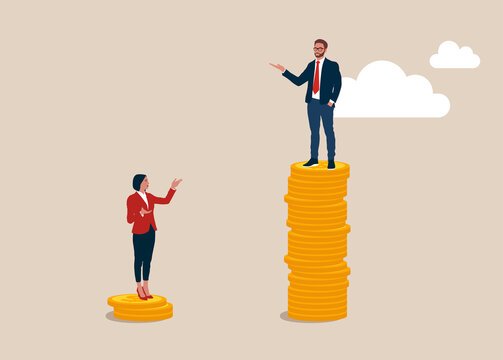
According to the report, the gender pay gap in Pakistan stands at 25% when calculated based on hourly wages. This means that for every Rs1,000 earned by a man, a woman in the same role earns only Rs750.
The disparity is even wider when considering monthly wages, where the gap reaches approximately 30%. The monthly wage gap is influenced by the fact that women, on average, work fewer hours than men.
A concerning aspect of the wage disparity is that a significant portion of the gap cannot be explained by differences in education, skills, experience, or other labour market characteristics between men and women.
The report suggests that this “unexplained” gap may be a result of discriminatory practices, which continue to hinder women’s financial independence and career advancement.
When compared to other regional countries, Pakistan’s gender pay gap remains alarmingly high. The report notes that the hourly wage gap is 22% in Sri Lanka, 18% in Nepal, and surprisingly, -5% in Bangladesh, where women in certain sectors may earn more than men. This data indicates that Pakistan lags behind its South Asian counterparts in achieving wage parity.
However, the report also acknowledges that Pakistan has made some progress in reducing the gender pay gap in recent years. In 2018, the gap based on hourly wages was recorded at 33%, meaning there has been an 8% improvement over time. Despite this progress, the disparity remains substantial, particularly in certain sectors.
The gender pay gap is significantly lower in the formal economy, where strict labour laws and regulations are enforced. In contrast, wage inequality is much more pronounced in the informal and household sectors, where the gap exceeds 40%.
The report emphasizes that sectors with better enforcement of labour laws, such as the public sector and regulated industries, tend to exhibit much smaller gender pay disparities.
The gender pay gap serves as a crucial indicator of inequality between men and women in the workforce. Many governments worldwide have implemented legislation to promote equal pay, and the ILO’s Equal Remuneration Convention, 1951 (No. 100) is one of the most widely ratified labour conventions.
However, despite legal frameworks advocating gender equality in wages, significant disparities continue to persist, particularly in countries like Pakistan, where structural and cultural barriers remain deeply ingrained.
Addressing the gender pay gap requires stronger policy interventions, better enforcement of equal pay laws, and initiatives aimed at empowering women in the workforce. Without targeted efforts to eliminate wage discrimination, the economic participation of women in Pakistan will remain limited, further reinforcing long-standing gender inequalities in the country.
